

78
4 Application of Biocatalysts for the Production of Methanol …
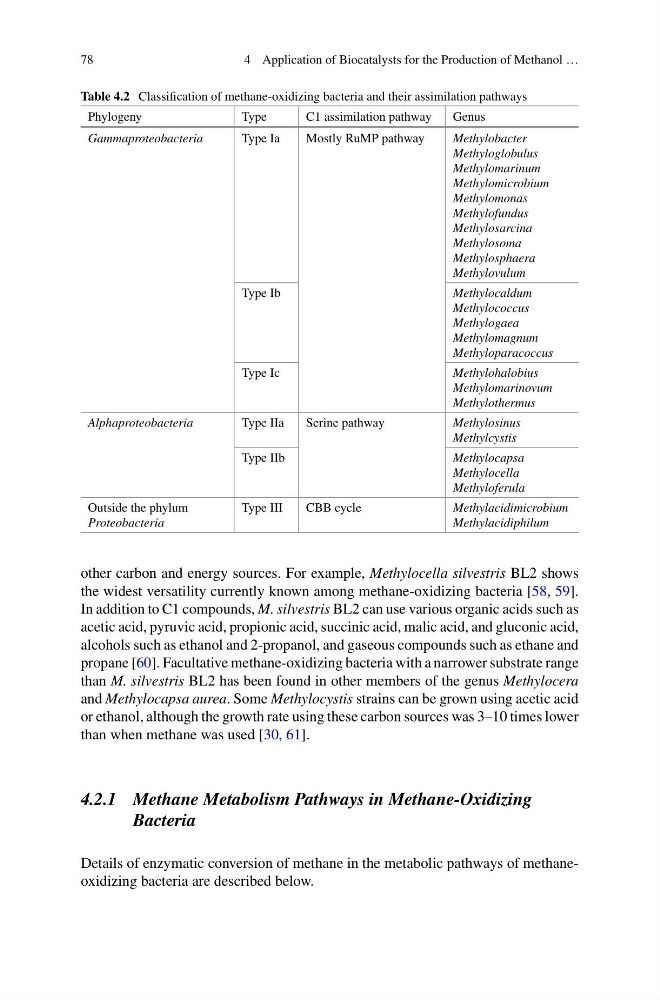
Table 4.2 Classification of methane-oxidizing bacteria and their assimilation pathways
Phylogeny
Type
C1 assimilation pathway
Genus
Gammaproteobacteria
Type Ia
Mostly RuMP pathway
Methylobacter
Methyloglobulus
Methylomarinum
Methylomicrobium
Methylomonas
Methylofundus
Methylosarcina
Methylosoma
Methylosphaera
Methylovulum
Type Ib
Methylocaldum
Methylococcus
Methylogaea
Methylomagnum
Methyloparacoccus
Type Ic
Methylohalobius
Methylomarinovum
Methylothermus
Alphaproteobacteria
Type IIa
Serine pathway
Methylosinus
Methylcystis
Type IIb
Methylocapsa
Methylocella
Methyloferula
Outside the phylum
Proteobacteria
Type III
CBB cycle
Methylacidimicrobium
Methylacidiphilum
other carbon and energy sources. For example, Methylocella silvestris BL2 shows
the widest versatility currently known among methane-oxidizing bacteria [58, 59].
In addition to C1 compounds, M. silvestris BL2 can use various organic acids such as
acetic acid, pyruvic acid, propionic acid, succinic acid, malic acid, and gluconic acid,
alcohols such as ethanol and 2-propanol, and gaseous compounds such as ethane and
propane [60]. Facultative methane-oxidizing bacteria with a narrower substrate range
than M. silvestris BL2 has been found in other members of the genus Methylocera
and Methylocapsa aurea. Some Methylocystis strains can be grown using acetic acid
or ethanol, although the growth rate using these carbon sources was 3–10 times lower
than when methane was used [30, 61].
4.2.1 Methane Metabolism Pathways in Methane-Oxidizing
Bacteria
Details of enzymatic conversion of methane in the metabolic pathways of methaneoxidizing bacteria are described below.
4 Application of Biocatalysts for the Production of Methanol …
Table 4.2 Classification of methane-oxidizing bacteria and their assimilation pathways
Phylogeny
Type
C1 assimilation pathway
Genus
Gammaproteobacteria
Type Ia
Mostly RuMP pathway
Methylobacter
Methyloglobulus
Methylomarinum
Methylomicrobium
Methylomonas
Methylofundus
Methylosarcina
Methylosoma
Methylosphaera
Methylovulum
Type Ib
Methylocaldum
Methylococcus
Methylogaea
Methylomagnum
Methyloparacoccus
Type Ic
Methylohalobius
Methylomarinovum
Methylothermus
Alphaproteobacteria
Type IIa
Serine pathway
Methylosinus
Methylcystis
Type IIb
Methylocapsa
Methylocella
Methyloferula
Outside the phylum
Proteobacteria
Type III
CBB cycle
Methylacidimicrobium
Methylacidiphilum
other carbon and energy sources. For example, Methylocella silvestris BL2 shows
the widest versatility currently known among methane-oxidizing bacteria [58, 59].
In addition to C1 compounds, M. silvestris BL2 can use various organic acids such as
acetic acid, pyruvic acid, propionic acid, succinic acid, malic acid, and gluconic acid,
alcohols such as ethanol and 2-propanol, and gaseous compounds such as ethane and
propane [60]. Facultative methane-oxidizing bacteria with a narrower substrate range
than M. silvestris BL2 has been found in other members of the genus Methylocera
and Methylocapsa aurea. Some Methylocystis strains can be grown using acetic acid
or ethanol, although the growth rate using these carbon sources was 3–10 times lower
than when methane was used [30, 61].
4.2.1 Methane Metabolism Pathways in Methane-Oxidizing
Bacteria
Details of enzymatic conversion of methane in the metabolic pathways of methaneoxidizing bacteria are described below.