

6
1 Overview of Direct Methane Conversion to Chemicals …
CH 4
C−O Bond Formation
Partial
Oxidation
O 2
CH 3 OSO 3 H
Esterification
H 2 SO 4
Oxidative
Coupling
Benzene
Naphthalene
C 2
+
Hydrocarbons
CH 3 OH
C 2
+
Hydrocarbons
C 2
+
Hydrocarbons
Methylation
Coupling
Dehydroaromatization
Methylation
C−C Bond Formation
Non-oxidative Reaction
(Dehydrogenative Reaction)
Oxidative Reaction
Oxidative Reaction
- H 2 O
- SO 2
O 2
- H 2 O
RH
- H 2
- H 2
- H 2
S: CH 3
B: CH 3
S: M−OCH 3
H: M−CH 3
H: CH 3
S: CH 3
H: M−CH 3
H: M−CH 2
S: CH 3
S:
CH X (0
S : Heterogeneous catalyst, H : Homogeneous catalyst, B : Biological catalyst
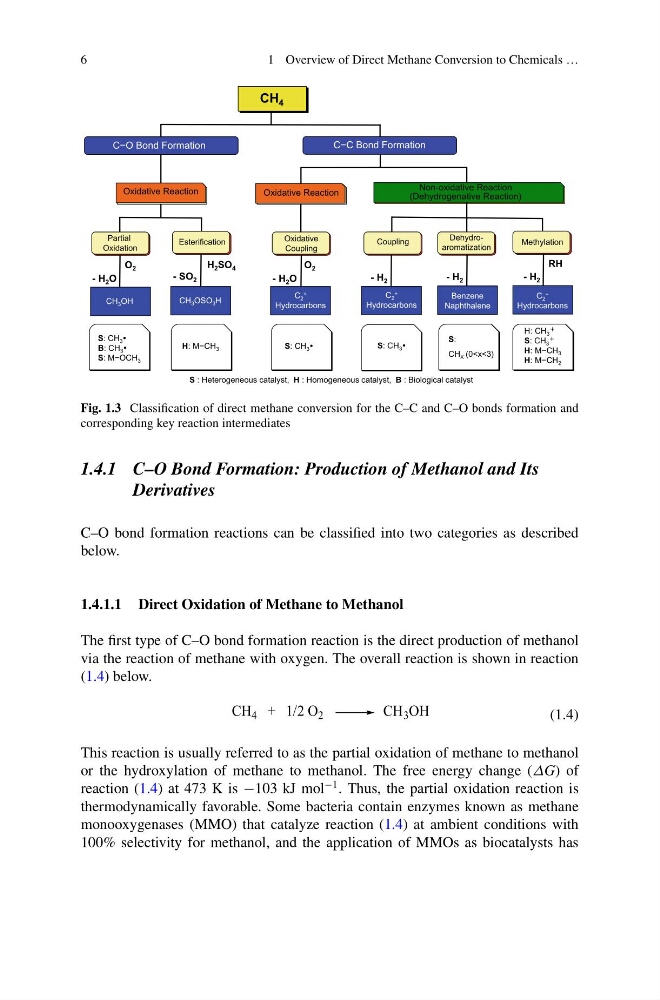
Fig. 1.3 Classification of direct methane conversion for the C–C and C–O bonds formation and
corresponding key reaction intermediates
1.4.1 C–O Bond Formation: Production of Methanol and Its
Derivatives
C–O bond formation reactions can be classified into two categories as described
below.
1.4.1.1 Direct Oxidation of Methane to Methanol
The first type of C–O bond formation reaction is the direct production of methanol
via the reaction of methane with oxygen. The overall reaction is shown in reaction
(1.4) below.
CH 4 + 1/2 O 2
CH 3 OH
(1.4)
This reaction is usually referred to as the partial oxidation of methane to methanol
or the hydroxylation of methane to methanol. The free energy change (ΔG) of
reaction (1.4) at 473 K is −103 kJ mol
−1 . Thus, the partial oxidation reaction is
thermodynamically favorable. Some bacteria contain enzymes known as methane
monooxygenases (MMO) that catalyze reaction (1.4) at ambient conditions with
100% selectivity for methanol, and the application of MMOs as biocatalysts has
1 Overview of Direct Methane Conversion to Chemicals …
CH 4
C−O Bond Formation
Partial
Oxidation
O 2
CH 3 OSO 3 H
Esterification
H 2 SO 4
Oxidative
Coupling
Benzene
Naphthalene
C 2
+
Hydrocarbons
CH 3 OH
C 2
+
Hydrocarbons
C 2
+
Hydrocarbons
Methylation
Coupling
Dehydroaromatization
Methylation
C−C Bond Formation
Non-oxidative Reaction
(Dehydrogenative Reaction)
Oxidative Reaction
Oxidative Reaction
- H 2 O
- SO 2
O 2
- H 2 O
RH
- H 2
- H 2
- H 2
S: CH 3
B: CH 3
S: M−OCH 3
H: M−CH 3
H: CH 3
S: CH 3
H: M−CH 3
H: M−CH 2
S: CH 3
S:
CH X (0
S : Heterogeneous catalyst, H : Homogeneous catalyst, B : Biological catalyst
Fig. 1.3 Classification of direct methane conversion for the C–C and C–O bonds formation and
corresponding key reaction intermediates
1.4.1 C–O Bond Formation: Production of Methanol and Its
Derivatives
C–O bond formation reactions can be classified into two categories as described
below.
1.4.1.1 Direct Oxidation of Methane to Methanol
The first type of C–O bond formation reaction is the direct production of methanol
via the reaction of methane with oxygen. The overall reaction is shown in reaction
(1.4) below.
CH 4 + 1/2 O 2
CH 3 OH
(1.4)
This reaction is usually referred to as the partial oxidation of methane to methanol
or the hydroxylation of methane to methanol. The free energy change (ΔG) of
reaction (1.4) at 473 K is −103 kJ mol
−1 . Thus, the partial oxidation reaction is
thermodynamically favorable. Some bacteria contain enzymes known as methane
monooxygenases (MMO) that catalyze reaction (1.4) at ambient conditions with
100% selectivity for methanol, and the application of MMOs as biocatalysts has