

62
3 Subsonic Wind Tunnels
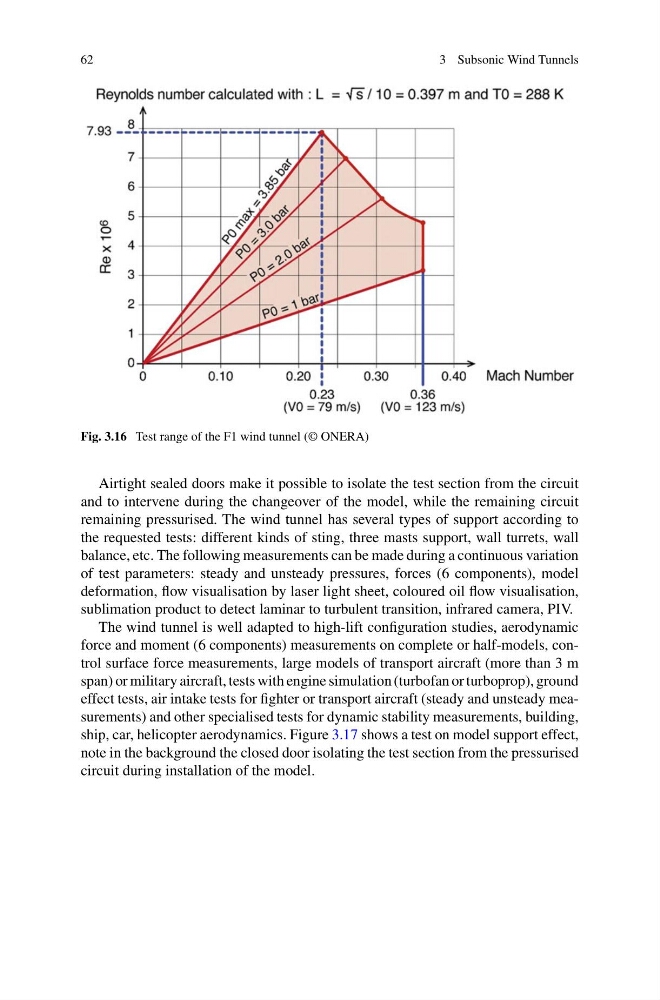
Fig. 3.16 Test range of the F1 wind tunnel (© ONERA)
Airtight sealed doors make it possible to isolate the test section from the circuit
and to intervene during the changeover of the model, while the remaining circuit
remaining pressurised. The wind tunnel has several types of support according to
the requested tests: different kinds of sting, three masts support, wall turrets, wall
balance, etc. The following measurements can be made during a continuous variation
of test parameters: steady and unsteady pressures, forces (6 components), model
deformation, flow visualisation by laser light sheet, coloured oil flow visualisation,
sublimation product to detect laminar to turbulent transition, infrared camera, PIV.
The wind tunnel is well adapted to high-lift configuration studies, aerodynamic
force and moment (6 components) measurements on complete or half-models, control surface force measurements, large models of transport aircraft (more than 3 m
span) or military aircraft, tests with engine simulation (turbofan or turboprop), ground
effect tests, air intake tests for fighter or transport aircraft (steady and unsteady measurements) and other specialised tests for dynamic stability measurements, building,
ship, car, helicopter aerodynamics. Figure 3.17 shows a test on model support effect,
note in the background the closed door isolating the test section from the pressurised
circuit during installation of the model.
3 Subsonic Wind Tunnels
Fig. 3.16 Test range of the F1 wind tunnel (© ONERA)
Airtight sealed doors make it possible to isolate the test section from the circuit
and to intervene during the changeover of the model, while the remaining circuit
remaining pressurised. The wind tunnel has several types of support according to
the requested tests: different kinds of sting, three masts support, wall turrets, wall
balance, etc. The following measurements can be made during a continuous variation
of test parameters: steady and unsteady pressures, forces (6 components), model
deformation, flow visualisation by laser light sheet, coloured oil flow visualisation,
sublimation product to detect laminar to turbulent transition, infrared camera, PIV.
The wind tunnel is well adapted to high-lift configuration studies, aerodynamic
force and moment (6 components) measurements on complete or half-models, control surface force measurements, large models of transport aircraft (more than 3 m
span) or military aircraft, tests with engine simulation (turbofan or turboprop), ground
effect tests, air intake tests for fighter or transport aircraft (steady and unsteady measurements) and other specialised tests for dynamic stability measurements, building,
ship, car, helicopter aerodynamics. Figure 3.17 shows a test on model support effect,
note in the background the closed door isolating the test section from the pressurised
circuit during installation of the model.