

220
9 Characterisation of Flow Properties at the Surface
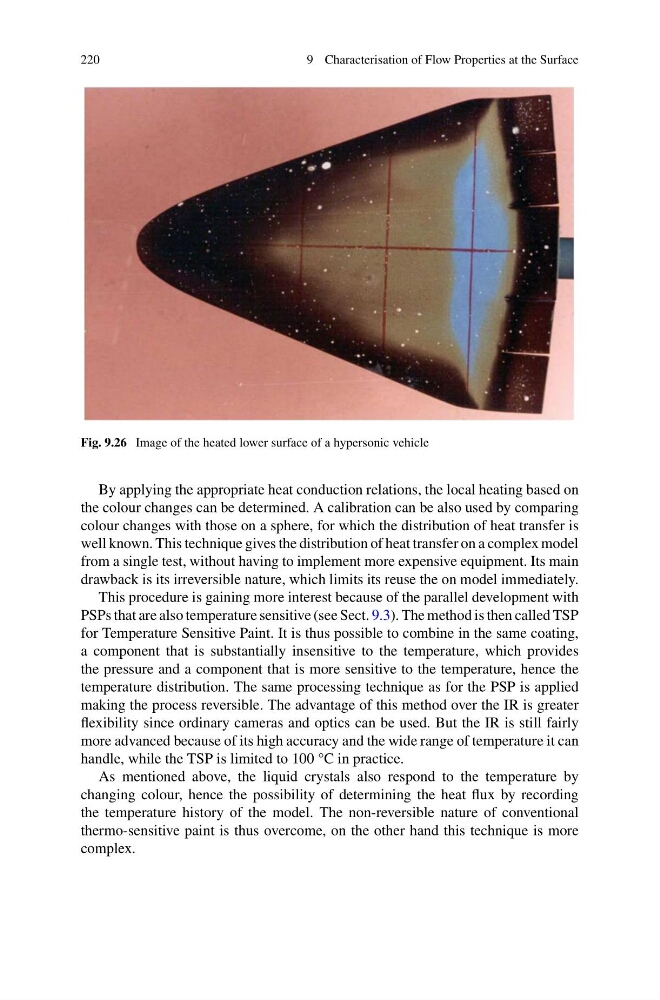
Fig. 9.26 Image of the heated lower surface of a hypersonic vehicle
By applying the appropriate heat conduction relations, the local heating based on
the colour changes can be determined. A calibration can be also used by comparing
colour changes with those on a sphere, for which the distribution of heat transfer is
well known. This technique gives the distribution of heat transfer on a complex model
from a single test, without having to implement more expensive equipment. Its main
drawback is its irreversible nature, which limits its reuse the on model immediately.
This procedure is gaining more interest because of the parallel development with
PSPs that are also temperature sensitive (see Sect. 9.3). The method is then called TSP
for Temperature Sensitive Paint. It is thus possible to combine in the same coating,
a component that is substantially insensitive to the temperature, which provides
the pressure and a component that is more sensitive to the temperature, hence the
temperature distribution. The same processing technique as for the PSP is applied
making the process reversible. The advantage of this method over the IR is greater
flexibility since ordinary cameras and optics can be used. But the IR is still fairly
more advanced because of its high accuracy and the wide range of temperature it can
handle, while the TSP is limited to 100 °C in practice.
As mentioned above, the liquid crystals also respond to the temperature by
changing colour, hence the possibility of determining the heat flux by recording
the temperature history of the model. The non-reversible nature of conventional
thermo-sensitive paint is thus overcome, on the other hand this technique is more
complex.
9 Characterisation of Flow Properties at the Surface
Fig. 9.26 Image of the heated lower surface of a hypersonic vehicle
By applying the appropriate heat conduction relations, the local heating based on
the colour changes can be determined. A calibration can be also used by comparing
colour changes with those on a sphere, for which the distribution of heat transfer is
well known. This technique gives the distribution of heat transfer on a complex model
from a single test, without having to implement more expensive equipment. Its main
drawback is its irreversible nature, which limits its reuse the on model immediately.
This procedure is gaining more interest because of the parallel development with
PSPs that are also temperature sensitive (see Sect. 9.3). The method is then called TSP
for Temperature Sensitive Paint. It is thus possible to combine in the same coating,
a component that is substantially insensitive to the temperature, which provides
the pressure and a component that is more sensitive to the temperature, hence the
temperature distribution. The same processing technique as for the PSP is applied
making the process reversible. The advantage of this method over the IR is greater
flexibility since ordinary cameras and optics can be used. But the IR is still fairly
more advanced because of its high accuracy and the wide range of temperature it can
handle, while the TSP is limited to 100 °C in practice.
As mentioned above, the liquid crystals also respond to the temperature by
changing colour, hence the possibility of determining the heat flux by recording
the temperature history of the model. The non-reversible nature of conventional
thermo-sensitive paint is thus overcome, on the other hand this technique is more
complex.