

6.2 Hypersonic “Cold” Wind Tunnels
137
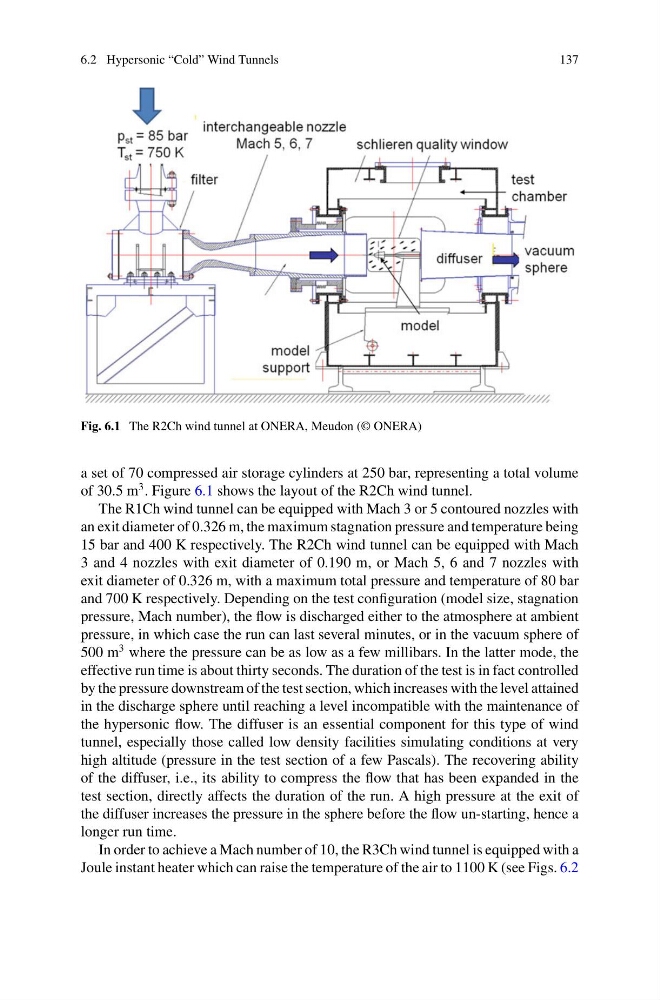
Fig. 6.1 The R2Ch wind tunnel at ONERA, Meudon (© ONERA)
a set of 70 compressed air storage cylinders at 250 bar, representing a total volume
of 30.5 m
3 . Figure 6.1 shows the layout of the R2Ch wind tunnel.
The R1Ch wind tunnel can be equipped with Mach 3 or 5 contoured nozzles with
an exit diameter of 0.326 m, the maximum stagnation pressure and temperature being
15 bar and 400 K respectively. The R2Ch wind tunnel can be equipped with Mach
3 and 4 nozzles with exit diameter of 0.190 m, or Mach 5, 6 and 7 nozzles with
exit diameter of 0.326 m, with a maximum total pressure and temperature of 80 bar
and 700 K respectively. Depending on the test configuration (model size, stagnation
pressure, Mach number), the flow is discharged either to the atmosphere at ambient
pressure, in which case the run can last several minutes, or in the vacuum sphere of
500 m
3 where the pressure can be as low as a few millibars. In the latter mode, the
effective run time is about thirty seconds. The duration of the test is in fact controlled
by the pressure downstream of the test section, which increases with the level attained
in the discharge sphere until reaching a level incompatible with the maintenance of
the hypersonic flow. The diffuser is an essential component for this type of wind
tunnel, especially those called low density facilities simulating conditions at very
high altitude (pressure in the test section of a few Pascals). The recovering ability
of the diffuser, i.e., its ability to compress the flow that has been expanded in the
test section, directly affects the duration of the run. A high pressure at the exit of
the diffuser increases the pressure in the sphere before the flow un-starting, hence a
longer run time.
In order to achieve a Mach number of 10, the R3Ch wind tunnel is equipped with a
Joule instant heater which can raise the temperature of the air to 1100 K (see Figs. 6.2
137
Fig. 6.1 The R2Ch wind tunnel at ONERA, Meudon (© ONERA)
a set of 70 compressed air storage cylinders at 250 bar, representing a total volume
of 30.5 m
3 . Figure 6.1 shows the layout of the R2Ch wind tunnel.
The R1Ch wind tunnel can be equipped with Mach 3 or 5 contoured nozzles with
an exit diameter of 0.326 m, the maximum stagnation pressure and temperature being
15 bar and 400 K respectively. The R2Ch wind tunnel can be equipped with Mach
3 and 4 nozzles with exit diameter of 0.190 m, or Mach 5, 6 and 7 nozzles with
exit diameter of 0.326 m, with a maximum total pressure and temperature of 80 bar
and 700 K respectively. Depending on the test configuration (model size, stagnation
pressure, Mach number), the flow is discharged either to the atmosphere at ambient
pressure, in which case the run can last several minutes, or in the vacuum sphere of
500 m
3 where the pressure can be as low as a few millibars. In the latter mode, the
effective run time is about thirty seconds. The duration of the test is in fact controlled
by the pressure downstream of the test section, which increases with the level attained
in the discharge sphere until reaching a level incompatible with the maintenance of
the hypersonic flow. The diffuser is an essential component for this type of wind
tunnel, especially those called low density facilities simulating conditions at very
high altitude (pressure in the test section of a few Pascals). The recovering ability
of the diffuser, i.e., its ability to compress the flow that has been expanded in the
test section, directly affects the duration of the run. A high pressure at the exit of
the diffuser increases the pressure in the sphere before the flow un-starting, hence a
longer run time.
In order to achieve a Mach number of 10, the R3Ch wind tunnel is equipped with a
Joule instant heater which can raise the temperature of the air to 1100 K (see Figs. 6.2