

2 Industrial Plant Oil Extraction
71
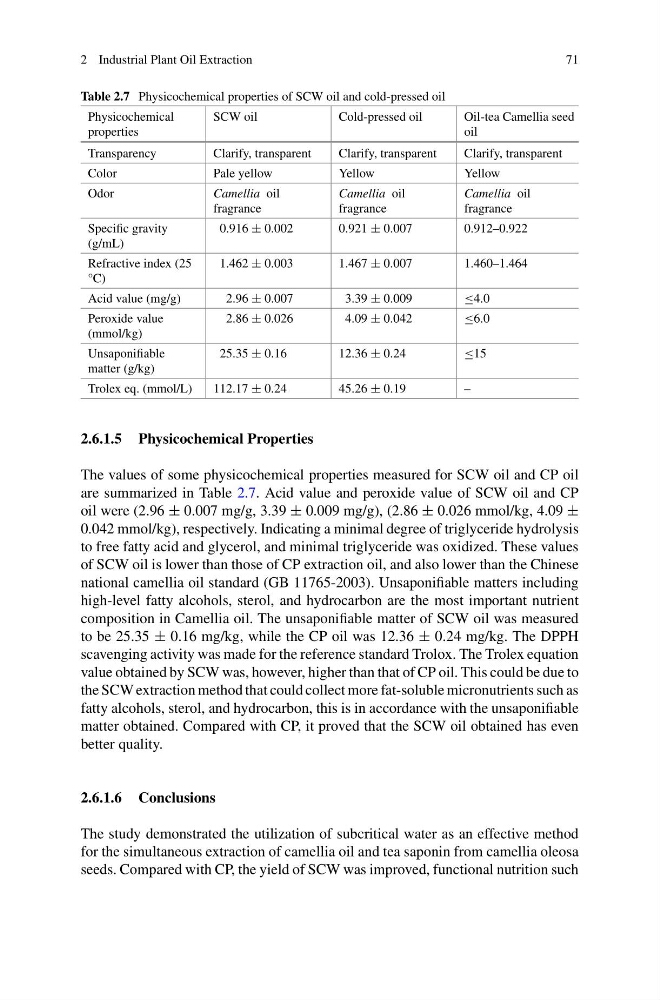
Table 2.7 Physicochemical properties of SCW oil and cold-pressed oil
Physicochemical
properties
SCW oil
Cold-pressed oil
Oil-tea Camellia seed
oil
Transparency
Clarify, transparent
Clarify, transparent
Clarify, transparent
Color
Pale yellow
Yellow
Yellow
Odor
Camellia oil
fragrance
Camellia oil
fragrance
Camellia oil
fragrance
Specific gravity
(g/mL)
0.916 ± 0.002
0.921 ± 0.007
0.912–0.922
Refractive index (25
°C)
1.462 ± 0.003
1.467 ± 0.007
1.460–1.464
Acid value (mg/g)
2.96 ± 0.007
3.39 ± 0.009
≤4.0
Peroxide value
(mmol/kg)
2.86 ± 0.026
4.09 ± 0.042
≤6.0
Unsaponifiable
matter (g/kg)
25.35 ± 0.16
12.36 ± 0.24
≤15
Trolex eq. (mmol/L)
112.17 ± 0.24
45.26 ± 0.19
–
2.6.1.5 Physicochemical Properties
The values of some physicochemical properties measured for SCW oil and CP oil
are summarized in Table 2.7. Acid value and peroxide value of SCW oil and CP
oil were (2.96 ± 0.007 mg/g, 3.39 ± 0.009 mg/g), (2.86 ± 0.026 mmol/kg, 4.09 ±
0.042 mmol/kg), respectively. Indicating a minimal degree of triglyceride hydrolysis
to free fatty acid and glycerol, and minimal triglyceride was oxidized. These values
of SCW oil is lower than those of CP extraction oil, and also lower than the Chinese
national camellia oil standard (GB 11765-2003). Unsaponifiable matters including
high-level fatty alcohols, sterol, and hydrocarbon are the most important nutrient
composition in Camellia oil. The unsaponifiable matter of SCW oil was measured
to be 25.35 ± 0.16 mg/kg, while the CP oil was 12.36 ± 0.24 mg/kg. The DPPH
scavenging activity was made for the reference standard Trolox. The Trolex equation
value obtained by SCW was, however, higher than that of CP oil. This could be due to
the SCW extraction method that could collect more fat-soluble micronutrients such as
fatty alcohols, sterol, and hydrocarbon, this is in accordance with the unsaponifiable
matter obtained. Compared with CP, it proved that the SCW oil obtained has even
better quality.
2.6.1.6 Conclusions
The study demonstrated the utilization of subcritical water as an effective method
for the simultaneous extraction of camellia oil and tea saponin from camellia oleosa
seeds. Compared with CP, the yield of SCW was improved, functional nutrition such
71
Table 2.7 Physicochemical properties of SCW oil and cold-pressed oil
Physicochemical
properties
SCW oil
Cold-pressed oil
Oil-tea Camellia seed
oil
Transparency
Clarify, transparent
Clarify, transparent
Clarify, transparent
Color
Pale yellow
Yellow
Yellow
Odor
Camellia oil
fragrance
Camellia oil
fragrance
Camellia oil
fragrance
Specific gravity
(g/mL)
0.916 ± 0.002
0.921 ± 0.007
0.912–0.922
Refractive index (25
°C)
1.462 ± 0.003
1.467 ± 0.007
1.460–1.464
Acid value (mg/g)
2.96 ± 0.007
3.39 ± 0.009
≤4.0
Peroxide value
(mmol/kg)
2.86 ± 0.026
4.09 ± 0.042
≤6.0
Unsaponifiable
matter (g/kg)
25.35 ± 0.16
12.36 ± 0.24
≤15
Trolex eq. (mmol/L)
112.17 ± 0.24
45.26 ± 0.19
–
2.6.1.5 Physicochemical Properties
The values of some physicochemical properties measured for SCW oil and CP oil
are summarized in Table 2.7. Acid value and peroxide value of SCW oil and CP
oil were (2.96 ± 0.007 mg/g, 3.39 ± 0.009 mg/g), (2.86 ± 0.026 mmol/kg, 4.09 ±
0.042 mmol/kg), respectively. Indicating a minimal degree of triglyceride hydrolysis
to free fatty acid and glycerol, and minimal triglyceride was oxidized. These values
of SCW oil is lower than those of CP extraction oil, and also lower than the Chinese
national camellia oil standard (GB 11765-2003). Unsaponifiable matters including
high-level fatty alcohols, sterol, and hydrocarbon are the most important nutrient
composition in Camellia oil. The unsaponifiable matter of SCW oil was measured
to be 25.35 ± 0.16 mg/kg, while the CP oil was 12.36 ± 0.24 mg/kg. The DPPH
scavenging activity was made for the reference standard Trolox. The Trolex equation
value obtained by SCW was, however, higher than that of CP oil. This could be due to
the SCW extraction method that could collect more fat-soluble micronutrients such as
fatty alcohols, sterol, and hydrocarbon, this is in accordance with the unsaponifiable
matter obtained. Compared with CP, it proved that the SCW oil obtained has even
better quality.
2.6.1.6 Conclusions
The study demonstrated the utilization of subcritical water as an effective method
for the simultaneous extraction of camellia oil and tea saponin from camellia oleosa
seeds. Compared with CP, the yield of SCW was improved, functional nutrition such