

238
R. Tesser et al.
Conversion to amide
N
C
O
OH
OH
Amide
+ Anhydride
+ Bisphenol/Resorcinol
N
C
O
O
OH
C R
O
C
O
OH
n
Polyesteramide
Polyetheramide
N
C
O
O
OH
R OH
n
O
O C
O
C
O
O
C
O
O
O C
O
C
O
O
C
O
O
O
O
O
O C
O
C
O
O
C
O
OH
OH
OH
OH
OH
OH
O
O C
O
C
O
O
C
O
Vegetable Oil (VO)
Epoxidation
Epoxidized Oil
Polyol
Hydroxylation
Ring opening
OH
O
O
OH OH
O
C
C
C
O
O
O
H
N
N
H
H
N
R'
N
C
O
R'
R' N
N C O
C O
Polyurethane
+ OCN-R'-NCO
Transesterif ication
OH
O C
O
HO
Monoglyceride
+ phtalic anhydride
O
O C
O
HO
C
O
C
OH
O
n
Alkyds
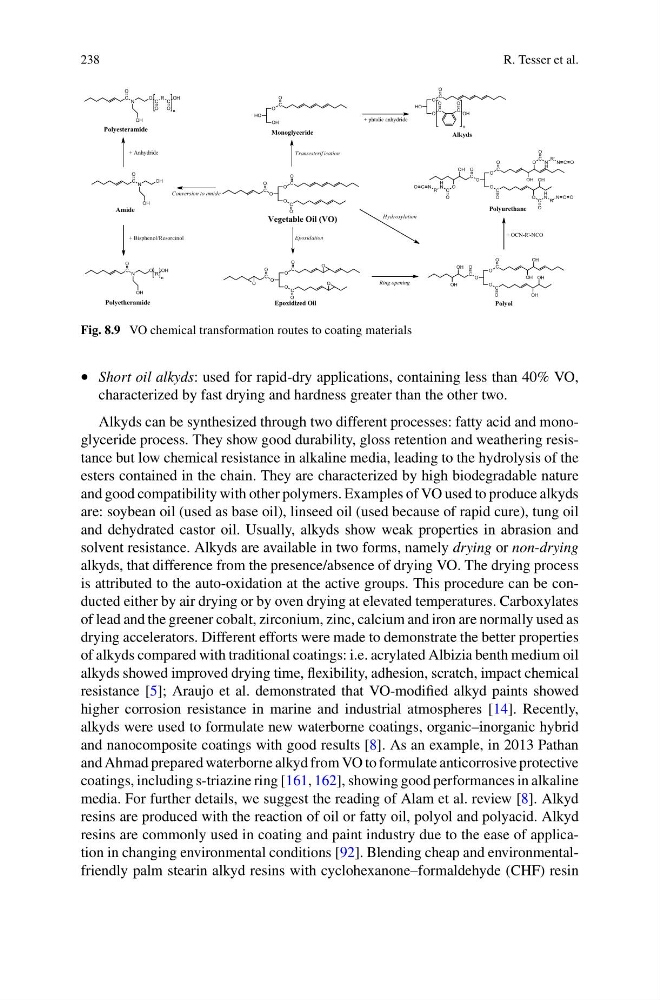
Fig. 8.9 VO chemical transformation routes to coating materials
• Short oil alkyds: used for rapid-dry applications, containing less than 40% VO,
characterized by fast drying and hardness greater than the other two.
Alkyds can be synthesized through two different processes: fatty acid and monoglyceride process. They show good durability, gloss retention and weathering resistance but low chemical resistance in alkaline media, leading to the hydrolysis of the
esters contained in the chain. They are characterized by high biodegradable nature
and good compatibility with other polymers. Examples of VO used to produce alkyds
are: soybean oil (used as base oil), linseed oil (used because of rapid cure), tung oil
and dehydrated castor oil. Usually, alkyds show weak properties in abrasion and
solvent resistance. Alkyds are available in two forms, namely drying or non-drying
alkyds, that difference from the presence/absence of drying VO. The drying process
is attributed to the auto-oxidation at the active groups. This procedure can be conducted either by air drying or by oven drying at elevated temperatures. Carboxylates
of lead and the greener cobalt, zirconium, zinc, calcium and iron are normally used as
drying accelerators. Different efforts were made to demonstrate the better properties
of alkyds compared with traditional coatings: i.e. acrylated Albizia benth medium oil
alkyds showed improved drying time, flexibility, adhesion, scratch, impact chemical
resistance [5]; Araujo et al. demonstrated that VO-modified alkyd paints showed
higher corrosion resistance in marine and industrial atmospheres [14]. Recently,
alkyds were used to formulate new waterborne coatings, organic–inorganic hybrid
and nanocomposite coatings with good results [8]. As an example, in 2013 Pathan
and Ahmad prepared waterborne alkyd from VO to formulate anticorrosive protective
coatings, including s-triazine ring [161, 162], showing good performances in alkaline
media. For further details, we suggest the reading of Alam et al. review [8]. Alkyd
resins are produced with the reaction of oil or fatty oil, polyol and polyacid. Alkyd
resins are commonly used in coating and paint industry due to the ease of application in changing environmental conditions [92]. Blending cheap and environmentalfriendly palm stearin alkyd resins with cyclohexanone–formaldehyde (CHF) resin
R. Tesser et al.
Conversion to amide
N
C
O
OH
OH
Amide
+ Anhydride
+ Bisphenol/Resorcinol
N
C
O
O
OH
C R
O
C
O
OH
n
Polyesteramide
Polyetheramide
N
C
O
O
OH
R OH
n
O
O C
O
C
O
O
C
O
O
O C
O
C
O
O
C
O
O
O
O
O
O C
O
C
O
O
C
O
OH
OH
OH
OH
OH
OH
O
O C
O
C
O
O
C
O
Vegetable Oil (VO)
Epoxidation
Epoxidized Oil
Polyol
Hydroxylation
Ring opening
OH
O
O
OH OH
O
C
C
C
O
O
O
H
N
N
H
H
N
R'
N
C
O
R'
R' N
N C O
C O
Polyurethane
+ OCN-R'-NCO
Transesterif ication
OH
O C
O
HO
Monoglyceride
+ phtalic anhydride
O
O C
O
HO
C
O
C
OH
O
n
Alkyds
Fig. 8.9 VO chemical transformation routes to coating materials
• Short oil alkyds: used for rapid-dry applications, containing less than 40% VO,
characterized by fast drying and hardness greater than the other two.
Alkyds can be synthesized through two different processes: fatty acid and monoglyceride process. They show good durability, gloss retention and weathering resistance but low chemical resistance in alkaline media, leading to the hydrolysis of the
esters contained in the chain. They are characterized by high biodegradable nature
and good compatibility with other polymers. Examples of VO used to produce alkyds
are: soybean oil (used as base oil), linseed oil (used because of rapid cure), tung oil
and dehydrated castor oil. Usually, alkyds show weak properties in abrasion and
solvent resistance. Alkyds are available in two forms, namely drying or non-drying
alkyds, that difference from the presence/absence of drying VO. The drying process
is attributed to the auto-oxidation at the active groups. This procedure can be conducted either by air drying or by oven drying at elevated temperatures. Carboxylates
of lead and the greener cobalt, zirconium, zinc, calcium and iron are normally used as
drying accelerators. Different efforts were made to demonstrate the better properties
of alkyds compared with traditional coatings: i.e. acrylated Albizia benth medium oil
alkyds showed improved drying time, flexibility, adhesion, scratch, impact chemical
resistance [5]; Araujo et al. demonstrated that VO-modified alkyd paints showed
higher corrosion resistance in marine and industrial atmospheres [14]. Recently,
alkyds were used to formulate new waterborne coatings, organic–inorganic hybrid
and nanocomposite coatings with good results [8]. As an example, in 2013 Pathan
and Ahmad prepared waterborne alkyd from VO to formulate anticorrosive protective
coatings, including s-triazine ring [161, 162], showing good performances in alkaline
media. For further details, we suggest the reading of Alam et al. review [8]. Alkyd
resins are produced with the reaction of oil or fatty oil, polyol and polyacid. Alkyd
resins are commonly used in coating and paint industry due to the ease of application in changing environmental conditions [92]. Blending cheap and environmentalfriendly palm stearin alkyd resins with cyclohexanone–formaldehyde (CHF) resin