

8 Oleochemistry Products
221
C
H 3
CH 3
CH 3
O
O
C
H 3
CH 2
O
CH 3
O
O
C
H 3
O
CH 3
O
H
C
H 3
CH 3
CH 3
C
H 3
CH 3
OH
CH 3
C
H 3
CH 3
OH
C
H 3
CH 3
CH 3
OH
CH 2
O
C
H 3
O
H
CH 3
C
H 3
CH 3
CH 3
C
H 2
CH 3
CH 3
C
H 3
CH 3
CH 3
C
H 3
CH 2
O
geraniol
eugenol
thymol
carvacrol
menthol
geranyl acetate
eugenyl acetate
trans-cinnamaldehyde
p-cymene
limonene
terpinene
carvone
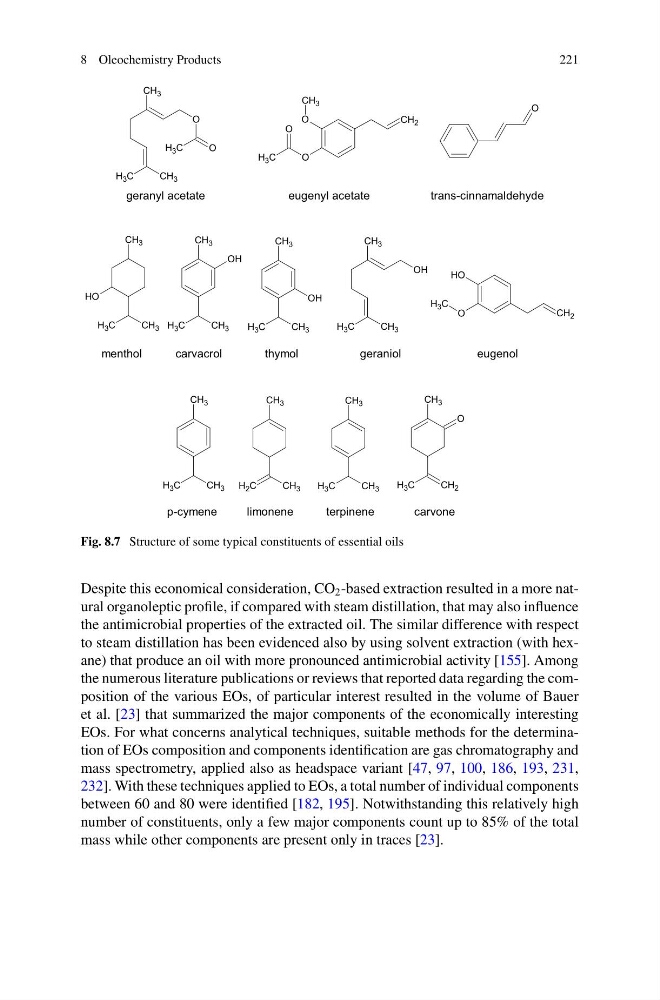
Fig. 8.7 Structure of some typical constituents of essential oils
Despite this economical consideration, CO 2 -based extraction resulted in a more natural organoleptic profile, if compared with steam distillation, that may also influence
the antimicrobial properties of the extracted oil. The similar difference with respect
to steam distillation has been evidenced also by using solvent extraction (with hexane) that produce an oil with more pronounced antimicrobial activity [155]. Among
the numerous literature publications or reviews that reported data regarding the composition of the various EOs, of particular interest resulted in the volume of Bauer
et al. [23] that summarized the major components of the economically interesting
EOs. For what concerns analytical techniques, suitable methods for the determination of EOs composition and components identification are gas chromatography and
mass spectrometry, applied also as headspace variant [47, 97, 100, 186, 193, 231,
232]. With these techniques applied to EOs, a total number of individual components
between 60 and 80 were identified [182, 195]. Notwithstanding this relatively high
number of constituents, only a few major components count up to 85% of the total
mass while other components are present only in traces [23].
221
C
H 3
CH 3
CH 3
O
O
C
H 3
CH 2
O
CH 3
O
O
C
H 3
O
CH 3
O
H
C
H 3
CH 3
CH 3
C
H 3
CH 3
OH
CH 3
C
H 3
CH 3
OH
C
H 3
CH 3
CH 3
OH
CH 2
O
C
H 3
O
H
CH 3
C
H 3
CH 3
CH 3
C
H 2
CH 3
CH 3
C
H 3
CH 3
CH 3
C
H 3
CH 2
O
geraniol
eugenol
thymol
carvacrol
menthol
geranyl acetate
eugenyl acetate
trans-cinnamaldehyde
p-cymene
limonene
terpinene
carvone
Fig. 8.7 Structure of some typical constituents of essential oils
Despite this economical consideration, CO 2 -based extraction resulted in a more natural organoleptic profile, if compared with steam distillation, that may also influence
the antimicrobial properties of the extracted oil. The similar difference with respect
to steam distillation has been evidenced also by using solvent extraction (with hexane) that produce an oil with more pronounced antimicrobial activity [155]. Among
the numerous literature publications or reviews that reported data regarding the composition of the various EOs, of particular interest resulted in the volume of Bauer
et al. [23] that summarized the major components of the economically interesting
EOs. For what concerns analytical techniques, suitable methods for the determination of EOs composition and components identification are gas chromatography and
mass spectrometry, applied also as headspace variant [47, 97, 100, 186, 193, 231,
232]. With these techniques applied to EOs, a total number of individual components
between 60 and 80 were identified [182, 195]. Notwithstanding this relatively high
number of constituents, only a few major components count up to 85% of the total
mass while other components are present only in traces [23].