

8 Oleochemistry Products
205
Microbial synthesis of oleochemicals has advanced significantly in the past
decade. Microbes have been engineered to convert renewable substrates to a wide
range of molecules that are ordinarily made from plant oils. This approach is attractive because it can reduce a motivation for converting tropical rainforest into farmland
while simultaneously enabling access to molecules that are currently expensive to
produce from oil crops. In the past decade, enzymes responsible for producing oleochemicals in nature have been identified, strategies to circumvent native regulation
have been developed, and high yielding strains have been designed, built and successfully demonstrated. Many studies have discussed the metabolic pathways that
lead to the diverse molecular features found in natural oleochemicals [165].
Natural lipid biosynthesis is regulated by enzymatic activity and leads to a broad
variety of oils in seeds and fruits in which a restricted subset of fatty acid compositions predominates and accounts for the traditional use of oils and fats in food
and oleochemical applications. Both genetic and environmental factors affect triacylglycerol (TAG) biochemistry. Manipulation of fatty acid and TAG synthesis for
the purpose of usability for both nutritional and industrial applications by means
of natural breeding methods and genetic engineering techniques rely on detailed
knowledge of biochemical pathways. The features of various oil recovery and refining techniques are outlined and the applications of unusual fatty acids are described
[21].
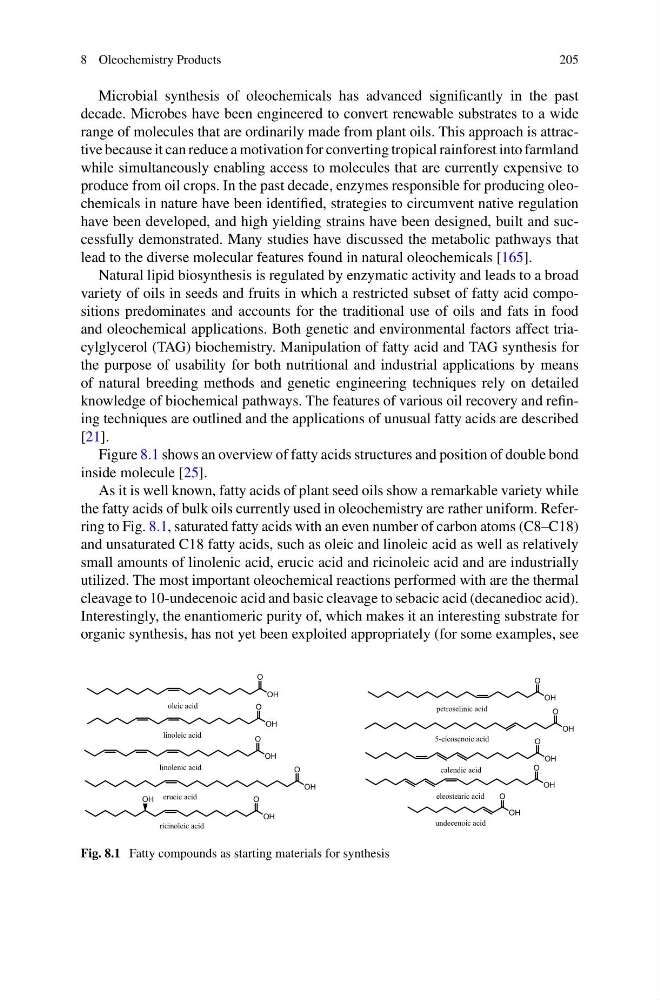
Figure 8.1 shows an overview of fatty acids structures and position of double bond
inside molecule [25].
As it is well known, fatty acids of plant seed oils show a remarkable variety while
the fatty acids of bulk oils currently used in oleochemistry are rather uniform. Referring to Fig. 8.1, saturated fatty acids with an even number of carbon atoms (C8–C18)
and unsaturated C18 fatty acids, such as oleic and linoleic acid as well as relatively
small amounts of linolenic acid, erucic acid and ricinoleic acid and are industrially
utilized. The most important oleochemical reactions performed with are the thermal
cleavage to 10-undecenoic acid and basic cleavage to sebacic acid (decanedioc acid).
Interestingly, the enantiomeric purity of, which makes it an interesting substrate for
organic synthesis, has not yet been exploited appropriately (for some examples, see
O
OH
oleic acid
O
OH
linoleic acid
O
OH
linolenic acid
O
OH
erucic acid
OH
O
OH
ricinoleic acid
O
OH
petroselinic acid
O
OH
5-eicosenoic acid
O
OH
calendic acid
O
OH
eleostearic acid
O
OH
undecenoic acid
Fig. 8.1 Fatty compounds as starting materials for synthesis
205
Microbial synthesis of oleochemicals has advanced significantly in the past
decade. Microbes have been engineered to convert renewable substrates to a wide
range of molecules that are ordinarily made from plant oils. This approach is attractive because it can reduce a motivation for converting tropical rainforest into farmland
while simultaneously enabling access to molecules that are currently expensive to
produce from oil crops. In the past decade, enzymes responsible for producing oleochemicals in nature have been identified, strategies to circumvent native regulation
have been developed, and high yielding strains have been designed, built and successfully demonstrated. Many studies have discussed the metabolic pathways that
lead to the diverse molecular features found in natural oleochemicals [165].
Natural lipid biosynthesis is regulated by enzymatic activity and leads to a broad
variety of oils in seeds and fruits in which a restricted subset of fatty acid compositions predominates and accounts for the traditional use of oils and fats in food
and oleochemical applications. Both genetic and environmental factors affect triacylglycerol (TAG) biochemistry. Manipulation of fatty acid and TAG synthesis for
the purpose of usability for both nutritional and industrial applications by means
of natural breeding methods and genetic engineering techniques rely on detailed
knowledge of biochemical pathways. The features of various oil recovery and refining techniques are outlined and the applications of unusual fatty acids are described
[21].
Figure 8.1 shows an overview of fatty acids structures and position of double bond
inside molecule [25].
As it is well known, fatty acids of plant seed oils show a remarkable variety while
the fatty acids of bulk oils currently used in oleochemistry are rather uniform. Referring to Fig. 8.1, saturated fatty acids with an even number of carbon atoms (C8–C18)
and unsaturated C18 fatty acids, such as oleic and linoleic acid as well as relatively
small amounts of linolenic acid, erucic acid and ricinoleic acid and are industrially
utilized. The most important oleochemical reactions performed with are the thermal
cleavage to 10-undecenoic acid and basic cleavage to sebacic acid (decanedioc acid).
Interestingly, the enantiomeric purity of, which makes it an interesting substrate for
organic synthesis, has not yet been exploited appropriately (for some examples, see
O
OH
oleic acid
O
OH
linoleic acid
O
OH
linolenic acid
O
OH
erucic acid
OH
O
OH
ricinoleic acid
O
OH
petroselinic acid
O
OH
5-eicosenoic acid
O
OH
calendic acid
O
OH
eleostearic acid
O
OH
undecenoic acid
Fig. 8.1 Fatty compounds as starting materials for synthesis