

5 Principle and Processing of Biodiesel Production
141
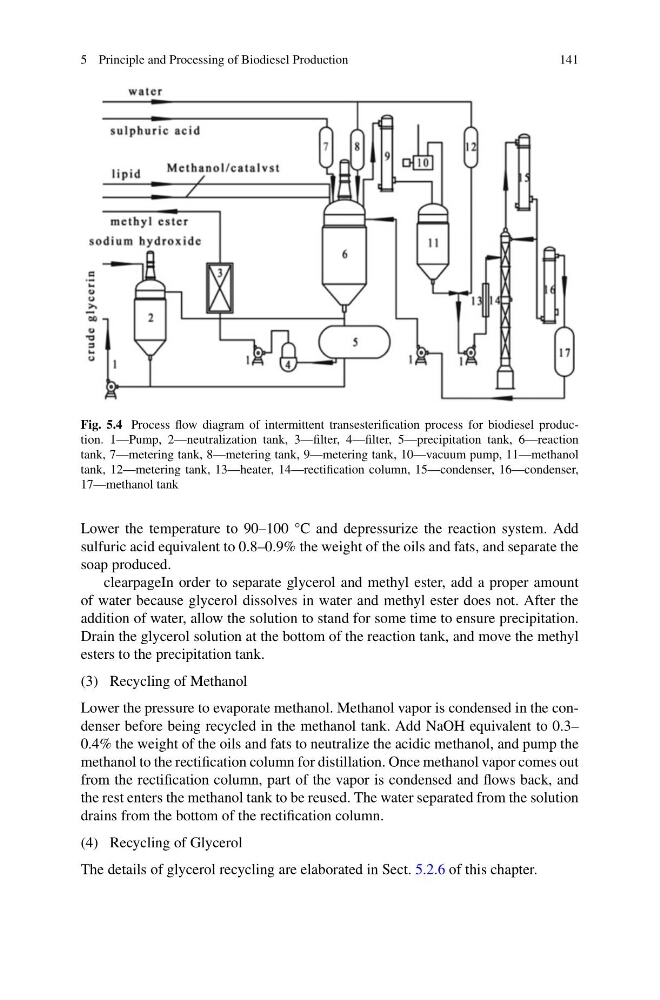
Fig. 5.4 Process flow diagram of intermittent transesterification process for biodiesel production. 1—Pump, 2—neutralization tank, 3—filter, 4—filter, 5—precipitation tank, 6—reaction
tank, 7—metering tank, 8—metering tank, 9—metering tank, 10—vacuum pump, 11—methanol
tank, 12—metering tank, 13—heater, 14—rectification column, 15—condenser, 16—condenser,
17—methanol tank
Lower the temperature to 90–100 °C and depressurize the reaction system. Add
sulfuric acid equivalent to 0.8–0.9% the weight of the oils and fats, and separate the
soap produced.
clearpageIn order to separate glycerol and methyl ester, add a proper amount
of water because glycerol dissolves in water and methyl ester does not. After the
addition of water, allow the solution to stand for some time to ensure precipitation.
Drain the glycerol solution at the bottom of the reaction tank, and move the methyl
esters to the precipitation tank.
(3) Recycling of Methanol
Lower the pressure to evaporate methanol. Methanol vapor is condensed in the condenser before being recycled in the methanol tank. Add NaOH equivalent to 0.3–
0.4% the weight of the oils and fats to neutralize the acidic methanol, and pump the
methanol to the rectification column for distillation. Once methanol vapor comes out
from the rectification column, part of the vapor is condensed and flows back, and
the rest enters the methanol tank to be reused. The water separated from the solution
drains from the bottom of the rectification column.
(4) Recycling of Glycerol
The details of glycerol recycling are elaborated in Sect. 5.2.6 of this chapter.
141
Fig. 5.4 Process flow diagram of intermittent transesterification process for biodiesel production. 1—Pump, 2—neutralization tank, 3—filter, 4—filter, 5—precipitation tank, 6—reaction
tank, 7—metering tank, 8—metering tank, 9—metering tank, 10—vacuum pump, 11—methanol
tank, 12—metering tank, 13—heater, 14—rectification column, 15—condenser, 16—condenser,
17—methanol tank
Lower the temperature to 90–100 °C and depressurize the reaction system. Add
sulfuric acid equivalent to 0.8–0.9% the weight of the oils and fats, and separate the
soap produced.
clearpageIn order to separate glycerol and methyl ester, add a proper amount
of water because glycerol dissolves in water and methyl ester does not. After the
addition of water, allow the solution to stand for some time to ensure precipitation.
Drain the glycerol solution at the bottom of the reaction tank, and move the methyl
esters to the precipitation tank.
(3) Recycling of Methanol
Lower the pressure to evaporate methanol. Methanol vapor is condensed in the condenser before being recycled in the methanol tank. Add NaOH equivalent to 0.3–
0.4% the weight of the oils and fats to neutralize the acidic methanol, and pump the
methanol to the rectification column for distillation. Once methanol vapor comes out
from the rectification column, part of the vapor is condensed and flows back, and
the rest enters the methanol tank to be reused. The water separated from the solution
drains from the bottom of the rectification column.
(4) Recycling of Glycerol
The details of glycerol recycling are elaborated in Sect. 5.2.6 of this chapter.