

116
C. Li et al.
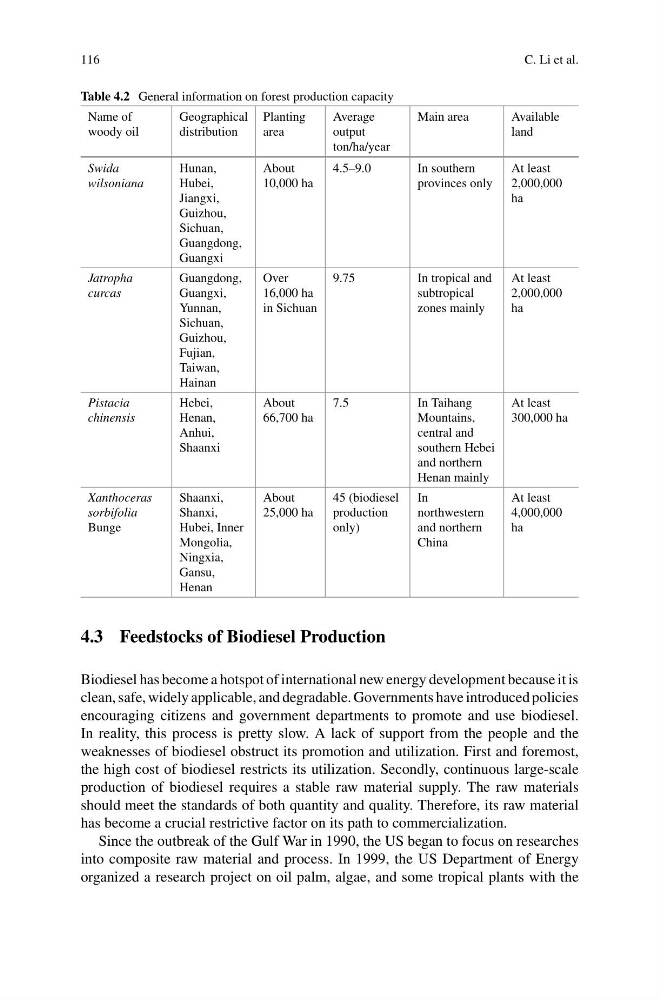
Table 4.2 General information on forest production capacity
Name of
woody oil
Geographical
distribution
Planting
area
Average
output
ton/ha/year
Main area
Available
land
Swida
wilsoniana
Hunan,
Hubei,
Jiangxi,
Guizhou,
Sichuan,
Guangdong,
Guangxi
About
10,000 ha
4.5–9.0
In southern
provinces only
At least
2,000,000
ha
Jatropha
curcas
Guangdong,
Guangxi,
Yunnan,
Sichuan,
Guizhou,
Fujian,
Taiwan,
Hainan
Over
16,000 ha
in Sichuan
9.75
In tropical and
subtropical
zones mainly
At least
2,000,000
ha
Pistacia
chinensis
Hebei,
Henan,
Anhui,
Shaanxi
About
66,700 ha
7.5
In Taihang
Mountains,
central and
southern Hebei
and northern
Henan mainly
At least
300,000 ha
Xanthoceras
sorbifolia
Bunge
Shaanxi,
Shanxi,
Hubei, Inner
Mongolia,
Ningxia,
Gansu,
Henan
About
25,000 ha
45 (biodiesel
production
only)
In
northwestern
and northern
China
At least
4,000,000
ha
4.3 Feedstocks of Biodiesel Production
Biodiesel has become a hotspot of international new energy development because it is
clean, safe, widely applicable, and degradable. Governments have introduced policies
encouraging citizens and government departments to promote and use biodiesel.
In reality, this process is pretty slow. A lack of support from the people and the
weaknesses of biodiesel obstruct its promotion and utilization. First and foremost,
the high cost of biodiesel restricts its utilization. Secondly, continuous large-scale
production of biodiesel requires a stable raw material supply. The raw materials
should meet the standards of both quantity and quality. Therefore, its raw material
has become a crucial restrictive factor on its path to commercialization.
Since the outbreak of the Gulf War in 1990, the US began to focus on researches
into composite raw material and process. In 1999, the US Department of Energy
organized a research project on oil palm, algae, and some tropical plants with the
C. Li et al.
Table 4.2 General information on forest production capacity
Name of
woody oil
Geographical
distribution
Planting
area
Average
output
ton/ha/year
Main area
Available
land
Swida
wilsoniana
Hunan,
Hubei,
Jiangxi,
Guizhou,
Sichuan,
Guangdong,
Guangxi
About
10,000 ha
4.5–9.0
In southern
provinces only
At least
2,000,000
ha
Jatropha
curcas
Guangdong,
Guangxi,
Yunnan,
Sichuan,
Guizhou,
Fujian,
Taiwan,
Hainan
Over
16,000 ha
in Sichuan
9.75
In tropical and
subtropical
zones mainly
At least
2,000,000
ha
Pistacia
chinensis
Hebei,
Henan,
Anhui,
Shaanxi
About
66,700 ha
7.5
In Taihang
Mountains,
central and
southern Hebei
and northern
Henan mainly
At least
300,000 ha
Xanthoceras
sorbifolia
Bunge
Shaanxi,
Shanxi,
Hubei, Inner
Mongolia,
Ningxia,
Gansu,
Henan
About
25,000 ha
45 (biodiesel
production
only)
In
northwestern
and northern
China
At least
4,000,000
ha
4.3 Feedstocks of Biodiesel Production
Biodiesel has become a hotspot of international new energy development because it is
clean, safe, widely applicable, and degradable. Governments have introduced policies
encouraging citizens and government departments to promote and use biodiesel.
In reality, this process is pretty slow. A lack of support from the people and the
weaknesses of biodiesel obstruct its promotion and utilization. First and foremost,
the high cost of biodiesel restricts its utilization. Secondly, continuous large-scale
production of biodiesel requires a stable raw material supply. The raw materials
should meet the standards of both quantity and quality. Therefore, its raw material
has become a crucial restrictive factor on its path to commercialization.
Since the outbreak of the Gulf War in 1990, the US began to focus on researches
into composite raw material and process. In 1999, the US Department of Energy
organized a research project on oil palm, algae, and some tropical plants with the