

4 Current Status of the Biodiesel Industry and Its Assessment …
113
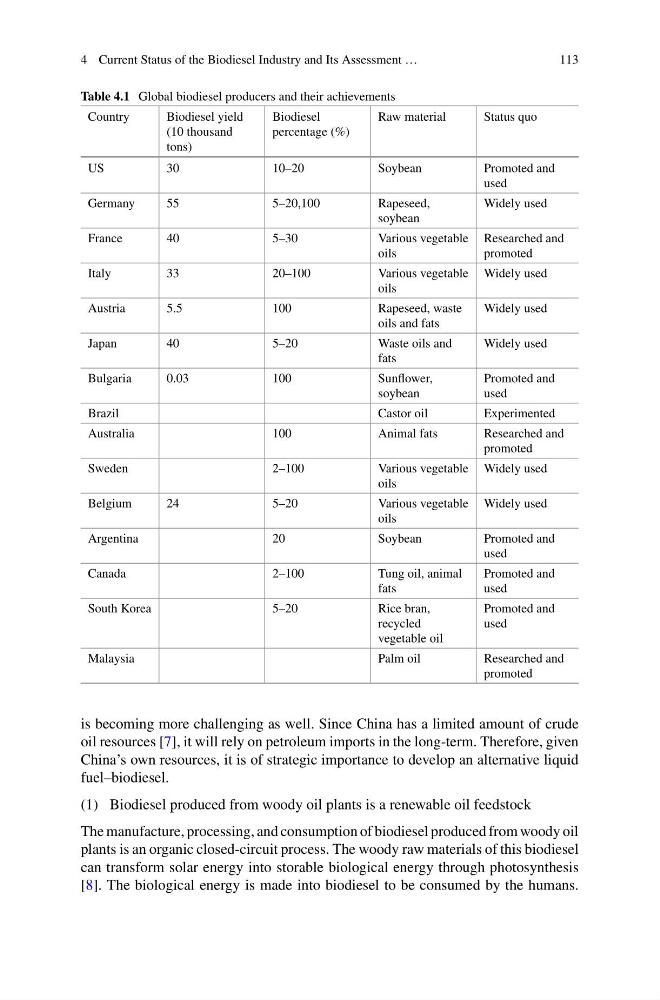
Table 4.1 Global biodiesel producers and their achievements
Country
Biodiesel yield
(10 thousand
tons)
Biodiesel
percentage (%)
Raw material
Status quo
US
30
10–20
Soybean
Promoted and
used
Germany
55
5–20,100
Rapeseed,
soybean
Widely used
France
40
5–30
Various vegetable
oils
Researched and
promoted
Italy
33
20–100
Various vegetable
oils
Widely used
Austria
5.5
100
Rapeseed, waste
oils and fats
Widely used
Japan
40
5–20
Waste oils and
fats
Widely used
Bulgaria
0.03
100
Sunflower,
soybean
Promoted and
used
Brazil
Castor oil
Experimented
Australia
100
Animal fats
Researched and
promoted
Sweden
2–100
Various vegetable
oils
Widely used
Belgium
24
5–20
Various vegetable
oils
Widely used
Argentina
20
Soybean
Promoted and
used
Canada
2–100
Tung oil, animal
fats
Promoted and
used
South Korea
5–20
Rice bran,
recycled
vegetable oil
Promoted and
used
Malaysia
Palm oil
Researched and
promoted
is becoming more challenging as well. Since China has a limited amount of crude
oil resources [7], it will rely on petroleum imports in the long-term. Therefore, given
China’s own resources, it is of strategic importance to develop an alternative liquid
fuel–biodiesel.
(1) Biodiesel produced from woody oil plants is a renewable oil feedstock
The manufacture, processing, and consumption of biodiesel produced from woody oil
plants is an organic closed-circuit process. The woody raw materials of this biodiesel
can transform solar energy into storable biological energy through photosynthesis
[8]. The biological energy is made into biodiesel to be consumed by the humans.
113
Table 4.1 Global biodiesel producers and their achievements
Country
Biodiesel yield
(10 thousand
tons)
Biodiesel
percentage (%)
Raw material
Status quo
US
30
10–20
Soybean
Promoted and
used
Germany
55
5–20,100
Rapeseed,
soybean
Widely used
France
40
5–30
Various vegetable
oils
Researched and
promoted
Italy
33
20–100
Various vegetable
oils
Widely used
Austria
5.5
100
Rapeseed, waste
oils and fats
Widely used
Japan
40
5–20
Waste oils and
fats
Widely used
Bulgaria
0.03
100
Sunflower,
soybean
Promoted and
used
Brazil
Castor oil
Experimented
Australia
100
Animal fats
Researched and
promoted
Sweden
2–100
Various vegetable
oils
Widely used
Belgium
24
5–20
Various vegetable
oils
Widely used
Argentina
20
Soybean
Promoted and
used
Canada
2–100
Tung oil, animal
fats
Promoted and
used
South Korea
5–20
Rice bran,
recycled
vegetable oil
Promoted and
used
Malaysia
Palm oil
Researched and
promoted
is becoming more challenging as well. Since China has a limited amount of crude
oil resources [7], it will rely on petroleum imports in the long-term. Therefore, given
China’s own resources, it is of strategic importance to develop an alternative liquid
fuel–biodiesel.
(1) Biodiesel produced from woody oil plants is a renewable oil feedstock
The manufacture, processing, and consumption of biodiesel produced from woody oil
plants is an organic closed-circuit process. The woody raw materials of this biodiesel
can transform solar energy into storable biological energy through photosynthesis
[8]. The biological energy is made into biodiesel to be consumed by the humans.