

8.4 Microwave Weapons for Atmospheric and Space Applications
785
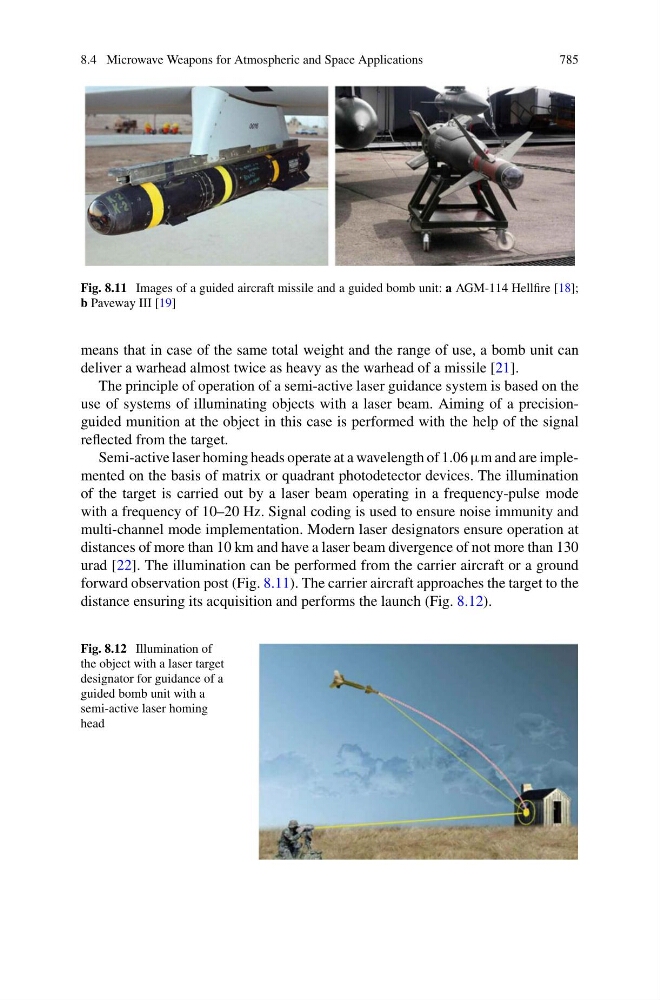
Fig. 8.11 Images of a guided aircraft missile and a guided bomb unit: a AGM-114 Hellfire [18];
b Paveway III [19]
means that in case of the same total weight and the range of use, a bomb unit can
deliver a warhead almost twice as heavy as the warhead of a missile [21].
The principle of operation of a semi-active laser guidance system is based on the
use of systems of illuminating objects with a laser beam. Aiming of a precisionguided munition at the object in this case is performed with the help of the signal
reflected from the target.
Semi-active laser homing heads operate at a wavelength of 1.06 µm and are implemented on the basis of matrix or quadrant photodetector devices. The illumination
of the target is carried out by a laser beam operating in a frequency-pulse mode
with a frequency of 10–20 Hz. Signal coding is used to ensure noise immunity and
multi-channel mode implementation. Modern laser designators ensure operation at
distances of more than 10 km and have a laser beam divergence of not more than 130
urad [22]. The illumination can be performed from the carrier aircraft or a ground
forward observation post (Fig. 8.11). The carrier aircraft approaches the target to the
distance ensuring its acquisition and performs the launch (Fig. 8.12).
Fig. 8.12 Illumination of
the object with a laser target
designator for guidance of a
guided bomb unit with a
semi-active laser homing
head