

54
1 Information Weapon: Concepts, Means, Methods …
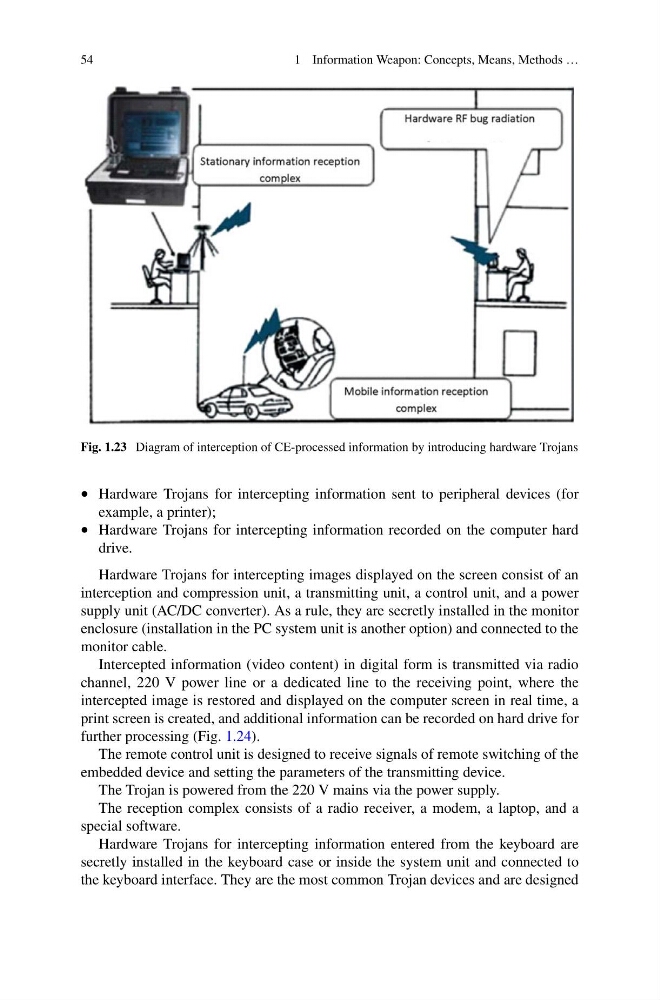
Fig. 1.23 Diagram of interception of CE-processed information by introducing hardware Trojans
• Hardware Trojans for intercepting information sent to peripheral devices (for
example, a printer);
• Hardware Trojans for intercepting information recorded on the computer hard
drive.
Hardware Trojans for intercepting images displayed on the screen consist of an
interception and compression unit, a transmitting unit, a control unit, and a power
supply unit (AC/DC converter). As a rule, they are secretly installed in the monitor
enclosure (installation in the PC system unit is another option) and connected to the
monitor cable.
Intercepted information (video content) in digital form is transmitted via radio
channel, 220 V power line or a dedicated line to the receiving point, where the
intercepted image is restored and displayed on the computer screen in real time, a
print screen is created, and additional information can be recorded on hard drive for
further processing (Fig. 1.24).
The remote control unit is designed to receive signals of remote switching of the
embedded device and setting the parameters of the transmitting device.
The Trojan is powered from the 220 V mains via the power supply.
The reception complex consists of a radio receiver, a modem, a laptop, and a
special software.
Hardware Trojans for intercepting information entered from the keyboard are
secretly installed in the keyboard case or inside the system unit and connected to
the keyboard interface. They are the most common Trojan devices and are designed
1 Information Weapon: Concepts, Means, Methods …
Fig. 1.23 Diagram of interception of CE-processed information by introducing hardware Trojans
• Hardware Trojans for intercepting information sent to peripheral devices (for
example, a printer);
• Hardware Trojans for intercepting information recorded on the computer hard
drive.
Hardware Trojans for intercepting images displayed on the screen consist of an
interception and compression unit, a transmitting unit, a control unit, and a power
supply unit (AC/DC converter). As a rule, they are secretly installed in the monitor
enclosure (installation in the PC system unit is another option) and connected to the
monitor cable.
Intercepted information (video content) in digital form is transmitted via radio
channel, 220 V power line or a dedicated line to the receiving point, where the
intercepted image is restored and displayed on the computer screen in real time, a
print screen is created, and additional information can be recorded on hard drive for
further processing (Fig. 1.24).
The remote control unit is designed to receive signals of remote switching of the
embedded device and setting the parameters of the transmitting device.
The Trojan is powered from the 220 V mains via the power supply.
The reception complex consists of a radio receiver, a modem, a laptop, and a
special software.
Hardware Trojans for intercepting information entered from the keyboard are
secretly installed in the keyboard case or inside the system unit and connected to
the keyboard interface. They are the most common Trojan devices and are designed