

732
8 Modern Weapons: Possibilities and Limitations
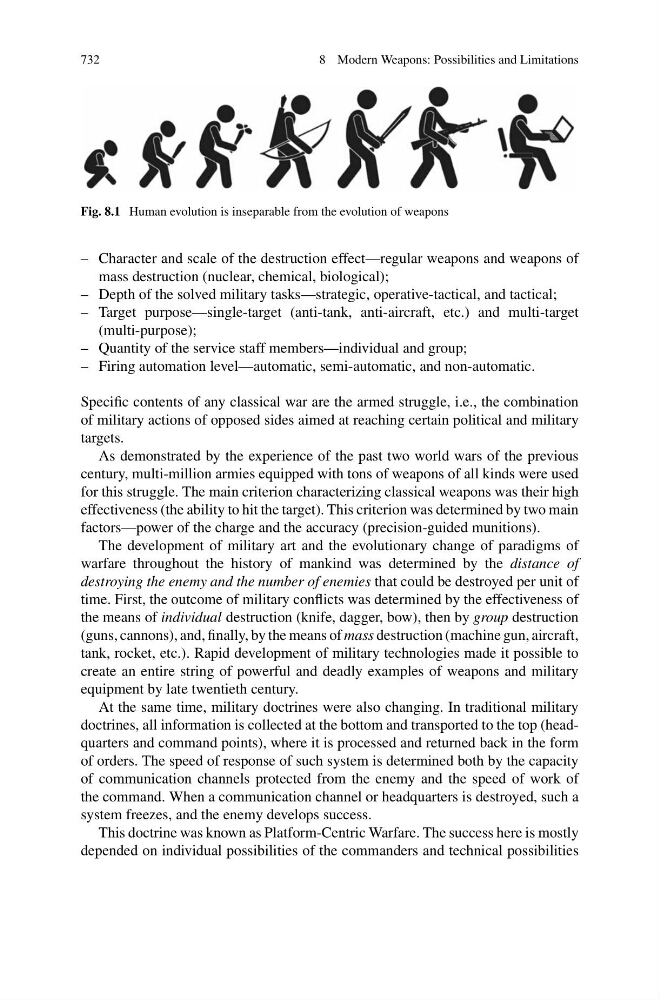
Fig. 8.1 Human evolution is inseparable from the evolution of weapons
– Character and scale of the destruction effect—regular weapons and weapons of
mass destruction (nuclear, chemical, biological);
– Depth of the solved military tasks—strategic, operative-tactical, and tactical;
– Target purpose—single-target (anti-tank, anti-aircraft, etc.) and multi-target
(multi-purpose);
– Quantity of the service staff members—individual and group;
– Firing automation level—automatic, semi-automatic, and non-automatic.
Specific contents of any classical war are the armed struggle, i.e., the combination
of military actions of opposed sides aimed at reaching certain political and military
targets.
As demonstrated by the experience of the past two world wars of the previous
century, multi-million armies equipped with tons of weapons of all kinds were used
for this struggle. The main criterion characterizing classical weapons was their high
effectiveness (the ability to hit the target). This criterion was determined by two main
factors—power of the charge and the accuracy (precision-guided munitions).
The development of military art and the evolutionary change of paradigms of
warfare throughout the history of mankind was determined by the distance of
destroying the enemy and the number of enemies that could be destroyed per unit of
time. First, the outcome of military conflicts was determined by the effectiveness of
the means of individual destruction (knife, dagger, bow), then by group destruction
(guns, cannons), and, finally, by the means of mass destruction (machine gun, aircraft,
tank, rocket, etc.). Rapid development of military technologies made it possible to
create an entire string of powerful and deadly examples of weapons and military
equipment by late twentieth century.
At the same time, military doctrines were also changing. In traditional military
doctrines, all information is collected at the bottom and transported to the top (headquarters and command points), where it is processed and returned back in the form
of orders. The speed of response of such system is determined both by the capacity
of communication channels protected from the enemy and the speed of work of
the command. When a communication channel or headquarters is destroyed, such a
system freezes, and the enemy develops success.
This doctrine was known as Platform-Centric Warfare. The success here is mostly
depended on individual possibilities of the commanders and technical possibilities