

6.2 Features of Providing Intellectual Property Rights …
519
Number of patents
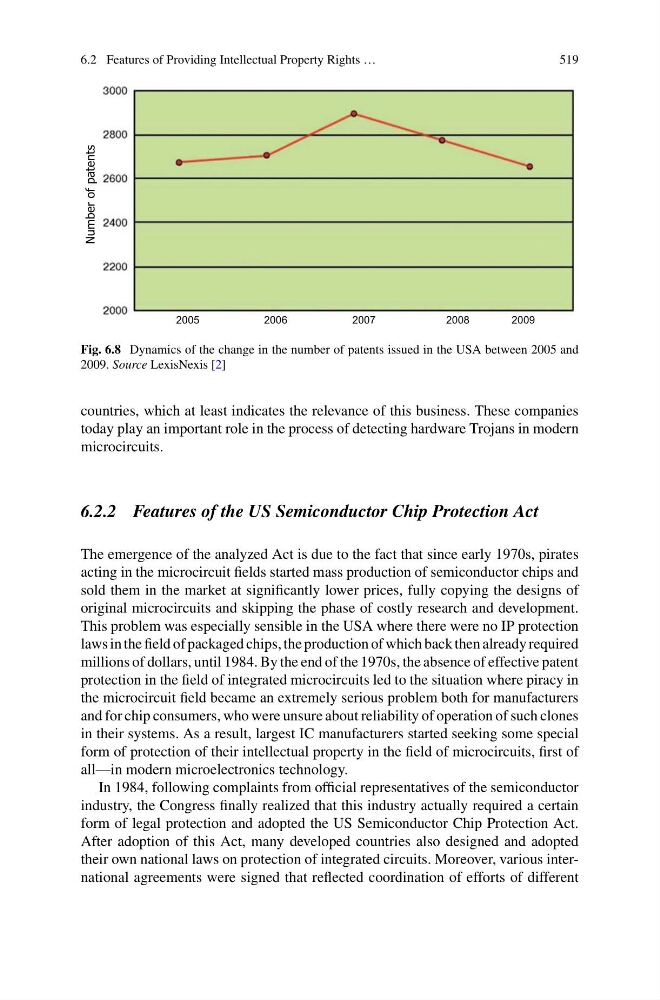
Fig. 6.8 Dynamics of the change in the number of patents issued in the USA between 2005 and
2009. Source LexisNexis [2]
countries, which at least indicates the relevance of this business. These companies
today play an important role in the process of detecting hardware Trojans in modern
microcircuits.
6.2.2 Features of the US Semiconductor Chip Protection Act
The emergence of the analyzed Act is due to the fact that since early 1970s, pirates
acting in the microcircuit fields started mass production of semiconductor chips and
sold them in the market at significantly lower prices, fully copying the designs of
original microcircuits and skipping the phase of costly research and development.
This problem was especially sensible in the USA where there were no IP protection
laws in the field of packaged chips, the production of which back then already required
millions of dollars, until 1984. By the end of the 1970s, the absence of effective patent
protection in the field of integrated microcircuits led to the situation where piracy in
the microcircuit field became an extremely serious problem both for manufacturers
and for chip consumers, who were unsure about reliability of operation of such clones
in their systems. As a result, largest IC manufacturers started seeking some special
form of protection of their intellectual property in the field of microcircuits, first of
all—in modern microelectronics technology.
In 1984, following complaints from official representatives of the semiconductor
industry, the Congress finally realized that this industry actually required a certain
form of legal protection and adopted the US Semiconductor Chip Protection Act.
After adoption of this Act, many developed countries also designed and adopted
their own national laws on protection of integrated circuits. Moreover, various international agreements were signed that reflected coordination of efforts of different
519
Number of patents
Fig. 6.8 Dynamics of the change in the number of patents issued in the USA between 2005 and
2009. Source LexisNexis [2]
countries, which at least indicates the relevance of this business. These companies
today play an important role in the process of detecting hardware Trojans in modern
microcircuits.
6.2.2 Features of the US Semiconductor Chip Protection Act
The emergence of the analyzed Act is due to the fact that since early 1970s, pirates
acting in the microcircuit fields started mass production of semiconductor chips and
sold them in the market at significantly lower prices, fully copying the designs of
original microcircuits and skipping the phase of costly research and development.
This problem was especially sensible in the USA where there were no IP protection
laws in the field of packaged chips, the production of which back then already required
millions of dollars, until 1984. By the end of the 1970s, the absence of effective patent
protection in the field of integrated microcircuits led to the situation where piracy in
the microcircuit field became an extremely serious problem both for manufacturers
and for chip consumers, who were unsure about reliability of operation of such clones
in their systems. As a result, largest IC manufacturers started seeking some special
form of protection of their intellectual property in the field of microcircuits, first of
all—in modern microelectronics technology.
In 1984, following complaints from official representatives of the semiconductor
industry, the Congress finally realized that this industry actually required a certain
form of legal protection and adopted the US Semiconductor Chip Protection Act.
After adoption of this Act, many developed countries also designed and adopted
their own national laws on protection of integrated circuits. Moreover, various international agreements were signed that reflected coordination of efforts of different