

426
4 Hardware Trojans in Microcircuits
attempt to detect the existence of Trojans in ICs that are manufactured at the untrusted
foundries. One of the initial provisions here is that the design, layout, and testing
steps of the design flow shown in Fig. 4.68 are trusted, and the only untrusted stage
is the IC fabrication at the foundry.
These techniques are primarily related to attack model B. If SoC developers can
ensure the reliability of their design using presilicon techniques, the presilicon and
postsilicon detection techniques can work together to address attacks in model F.
The techniques of the design-for-trust method are used to eliminate potential threats
of Trojan insertion at the design phase, so split manufacturing techniques rely on the
BEOL (formation of the interconnections and interlayer wiring) portion fabricated
by trusted foundries.
4.11.4.3 Analysis of the Main Trends in Hardware Trojans Research
Hundreds of papers and articles have been published in the last decade. In order to
analyze the research trends, the authors searched all publications with the keywords
of “hardware Trojan” in the IEEE Xplore digital library. The authors [259] believe
that the publications in IEEE Xplore are representative and objective for the research
carried out by the IC hardware security community and they can provide an overview
of the current status of research work. In total, 228 different papers published from
2007 to 2014 were found. The authors [259] classified them according to the attack
models, the proposed types of attack, and countermeasures. The trends outlined below
will give an idea to readers about which directions have been explored intensively
and which directions are still promising.
The classification of main countermeasures against hardware Trojans is given
above [259]. Each countermeasure targets one or more threat models as shown in
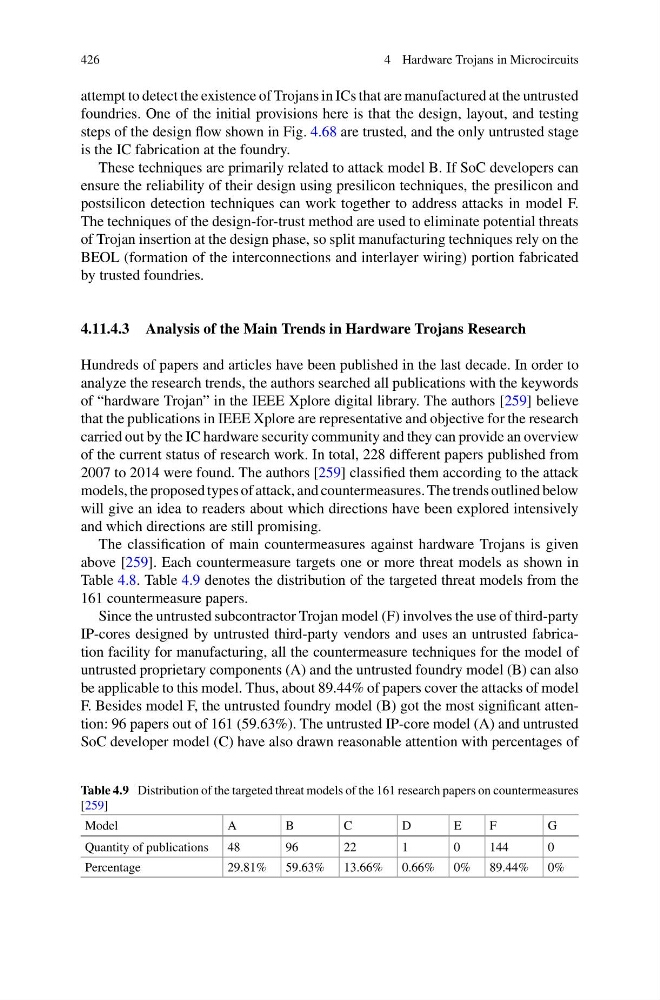
Table 4.8. Table 4.9 denotes the distribution of the targeted threat models from the
161 countermeasure papers.
Since the untrusted subcontractor Trojan model (F) involves the use of third-party
IP-cores designed by untrusted third-party vendors and uses an untrusted fabrication facility for manufacturing, all the countermeasure techniques for the model of
untrusted proprietary components (A) and the untrusted foundry model (B) can also
be applicable to this model. Thus, about 89.44% of papers cover the attacks of model
F. Besides model F, the untrusted foundry model (B) got the most significant attention: 96 papers out of 161 (59.63%). The untrusted IP-core model (A) and untrusted
SoC developer model (C) have also drawn reasonable attention with percentages of
Table 4.9 Distribution of the targeted threat models of the 161 research papers on countermeasures
[259]
Model
A
B
C
D
E
F
G
Quantity of publications 48
96
22
1
0
144
0
Percentage
29.81% 59.63% 13.66% 0.66% 0% 89.44% 0%
4 Hardware Trojans in Microcircuits
attempt to detect the existence of Trojans in ICs that are manufactured at the untrusted
foundries. One of the initial provisions here is that the design, layout, and testing
steps of the design flow shown in Fig. 4.68 are trusted, and the only untrusted stage
is the IC fabrication at the foundry.
These techniques are primarily related to attack model B. If SoC developers can
ensure the reliability of their design using presilicon techniques, the presilicon and
postsilicon detection techniques can work together to address attacks in model F.
The techniques of the design-for-trust method are used to eliminate potential threats
of Trojan insertion at the design phase, so split manufacturing techniques rely on the
BEOL (formation of the interconnections and interlayer wiring) portion fabricated
by trusted foundries.
4.11.4.3 Analysis of the Main Trends in Hardware Trojans Research
Hundreds of papers and articles have been published in the last decade. In order to
analyze the research trends, the authors searched all publications with the keywords
of “hardware Trojan” in the IEEE Xplore digital library. The authors [259] believe
that the publications in IEEE Xplore are representative and objective for the research
carried out by the IC hardware security community and they can provide an overview
of the current status of research work. In total, 228 different papers published from
2007 to 2014 were found. The authors [259] classified them according to the attack
models, the proposed types of attack, and countermeasures. The trends outlined below
will give an idea to readers about which directions have been explored intensively
and which directions are still promising.
The classification of main countermeasures against hardware Trojans is given
above [259]. Each countermeasure targets one or more threat models as shown in
Table 4.8. Table 4.9 denotes the distribution of the targeted threat models from the
161 countermeasure papers.
Since the untrusted subcontractor Trojan model (F) involves the use of third-party
IP-cores designed by untrusted third-party vendors and uses an untrusted fabrication facility for manufacturing, all the countermeasure techniques for the model of
untrusted proprietary components (A) and the untrusted foundry model (B) can also
be applicable to this model. Thus, about 89.44% of papers cover the attacks of model
F. Besides model F, the untrusted foundry model (B) got the most significant attention: 96 papers out of 161 (59.63%). The untrusted IP-core model (A) and untrusted
SoC developer model (C) have also drawn reasonable attention with percentages of
Table 4.9 Distribution of the targeted threat models of the 161 research papers on countermeasures
[259]
Model
A
B
C
D
E
F
G
Quantity of publications 48
96
22
1
0
144
0
Percentage
29.81% 59.63% 13.66% 0.66% 0% 89.44% 0%