

406
4 Hardware Trojans in Microcircuits
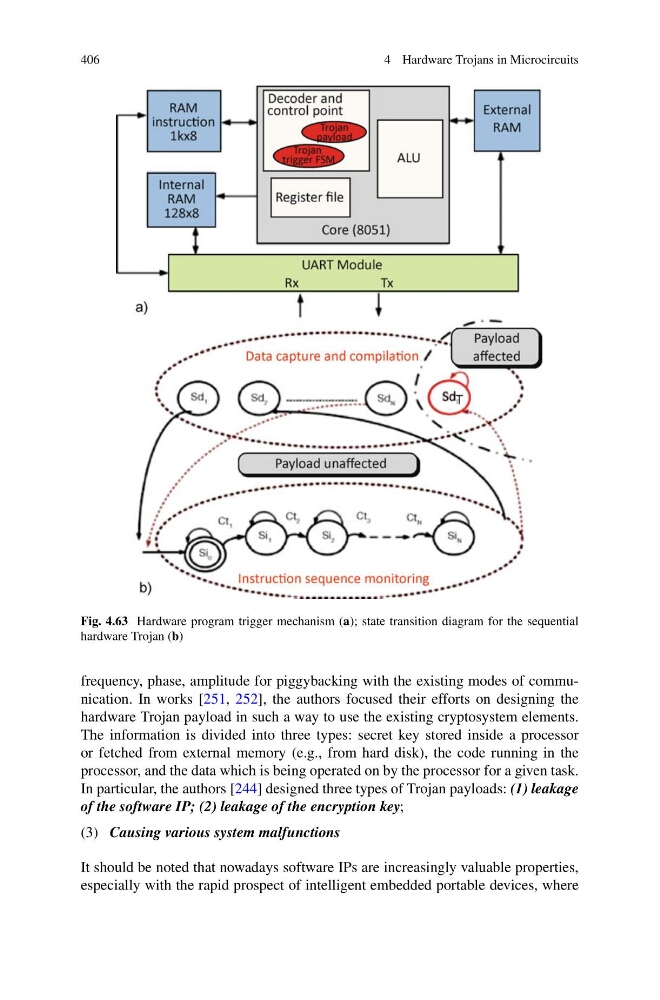
Fig. 4.63 Hardware program trigger mechanism (a); state transition diagram for the sequential
hardware Trojan (b)
frequency, phase, amplitude for piggybacking with the existing modes of communication. In works [251, 252], the authors focused their efforts on designing the
hardware Trojan payload in such a way to use the existing cryptosystem elements.
The information is divided into three types: secret key stored inside a processor
or fetched from external memory (e.g., from hard disk), the code running in the
processor, and the data which is being operated on by the processor for a given task.
In particular, the authors [244] designed three types of Trojan payloads: (1) leakage
of the software IP; (2) leakage of the encryption key;
(3) Causing various system malfunctions
It should be noted that nowadays software IPs are increasingly valuable properties,
especially with the rapid prospect of intelligent embedded portable devices, where
4 Hardware Trojans in Microcircuits
Fig. 4.63 Hardware program trigger mechanism (a); state transition diagram for the sequential
hardware Trojan (b)
frequency, phase, amplitude for piggybacking with the existing modes of communication. In works [251, 252], the authors focused their efforts on designing the
hardware Trojan payload in such a way to use the existing cryptosystem elements.
The information is divided into three types: secret key stored inside a processor
or fetched from external memory (e.g., from hard disk), the code running in the
processor, and the data which is being operated on by the processor for a given task.
In particular, the authors [244] designed three types of Trojan payloads: (1) leakage
of the software IP; (2) leakage of the encryption key;
(3) Causing various system malfunctions
It should be noted that nowadays software IPs are increasingly valuable properties,
especially with the rapid prospect of intelligent embedded portable devices, where