

4.3 Classification of Hardware Trojans in Chips
319
It is obvious that in order to solve this task, we (the authors of the encyclopedia)
will need to answer a number of obvious questions that may arise from any developer
of such modern microcircuit designed to be used in high-duty systems.
Of course, the first question here is obvious: during which stage of development
can a hardware Trojan be introduced?
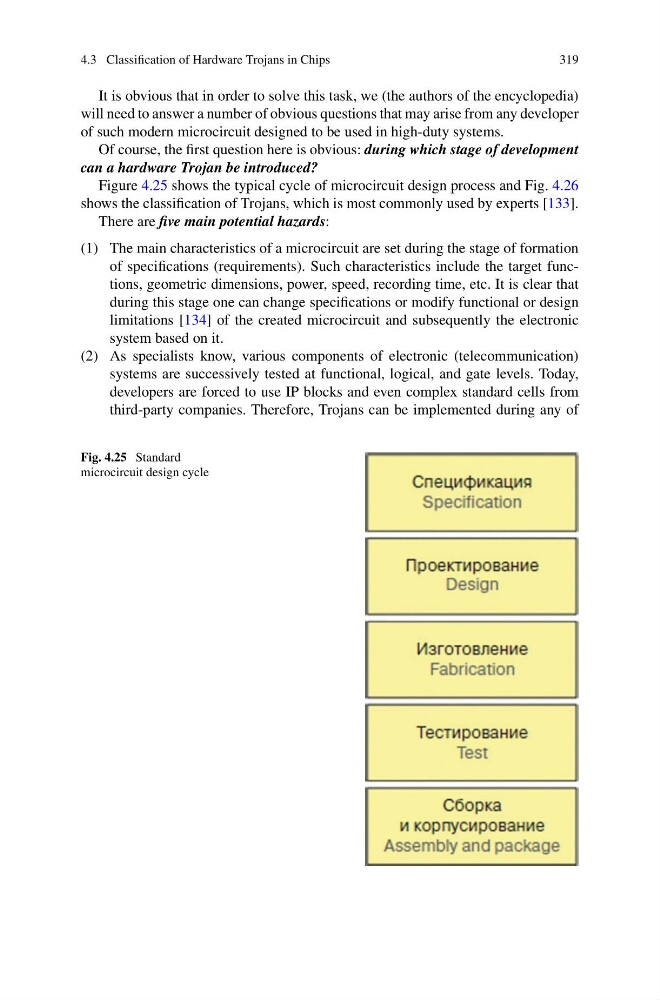
Figure 4.25 shows the typical cycle of microcircuit design process and Fig. 4.26
shows the classification of Trojans, which is most commonly used by experts [133].
There are five main potential hazards:
(1) The main characteristics of a microcircuit are set during the stage of formation
of specifications (requirements). Such characteristics include the target functions, geometric dimensions, power, speed, recording time, etc. It is clear that
during this stage one can change specifications or modify functional or design
limitations [134] of the created microcircuit and subsequently the electronic
system based on it.
(2) As specialists know, various components of electronic (telecommunication)
systems are successively tested at functional, logical, and gate levels. Today,
developers are forced to use IP blocks and even complex standard cells from
third-party companies. Therefore, Trojans can be implemented during any of
Fig. 4.25 Standard
microcircuit design cycle
319
It is obvious that in order to solve this task, we (the authors of the encyclopedia)
will need to answer a number of obvious questions that may arise from any developer
of such modern microcircuit designed to be used in high-duty systems.
Of course, the first question here is obvious: during which stage of development
can a hardware Trojan be introduced?
Figure 4.25 shows the typical cycle of microcircuit design process and Fig. 4.26
shows the classification of Trojans, which is most commonly used by experts [133].
There are five main potential hazards:
(1) The main characteristics of a microcircuit are set during the stage of formation
of specifications (requirements). Such characteristics include the target functions, geometric dimensions, power, speed, recording time, etc. It is clear that
during this stage one can change specifications or modify functional or design
limitations [134] of the created microcircuit and subsequently the electronic
system based on it.
(2) As specialists know, various components of electronic (telecommunication)
systems are successively tested at functional, logical, and gate levels. Today,
developers are forced to use IP blocks and even complex standard cells from
third-party companies. Therefore, Trojans can be implemented during any of
Fig. 4.25 Standard
microcircuit design cycle