

3.3 Trojan Programs in Mobile Communication Systems
249
Press On/Off
On
Off
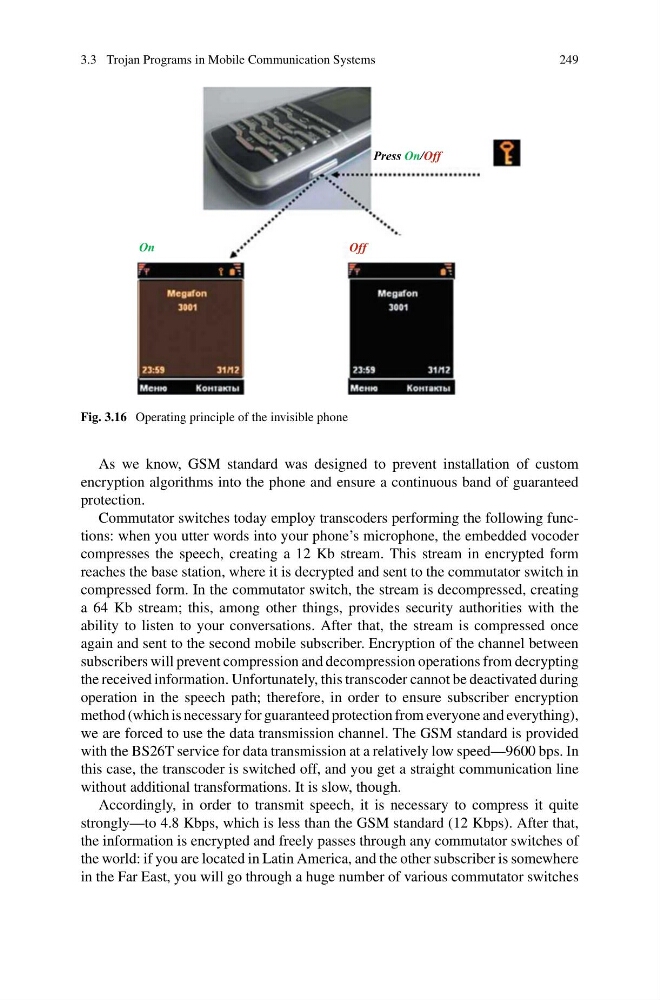
Fig. 3.16 Operating principle of the invisible phone
As we know, GSM standard was designed to prevent installation of custom
encryption algorithms into the phone and ensure a continuous band of guaranteed
protection.
Commutator switches today employ transcoders performing the following functions: when you utter words into your phone’s microphone, the embedded vocoder
compresses the speech, creating a 12 Kb stream. This stream in encrypted form
reaches the base station, where it is decrypted and sent to the commutator switch in
compressed form. In the commutator switch, the stream is decompressed, creating
a 64 Kb stream; this, among other things, provides security authorities with the
ability to listen to your conversations. After that, the stream is compressed once
again and sent to the second mobile subscriber. Encryption of the channel between
subscribers will prevent compression and decompression operations from decrypting
the received information. Unfortunately, this transcoder cannot be deactivated during
operation in the speech path; therefore, in order to ensure subscriber encryption
method (which is necessary for guaranteed protection from everyone and everything),
we are forced to use the data transmission channel. The GSM standard is provided
with the BS26T service for data transmission at a relatively low speed—9600 bps. In
this case, the transcoder is switched off, and you get a straight communication line
without additional transformations. It is slow, though.
Accordingly, in order to transmit speech, it is necessary to compress it quite
strongly—to 4.8 Kbps, which is less than the GSM standard (12 Kbps). After that,
the information is encrypted and freely passes through any commutator switches of
the world: if you are located in Latin America, and the other subscriber is somewhere
in the Far East, you will go through a huge number of various commutator switches
249
Press On/Off
On
Off
Fig. 3.16 Operating principle of the invisible phone
As we know, GSM standard was designed to prevent installation of custom
encryption algorithms into the phone and ensure a continuous band of guaranteed
protection.
Commutator switches today employ transcoders performing the following functions: when you utter words into your phone’s microphone, the embedded vocoder
compresses the speech, creating a 12 Kb stream. This stream in encrypted form
reaches the base station, where it is decrypted and sent to the commutator switch in
compressed form. In the commutator switch, the stream is decompressed, creating
a 64 Kb stream; this, among other things, provides security authorities with the
ability to listen to your conversations. After that, the stream is compressed once
again and sent to the second mobile subscriber. Encryption of the channel between
subscribers will prevent compression and decompression operations from decrypting
the received information. Unfortunately, this transcoder cannot be deactivated during
operation in the speech path; therefore, in order to ensure subscriber encryption
method (which is necessary for guaranteed protection from everyone and everything),
we are forced to use the data transmission channel. The GSM standard is provided
with the BS26T service for data transmission at a relatively low speed—9600 bps. In
this case, the transcoder is switched off, and you get a straight communication line
without additional transformations. It is slow, though.
Accordingly, in order to transmit speech, it is necessary to compress it quite
strongly—to 4.8 Kbps, which is less than the GSM standard (12 Kbps). After that,
the information is encrypted and freely passes through any commutator switches of
the world: if you are located in Latin America, and the other subscriber is somewhere
in the Far East, you will go through a huge number of various commutator switches