

220
3 Hardware Trojans in Electronic Devices
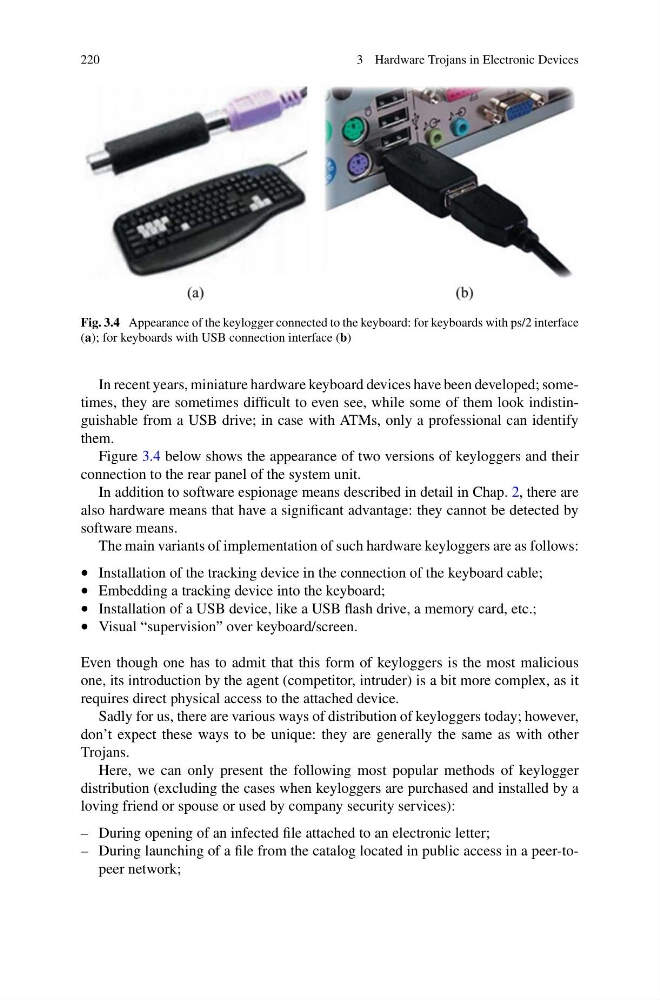
Fig. 3.4 Appearance of the keylogger connected to the keyboard: for keyboards with ps/2 interface
(a); for keyboards with USB connection interface (b)
In recent years, miniature hardware keyboard devices have been developed; sometimes, they are sometimes difficult to even see, while some of them look indistinguishable from a USB drive; in case with ATMs, only a professional can identify
them.
Figure 3.4 below shows the appearance of two versions of keyloggers and their
connection to the rear panel of the system unit.
In addition to software espionage means described in detail in Chap. 2, there are
also hardware means that have a significant advantage: they cannot be detected by
software means.
The main variants of implementation of such hardware keyloggers are as follows:
• Installation of the tracking device in the connection of the keyboard cable;
• Embedding a tracking device into the keyboard;
• Installation of a USB device, like a USB flash drive, a memory card, etc.;
• Visual “supervision” over keyboard/screen.
Even though one has to admit that this form of keyloggers is the most malicious
one, its introduction by the agent (competitor, intruder) is a bit more complex, as it
requires direct physical access to the attached device.
Sadly for us, there are various ways of distribution of keyloggers today; however,
don’t expect these ways to be unique: they are generally the same as with other
Trojans.
Here, we can only present the following most popular methods of keylogger
distribution (excluding the cases when keyloggers are purchased and installed by a
loving friend or spouse or used by company security services):
– During opening of an infected file attached to an electronic letter;
– During launching of a file from the catalog located in public access in a peer-topeer network;
3 Hardware Trojans in Electronic Devices
Fig. 3.4 Appearance of the keylogger connected to the keyboard: for keyboards with ps/2 interface
(a); for keyboards with USB connection interface (b)
In recent years, miniature hardware keyboard devices have been developed; sometimes, they are sometimes difficult to even see, while some of them look indistinguishable from a USB drive; in case with ATMs, only a professional can identify
them.
Figure 3.4 below shows the appearance of two versions of keyloggers and their
connection to the rear panel of the system unit.
In addition to software espionage means described in detail in Chap. 2, there are
also hardware means that have a significant advantage: they cannot be detected by
software means.
The main variants of implementation of such hardware keyloggers are as follows:
• Installation of the tracking device in the connection of the keyboard cable;
• Embedding a tracking device into the keyboard;
• Installation of a USB device, like a USB flash drive, a memory card, etc.;
• Visual “supervision” over keyboard/screen.
Even though one has to admit that this form of keyloggers is the most malicious
one, its introduction by the agent (competitor, intruder) is a bit more complex, as it
requires direct physical access to the attached device.
Sadly for us, there are various ways of distribution of keyloggers today; however,
don’t expect these ways to be unique: they are generally the same as with other
Trojans.
Here, we can only present the following most popular methods of keylogger
distribution (excluding the cases when keyloggers are purchased and installed by a
loving friend or spouse or used by company security services):
– During opening of an infected file attached to an electronic letter;
– During launching of a file from the catalog located in public access in a peer-topeer network;