

28
A. Ghosh
Traditional Engineering
Subjects
Mathematics
and Computation
for Extensive
Simulation &
Modeling
Physics
Chemistry
Life
Science
Engineering Curricula of the New Era
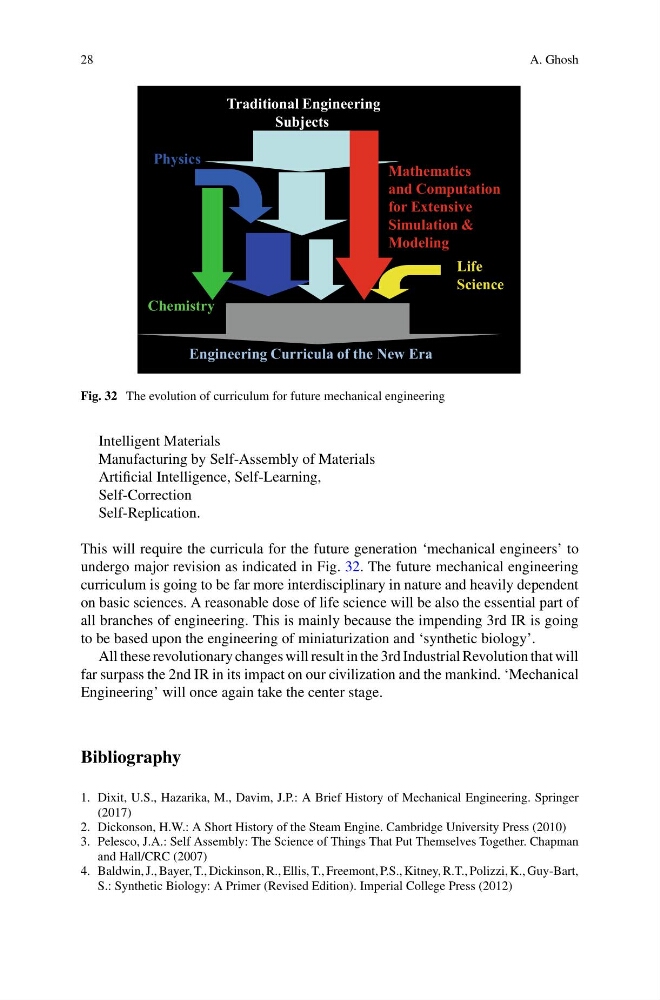
Fig. 32 The evolution of curriculum for future mechanical engineering
Intelligent Materials
Manufacturing by Self-Assembly of Materials
Artificial Intelligence, Self-Learning,
Self-Correction
Self-Replication.
This will require the curricula for the future generation ‘mechanical engineers’ to
undergo major revision as indicated in Fig. 32. The future mechanical engineering
curriculum is going to be far more interdisciplinary in nature and heavily dependent
on basic sciences. A reasonable dose of life science will be also the essential part of
all branches of engineering. This is mainly because the impending 3rd IR is going
to be based upon the engineering of miniaturization and ‘synthetic biology’.
All these revolutionary changes will result in the 3rd Industrial Revolution that will
far surpass the 2nd IR in its impact on our civilization and the mankind. ‘Mechanical
Engineering’ will once again take the center stage.
Bibliography
1. Dixit, U.S., Hazarika, M., Davim, J.P.: A Brief History of Mechanical Engineering. Springer
(2017)
2. Dickonson, H.W.: A Short History of the Steam Engine. Cambridge University Press (2010)
3. Pelesco, J.A.: Self Assembly: The Science of Things That Put Themselves Together. Chapman
and Hall/CRC (2007)
4. Baldwin, J., Bayer, T., Dickinson, R., Ellis, T., Freemont, P.S., Kitney, R.T., Polizzi, K., Guy-Bart,
S.: Synthetic Biology: A Primer (Revised Edition). Imperial College Press (2012)
A. Ghosh
Traditional Engineering
Subjects
Mathematics
and Computation
for Extensive
Simulation &
Modeling
Physics
Chemistry
Life
Science
Engineering Curricula of the New Era
Fig. 32 The evolution of curriculum for future mechanical engineering
Intelligent Materials
Manufacturing by Self-Assembly of Materials
Artificial Intelligence, Self-Learning,
Self-Correction
Self-Replication.
This will require the curricula for the future generation ‘mechanical engineers’ to
undergo major revision as indicated in Fig. 32. The future mechanical engineering
curriculum is going to be far more interdisciplinary in nature and heavily dependent
on basic sciences. A reasonable dose of life science will be also the essential part of
all branches of engineering. This is mainly because the impending 3rd IR is going
to be based upon the engineering of miniaturization and ‘synthetic biology’.
All these revolutionary changes will result in the 3rd Industrial Revolution that will
far surpass the 2nd IR in its impact on our civilization and the mankind. ‘Mechanical
Engineering’ will once again take the center stage.
Bibliography
1. Dixit, U.S., Hazarika, M., Davim, J.P.: A Brief History of Mechanical Engineering. Springer
(2017)
2. Dickonson, H.W.: A Short History of the Steam Engine. Cambridge University Press (2010)
3. Pelesco, J.A.: Self Assembly: The Science of Things That Put Themselves Together. Chapman
and Hall/CRC (2007)
4. Baldwin, J., Bayer, T., Dickinson, R., Ellis, T., Freemont, P.S., Kitney, R.T., Polizzi, K., Guy-Bart,
S.: Synthetic Biology: A Primer (Revised Edition). Imperial College Press (2012)