

Origami MEMS
225
Not UV exposed
Differentially UV exposed
Less cross-linked SU8
More cross-linked SU8
>
Cooling (< )
and cross-linking
Application of
external force
Non-cross-linked SU8
Less cross-linked SU8
(Undeformed)
Less cross-linked SU8
(Deformed)
Completely cross-linked
SU8 (Deformed)
Monomer
Cross-links
Not cross-linked
Less cross-linked
More cross-linked
Completely cross-linked
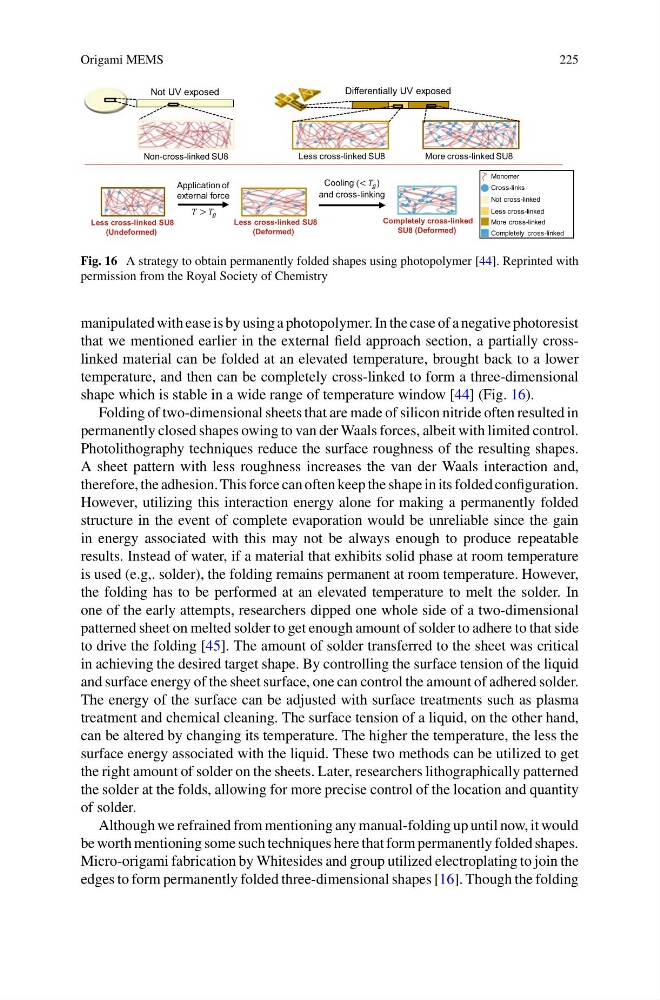
Fig. 16 A strategy to obtain permanently folded shapes using photopolymer [44]. Reprinted with
permission from the Royal Society of Chemistry
manipulated with ease is by using a photopolymer. In the case of a negative photoresist
that we mentioned earlier in the external field approach section, a partially crosslinked material can be folded at an elevated temperature, brought back to a lower
temperature, and then can be completely cross-linked to form a three-dimensional
shape which is stable in a wide range of temperature window [44] (Fig. 16).
Folding of two-dimensional sheets that are made of silicon nitride often resulted in
permanently closed shapes owing to van der Waals forces, albeit with limited control.
Photolithography techniques reduce the surface roughness of the resulting shapes.
A sheet pattern with less roughness increases the van der Waals interaction and,
therefore, the adhesion. This force can often keep the shape in its folded configuration.
However, utilizing this interaction energy alone for making a permanently folded
structure in the event of complete evaporation would be unreliable since the gain
in energy associated with this may not be always enough to produce repeatable
results. Instead of water, if a material that exhibits solid phase at room temperature
is used (e.g,. solder), the folding remains permanent at room temperature. However,
the folding has to be performed at an elevated temperature to melt the solder. In
one of the early attempts, researchers dipped one whole side of a two-dimensional
patterned sheet on melted solder to get enough amount of solder to adhere to that side
to drive the folding [45]. The amount of solder transferred to the sheet was critical
in achieving the desired target shape. By controlling the surface tension of the liquid
and surface energy of the sheet surface, one can control the amount of adhered solder.
The energy of the surface can be adjusted with surface treatments such as plasma
treatment and chemical cleaning. The surface tension of a liquid, on the other hand,
can be altered by changing its temperature. The higher the temperature, the less the
surface energy associated with the liquid. These two methods can be utilized to get
the right amount of solder on the sheets. Later, researchers lithographically patterned
the solder at the folds, allowing for more precise control of the location and quantity
of solder.
Although we refrained from mentioning any manual-folding up until now, it would
be worth mentioning some such techniques here that form permanently folded shapes.
Micro-origami fabrication by Whitesides and group utilized electroplating to join the
edges to form permanently folded three-dimensional shapes [16]. Though the folding
225
Not UV exposed
Differentially UV exposed
Less cross-linked SU8
More cross-linked SU8
>
Cooling (< )
and cross-linking
Application of
external force
Non-cross-linked SU8
Less cross-linked SU8
(Undeformed)
Less cross-linked SU8
(Deformed)
Completely cross-linked
SU8 (Deformed)
Monomer
Cross-links
Not cross-linked
Less cross-linked
More cross-linked
Completely cross-linked
Fig. 16 A strategy to obtain permanently folded shapes using photopolymer [44]. Reprinted with
permission from the Royal Society of Chemistry
manipulated with ease is by using a photopolymer. In the case of a negative photoresist
that we mentioned earlier in the external field approach section, a partially crosslinked material can be folded at an elevated temperature, brought back to a lower
temperature, and then can be completely cross-linked to form a three-dimensional
shape which is stable in a wide range of temperature window [44] (Fig. 16).
Folding of two-dimensional sheets that are made of silicon nitride often resulted in
permanently closed shapes owing to van der Waals forces, albeit with limited control.
Photolithography techniques reduce the surface roughness of the resulting shapes.
A sheet pattern with less roughness increases the van der Waals interaction and,
therefore, the adhesion. This force can often keep the shape in its folded configuration.
However, utilizing this interaction energy alone for making a permanently folded
structure in the event of complete evaporation would be unreliable since the gain
in energy associated with this may not be always enough to produce repeatable
results. Instead of water, if a material that exhibits solid phase at room temperature
is used (e.g,. solder), the folding remains permanent at room temperature. However,
the folding has to be performed at an elevated temperature to melt the solder. In
one of the early attempts, researchers dipped one whole side of a two-dimensional
patterned sheet on melted solder to get enough amount of solder to adhere to that side
to drive the folding [45]. The amount of solder transferred to the sheet was critical
in achieving the desired target shape. By controlling the surface tension of the liquid
and surface energy of the sheet surface, one can control the amount of adhered solder.
The energy of the surface can be adjusted with surface treatments such as plasma
treatment and chemical cleaning. The surface tension of a liquid, on the other hand,
can be altered by changing its temperature. The higher the temperature, the less the
surface energy associated with the liquid. These two methods can be utilized to get
the right amount of solder on the sheets. Later, researchers lithographically patterned
the solder at the folds, allowing for more precise control of the location and quantity
of solder.
Although we refrained from mentioning any manual-folding up until now, it would
be worth mentioning some such techniques here that form permanently folded shapes.
Micro-origami fabrication by Whitesides and group utilized electroplating to join the
edges to form permanently folded three-dimensional shapes [16]. Though the folding