

Origami MEMS
223
Differential stiffness and
surface tension
Aligned magnetic particles
and magnetic force
Local buckling
Compression
Heating
Melting hinge and heating
B
Melting hinges for capillary
origami
(Timothy et al., 2007)
Oriented magnetic particles
using direct writing
(Kim et al., 2018)
Buckling-based origami
(Fu et al., 2018)
Folded capillary origami
(George et al., 2019)
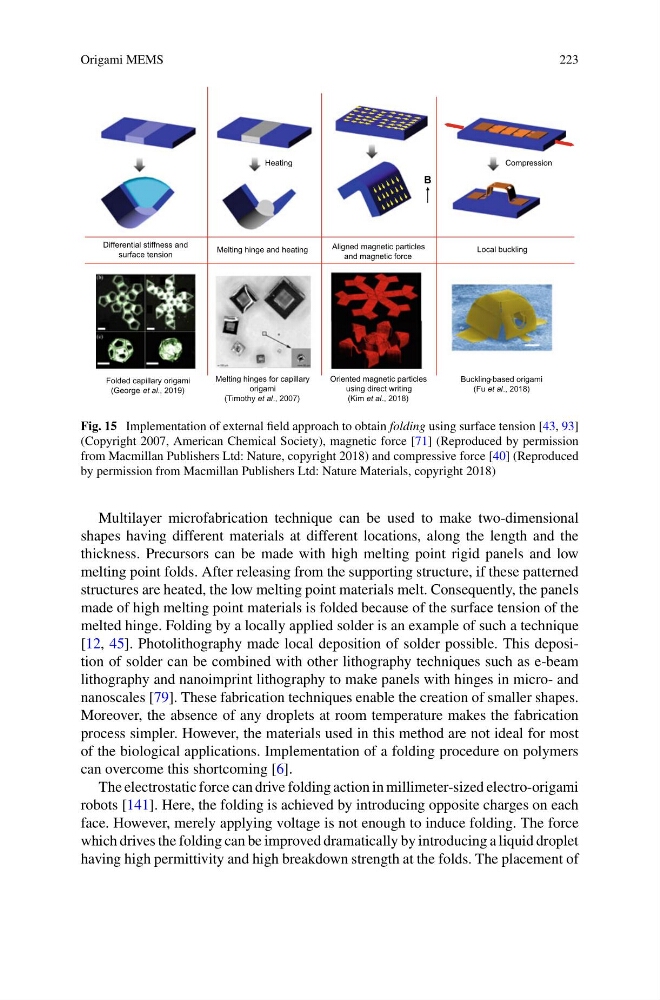
Fig. 15 Implementation of external field approach to obtain folding using surface tension [43, 93]
(Copyright 2007, American Chemical Society), magnetic force [71] (Reproduced by permission
from Macmillan Publishers Ltd: Nature, copyright 2018) and compressive force [40] (Reproduced
by permission from Macmillan Publishers Ltd: Nature Materials, copyright 2018)
Multilayer microfabrication technique can be used to make two-dimensional
shapes having different materials at different locations, along the length and the
thickness. Precursors can be made with high melting point rigid panels and low
melting point folds. After releasing from the supporting structure, if these patterned
structures are heated, the low melting point materials melt. Consequently, the panels
made of high melting point materials is folded because of the surface tension of the
melted hinge. Folding by a locally applied solder is an example of such a technique
[12, 45]. Photolithography made local deposition of solder possible. This deposition of solder can be combined with other lithography techniques such as e-beam
lithography and nanoimprint lithography to make panels with hinges in micro- and
nanoscales [79]. These fabrication techniques enable the creation of smaller shapes.
Moreover, the absence of any droplets at room temperature makes the fabrication
process simpler. However, the materials used in this method are not ideal for most
of the biological applications. Implementation of a folding procedure on polymers
can overcome this shortcoming [6].
The electrostatic force can drive folding action in millimeter-sized electro-origami
robots [141]. Here, the folding is achieved by introducing opposite charges on each
face. However, merely applying voltage is not enough to induce folding. The force
which drives the folding can be improved dramatically by introducing a liquid droplet
having high permittivity and high breakdown strength at the folds. The placement of
223
Differential stiffness and
surface tension
Aligned magnetic particles
and magnetic force
Local buckling
Compression
Heating
Melting hinge and heating
B
Melting hinges for capillary
origami
(Timothy et al., 2007)
Oriented magnetic particles
using direct writing
(Kim et al., 2018)
Buckling-based origami
(Fu et al., 2018)
Folded capillary origami
(George et al., 2019)
Fig. 15 Implementation of external field approach to obtain folding using surface tension [43, 93]
(Copyright 2007, American Chemical Society), magnetic force [71] (Reproduced by permission
from Macmillan Publishers Ltd: Nature, copyright 2018) and compressive force [40] (Reproduced
by permission from Macmillan Publishers Ltd: Nature Materials, copyright 2018)
Multilayer microfabrication technique can be used to make two-dimensional
shapes having different materials at different locations, along the length and the
thickness. Precursors can be made with high melting point rigid panels and low
melting point folds. After releasing from the supporting structure, if these patterned
structures are heated, the low melting point materials melt. Consequently, the panels
made of high melting point materials is folded because of the surface tension of the
melted hinge. Folding by a locally applied solder is an example of such a technique
[12, 45]. Photolithography made local deposition of solder possible. This deposition of solder can be combined with other lithography techniques such as e-beam
lithography and nanoimprint lithography to make panels with hinges in micro- and
nanoscales [79]. These fabrication techniques enable the creation of smaller shapes.
Moreover, the absence of any droplets at room temperature makes the fabrication
process simpler. However, the materials used in this method are not ideal for most
of the biological applications. Implementation of a folding procedure on polymers
can overcome this shortcoming [6].
The electrostatic force can drive folding action in millimeter-sized electro-origami
robots [141]. Here, the folding is achieved by introducing opposite charges on each
face. However, merely applying voltage is not enough to induce folding. The force
which drives the folding can be improved dramatically by introducing a liquid droplet
having high permittivity and high breakdown strength at the folds. The placement of