

558
R. B. Pachori and V. Gupta
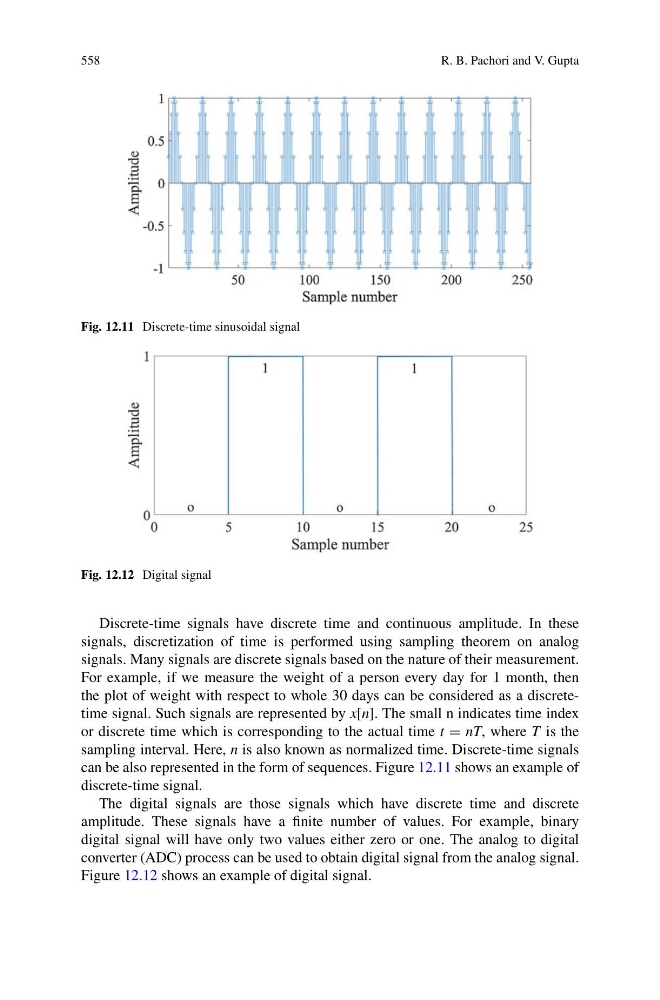
Fig. 12.11 Discrete-time sinusoidal signal
Fig. 12.12 Digital signal
Discrete-time signals have discrete time and continuous amplitude. In these
signals, discretization of time is performed using sampling theorem on analog
signals. Many signals are discrete signals based on the nature of their measurement.
For example, if we measure the weight of a person every day for 1 month, then
the plot of weight with respect to whole 30 days can be considered as a discretetime signal. Such signals are represented by x[n]. The small n indicates time index
or discrete time which is corresponding to the actual time t = nT, where T is the
sampling interval. Here, n is also known as normalized time. Discrete-time signals
can be also represented in the form of sequences. Figure 12.11 shows an example of
discrete-time signal.
The digital signals are those signals which have discrete time and discrete
amplitude. These signals have a finite number of values. For example, binary
digital signal will have only two values either zero or one. The analog to digital
converter (ADC) process can be used to obtain digital signal from the analog signal.
Figure 12.12 shows an example of digital signal.
R. B. Pachori and V. Gupta
Fig. 12.11 Discrete-time sinusoidal signal
Fig. 12.12 Digital signal
Discrete-time signals have discrete time and continuous amplitude. In these
signals, discretization of time is performed using sampling theorem on analog
signals. Many signals are discrete signals based on the nature of their measurement.
For example, if we measure the weight of a person every day for 1 month, then
the plot of weight with respect to whole 30 days can be considered as a discretetime signal. Such signals are represented by x[n]. The small n indicates time index
or discrete time which is corresponding to the actual time t = nT, where T is the
sampling interval. Here, n is also known as normalized time. Discrete-time signals
can be also represented in the form of sequences. Figure 12.11 shows an example of
discrete-time signal.
The digital signals are those signals which have discrete time and discrete
amplitude. These signals have a finite number of values. For example, binary
digital signal will have only two values either zero or one. The analog to digital
converter (ADC) process can be used to obtain digital signal from the analog signal.
Figure 12.12 shows an example of digital signal.