

11 Healthcare IoT
529
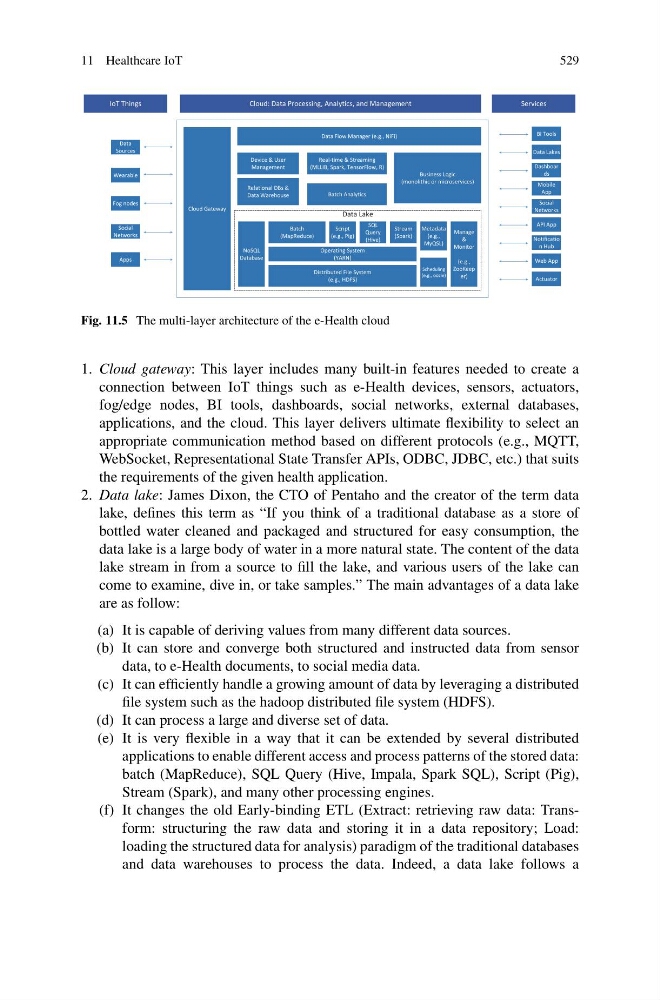
Fig. 11.5 The multi-layer architecture of the e-Health cloud
1. Cloud gateway: This layer includes many built-in features needed to create a
connection between IoT things such as e-Health devices, sensors, actuators,
fog/edge nodes, BI tools, dashboards, social networks, external databases,
applications, and the cloud. This layer delivers ultimate flexibility to select an
appropriate communication method based on different protocols (e.g., MQTT,
WebSocket, Representational State Transfer APIs, ODBC, JDBC, etc.) that suits
the requirements of the given health application.
2. Data lake: James Dixon, the CTO of Pentaho and the creator of the term data
lake, defines this term as “If you think of a traditional database as a store of
bottled water cleaned and packaged and structured for easy consumption, the
data lake is a large body of water in a more natural state. The content of the data
lake stream in from a source to fill the lake, and various users of the lake can
come to examine, dive in, or take samples.” The main advantages of a data lake
are as follow:
(a) It is capable of deriving values from many different data sources.
(b) It can store and converge both structured and instructed data from sensor
data, to e-Health documents, to social media data.
(c) It can efficiently handle a growing amount of data by leveraging a distributed
file system such as the hadoop distributed file system (HDFS).
(d) It can process a large and diverse set of data.
(e) It is very flexible in a way that it can be extended by several distributed
applications to enable different access and process patterns of the stored data:
batch (MapReduce), SQL Query (Hive, Impala, Spark SQL), Script (Pig),
Stream (Spark), and many other processing engines.
(f) It changes the old Early-binding ETL (Extract: retrieving raw data: Transform: structuring the raw data and storing it in a data repository; Load:
loading the structured data for analysis) paradigm of the traditional databases
and data warehouses to process the data. Indeed, a data lake follows a
529
Fig. 11.5 The multi-layer architecture of the e-Health cloud
1. Cloud gateway: This layer includes many built-in features needed to create a
connection between IoT things such as e-Health devices, sensors, actuators,
fog/edge nodes, BI tools, dashboards, social networks, external databases,
applications, and the cloud. This layer delivers ultimate flexibility to select an
appropriate communication method based on different protocols (e.g., MQTT,
WebSocket, Representational State Transfer APIs, ODBC, JDBC, etc.) that suits
the requirements of the given health application.
2. Data lake: James Dixon, the CTO of Pentaho and the creator of the term data
lake, defines this term as “If you think of a traditional database as a store of
bottled water cleaned and packaged and structured for easy consumption, the
data lake is a large body of water in a more natural state. The content of the data
lake stream in from a source to fill the lake, and various users of the lake can
come to examine, dive in, or take samples.” The main advantages of a data lake
are as follow:
(a) It is capable of deriving values from many different data sources.
(b) It can store and converge both structured and instructed data from sensor
data, to e-Health documents, to social media data.
(c) It can efficiently handle a growing amount of data by leveraging a distributed
file system such as the hadoop distributed file system (HDFS).
(d) It can process a large and diverse set of data.
(e) It is very flexible in a way that it can be extended by several distributed
applications to enable different access and process patterns of the stored data:
batch (MapReduce), SQL Query (Hive, Impala, Spark SQL), Script (Pig),
Stream (Spark), and many other processing engines.
(f) It changes the old Early-binding ETL (Extract: retrieving raw data: Transform: structuring the raw data and storing it in a data repository; Load:
loading the structured data for analysis) paradigm of the traditional databases
and data warehouses to process the data. Indeed, a data lake follows a