

388
W. Chang et al.
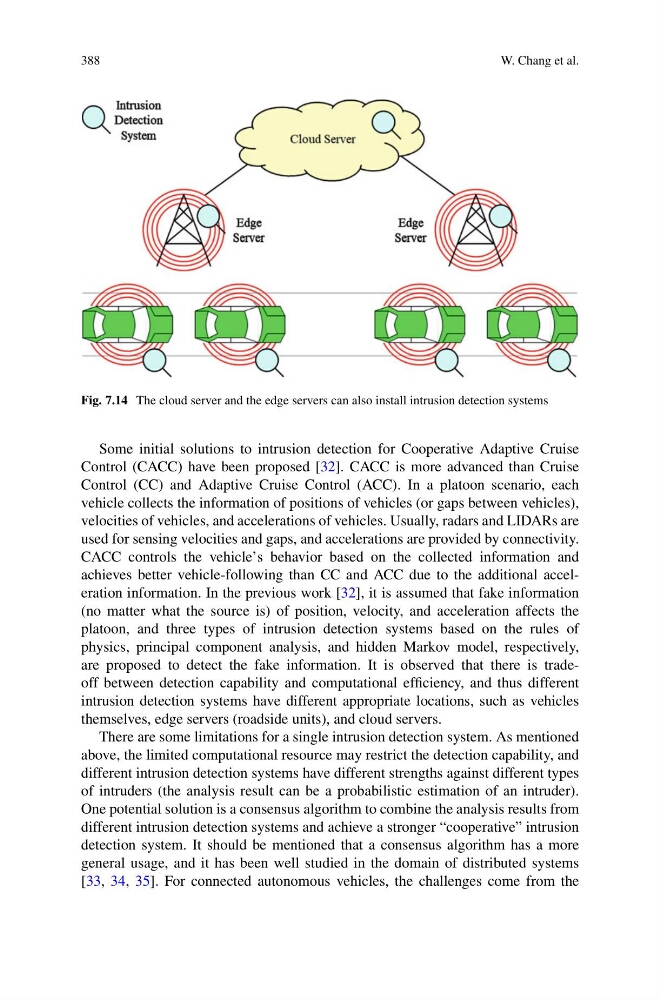
Fig. 7.14 The cloud server and the edge servers can also install intrusion detection systems
Some initial solutions to intrusion detection for Cooperative Adaptive Cruise
Control (CACC) have been proposed [32]. CACC is more advanced than Cruise
Control (CC) and Adaptive Cruise Control (ACC). In a platoon scenario, each
vehicle collects the information of positions of vehicles (or gaps between vehicles),
velocities of vehicles, and accelerations of vehicles. Usually, radars and LIDARs are
used for sensing velocities and gaps, and accelerations are provided by connectivity.
CACC controls the vehicle’s behavior based on the collected information and
achieves better vehicle-following than CC and ACC due to the additional acceleration information. In the previous work [32], it is assumed that fake information
(no matter what the source is) of position, velocity, and acceleration affects the
platoon, and three types of intrusion detection systems based on the rules of
physics, principal component analysis, and hidden Markov model, respectively,
are proposed to detect the fake information. It is observed that there is tradeoff between detection capability and computational efficiency, and thus different
intrusion detection systems have different appropriate locations, such as vehicles
themselves, edge servers (roadside units), and cloud servers.
There are some limitations for a single intrusion detection system. As mentioned
above, the limited computational resource may restrict the detection capability, and
different intrusion detection systems have different strengths against different types
of intruders (the analysis result can be a probabilistic estimation of an intruder).
One potential solution is a consensus algorithm to combine the analysis results from
different intrusion detection systems and achieve a stronger “cooperative” intrusion
detection system. It should be mentioned that a consensus algorithm has a more
general usage, and it has been well studied in the domain of distributed systems
[33, 34, 35]. For connected autonomous vehicles, the challenges come from the
W. Chang et al.
Fig. 7.14 The cloud server and the edge servers can also install intrusion detection systems
Some initial solutions to intrusion detection for Cooperative Adaptive Cruise
Control (CACC) have been proposed [32]. CACC is more advanced than Cruise
Control (CC) and Adaptive Cruise Control (ACC). In a platoon scenario, each
vehicle collects the information of positions of vehicles (or gaps between vehicles),
velocities of vehicles, and accelerations of vehicles. Usually, radars and LIDARs are
used for sensing velocities and gaps, and accelerations are provided by connectivity.
CACC controls the vehicle’s behavior based on the collected information and
achieves better vehicle-following than CC and ACC due to the additional acceleration information. In the previous work [32], it is assumed that fake information
(no matter what the source is) of position, velocity, and acceleration affects the
platoon, and three types of intrusion detection systems based on the rules of
physics, principal component analysis, and hidden Markov model, respectively,
are proposed to detect the fake information. It is observed that there is tradeoff between detection capability and computational efficiency, and thus different
intrusion detection systems have different appropriate locations, such as vehicles
themselves, edge servers (roadside units), and cloud servers.
There are some limitations for a single intrusion detection system. As mentioned
above, the limited computational resource may restrict the detection capability, and
different intrusion detection systems have different strengths against different types
of intruders (the analysis result can be a probabilistic estimation of an intruder).
One potential solution is a consensus algorithm to combine the analysis results from
different intrusion detection systems and achieve a stronger “cooperative” intrusion
detection system. It should be mentioned that a consensus algorithm has a more
general usage, and it has been well studied in the domain of distributed systems
[33, 34, 35]. For connected autonomous vehicles, the challenges come from the