

312
F. Firouzi et al.
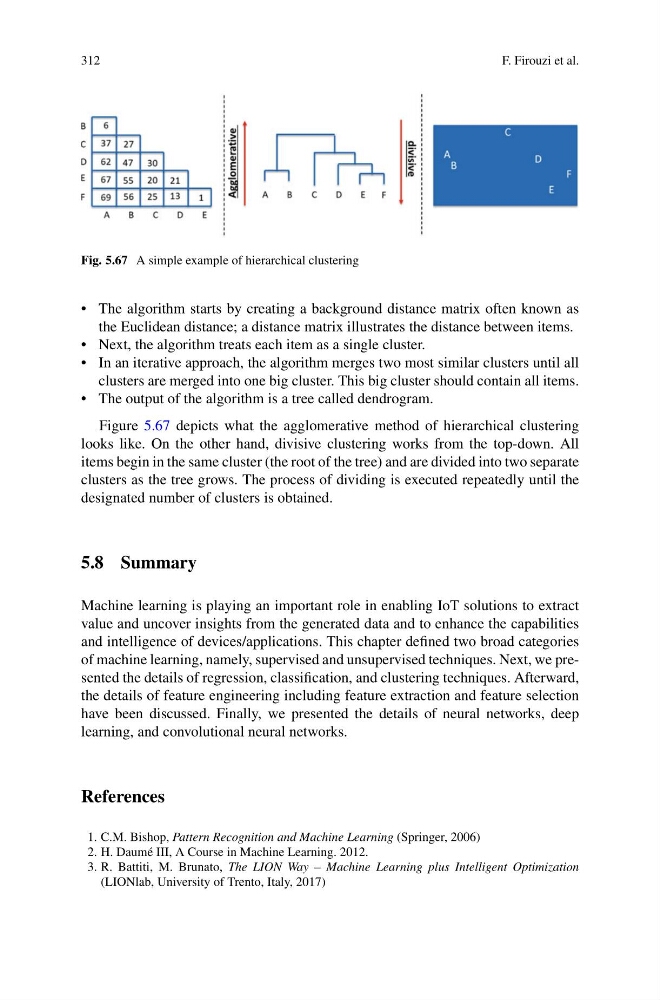
Fig. 5.67 A simple example of hierarchical clustering
• The algorithm starts by creating a background distance matrix often known as
the Euclidean distance; a distance matrix illustrates the distance between items.
• Next, the algorithm treats each item as a single cluster.
• In an iterative approach, the algorithm merges two most similar clusters until all
clusters are merged into one big cluster. This big cluster should contain all items.
• The output of the algorithm is a tree called dendrogram.
Figure 5.67 depicts what the agglomerative method of hierarchical clustering
looks like. On the other hand, divisive clustering works from the top-down. All
items begin in the same cluster (the root of the tree) and are divided into two separate
clusters as the tree grows. The process of dividing is executed repeatedly until the
designated number of clusters is obtained.
5.8 Summary
Machine learning is playing an important role in enabling IoT solutions to extract
value and uncover insights from the generated data and to enhance the capabilities
and intelligence of devices/applications. This chapter defined two broad categories
of machine learning, namely, supervised and unsupervised techniques. Next, we presented the details of regression, classification, and clustering techniques. Afterward,
the details of feature engineering including feature extraction and feature selection
have been discussed. Finally, we presented the details of neural networks, deep
learning, and convolutional neural networks.
References
1. C.M. Bishop, Pattern Recognition and Machine Learning (Springer, 2006)
2. H. Daumé III, A Course in Machine Learning. 2012.
3. R. Battiti, M. Brunato, The LION Way – Machine Learning plus Intelligent Optimization
(LIONlab, University of Trento, Italy, 2017)
F. Firouzi et al.
Fig. 5.67 A simple example of hierarchical clustering
• The algorithm starts by creating a background distance matrix often known as
the Euclidean distance; a distance matrix illustrates the distance between items.
• Next, the algorithm treats each item as a single cluster.
• In an iterative approach, the algorithm merges two most similar clusters until all
clusters are merged into one big cluster. This big cluster should contain all items.
• The output of the algorithm is a tree called dendrogram.
Figure 5.67 depicts what the agglomerative method of hierarchical clustering
looks like. On the other hand, divisive clustering works from the top-down. All
items begin in the same cluster (the root of the tree) and are divided into two separate
clusters as the tree grows. The process of dividing is executed repeatedly until the
designated number of clusters is obtained.
5.8 Summary
Machine learning is playing an important role in enabling IoT solutions to extract
value and uncover insights from the generated data and to enhance the capabilities
and intelligence of devices/applications. This chapter defined two broad categories
of machine learning, namely, supervised and unsupervised techniques. Next, we presented the details of regression, classification, and clustering techniques. Afterward,
the details of feature engineering including feature extraction and feature selection
have been discussed. Finally, we presented the details of neural networks, deep
learning, and convolutional neural networks.
References
1. C.M. Bishop, Pattern Recognition and Machine Learning (Springer, 2006)
2. H. Daumé III, A Course in Machine Learning. 2012.
3. R. Battiti, M. Brunato, The LION Way – Machine Learning plus Intelligent Optimization
(LIONlab, University of Trento, Italy, 2017)