

5 Machine Learning for IoT
245
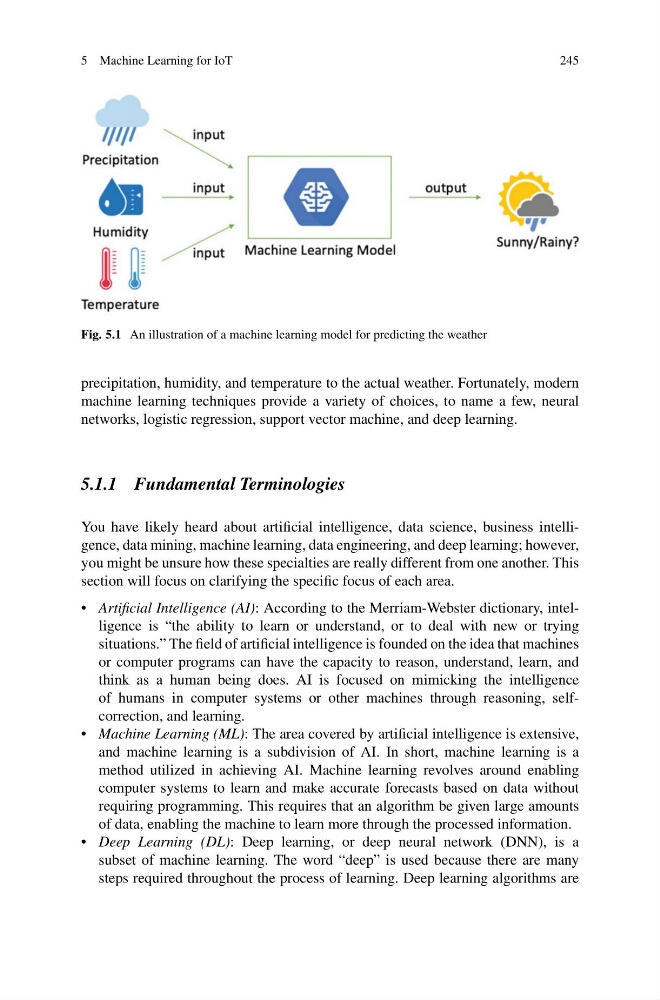
Fig. 5.1 An illustration of a machine learning model for predicting the weather
precipitation, humidity, and temperature to the actual weather. Fortunately, modern
machine learning techniques provide a variety of choices, to name a few, neural
networks, logistic regression, support vector machine, and deep learning.
5.1.1 Fundamental Terminologies
You have likely heard about artificial intelligence, data science, business intelligence, data mining, machine learning, data engineering, and deep learning; however,
you might be unsure how these specialties are really different from one another. This
section will focus on clarifying the specific focus of each area.
• Artificial Intelligence (AI): According to the Merriam-Webster dictionary, intelligence is “the ability to learn or understand, or to deal with new or trying
situations.” The field of artificial intelligence is founded on the idea that machines
or computer programs can have the capacity to reason, understand, learn, and
think as a human being does. AI is focused on mimicking the intelligence
of humans in computer systems or other machines through reasoning, selfcorrection, and learning.
• Machine Learning (ML): The area covered by artificial intelligence is extensive,
and machine learning is a subdivision of AI. In short, machine learning is a
method utilized in achieving AI. Machine learning revolves around enabling
computer systems to learn and make accurate forecasts based on data without
requiring programming. This requires that an algorithm be given large amounts
of data, enabling the machine to learn more through the processed information.
• Deep Learning (DL): Deep learning, or deep neural network (DNN), is a
subset of machine learning. The word “deep” is used because there are many
steps required throughout the process of learning. Deep learning algorithms are
245
Fig. 5.1 An illustration of a machine learning model for predicting the weather
precipitation, humidity, and temperature to the actual weather. Fortunately, modern
machine learning techniques provide a variety of choices, to name a few, neural
networks, logistic regression, support vector machine, and deep learning.
5.1.1 Fundamental Terminologies
You have likely heard about artificial intelligence, data science, business intelligence, data mining, machine learning, data engineering, and deep learning; however,
you might be unsure how these specialties are really different from one another. This
section will focus on clarifying the specific focus of each area.
• Artificial Intelligence (AI): According to the Merriam-Webster dictionary, intelligence is “the ability to learn or understand, or to deal with new or trying
situations.” The field of artificial intelligence is founded on the idea that machines
or computer programs can have the capacity to reason, understand, learn, and
think as a human being does. AI is focused on mimicking the intelligence
of humans in computer systems or other machines through reasoning, selfcorrection, and learning.
• Machine Learning (ML): The area covered by artificial intelligence is extensive,
and machine learning is a subdivision of AI. In short, machine learning is a
method utilized in achieving AI. Machine learning revolves around enabling
computer systems to learn and make accurate forecasts based on data without
requiring programming. This requires that an algorithm be given large amounts
of data, enabling the machine to learn more through the processed information.
• Deep Learning (DL): Deep learning, or deep neural network (DNN), is a
subset of machine learning. The word “deep” is used because there are many
steps required throughout the process of learning. Deep learning algorithms are