

98
E. Fraccaroli and D. Quaglia
3.4 Application Layer Protocols .............................................................. 144
3.4.1 HyperText Transfer Protocol (HTTP)........................................... 145
3.4.2 WebSocket ....................................................................... 146
3.4.3 Web Services and Representational State Transfer (REST) ................... 147
3.4.4 Message Queuing Telemetry Transport (MQTT) .............................. 149
3.4.5 Advanced Message Queuing Protocol (AMQP)................................ 153
3.4.6 Constrained Application Protocol (CoAP) ..................................... 153
3.4.7 Extensible Messaging and Presence Protocol (XMPP) ........................ 157
3.4.8 OPC Unified Architecture (OPC-UA) .......................................... 158
3.5 IoT Network Design Methodology ....................................................... 161
3.5.1 Communications for Localization............................................... 164
3.6 Summary .................................................................................. 166
References ........................................................................................ 166
3.1 IoT Network Scenarios
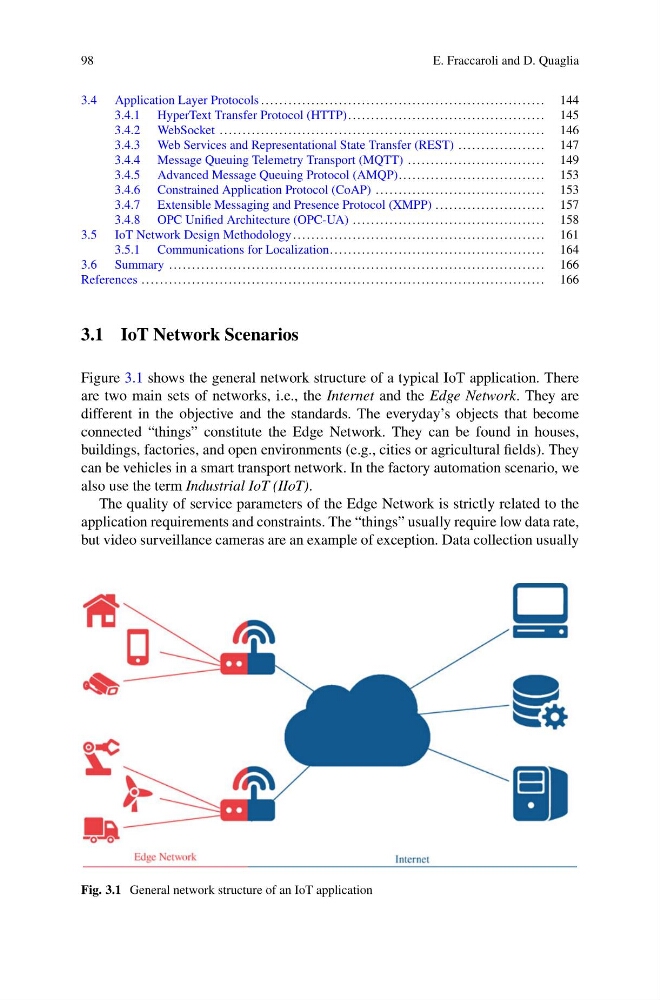
Figure 3.1 shows the general network structure of a typical IoT application. There
are two main sets of networks, i.e., the Internet and the Edge Network. They are
different in the objective and the standards. The everyday’s objects that become
connected “things” constitute the Edge Network. They can be found in houses,
buildings, factories, and open environments (e.g., cities or agricultural fields). They
can be vehicles in a smart transport network. In the factory automation scenario, we
also use the term Industrial IoT (IIoT).
The quality of service parameters of the Edge Network is strictly related to the
application requirements and constraints. The “things” usually require low data rate,
but video surveillance cameras are an example of exception. Data collection usually
Fig. 3.1 General network structure of an IoT application
E. Fraccaroli and D. Quaglia
3.4 Application Layer Protocols .............................................................. 144
3.4.1 HyperText Transfer Protocol (HTTP)........................................... 145
3.4.2 WebSocket ....................................................................... 146
3.4.3 Web Services and Representational State Transfer (REST) ................... 147
3.4.4 Message Queuing Telemetry Transport (MQTT) .............................. 149
3.4.5 Advanced Message Queuing Protocol (AMQP)................................ 153
3.4.6 Constrained Application Protocol (CoAP) ..................................... 153
3.4.7 Extensible Messaging and Presence Protocol (XMPP) ........................ 157
3.4.8 OPC Unified Architecture (OPC-UA) .......................................... 158
3.5 IoT Network Design Methodology ....................................................... 161
3.5.1 Communications for Localization............................................... 164
3.6 Summary .................................................................................. 166
References ........................................................................................ 166
3.1 IoT Network Scenarios
Figure 3.1 shows the general network structure of a typical IoT application. There
are two main sets of networks, i.e., the Internet and the Edge Network. They are
different in the objective and the standards. The everyday’s objects that become
connected “things” constitute the Edge Network. They can be found in houses,
buildings, factories, and open environments (e.g., cities or agricultural fields). They
can be vehicles in a smart transport network. In the factory automation scenario, we
also use the term Industrial IoT (IIoT).
The quality of service parameters of the Edge Network is strictly related to the
application requirements and constraints. The “things” usually require low data rate,
but video surveillance cameras are an example of exception. Data collection usually
Fig. 3.1 General network structure of an IoT application