

276
S. Papazoglou and I. Zergioti
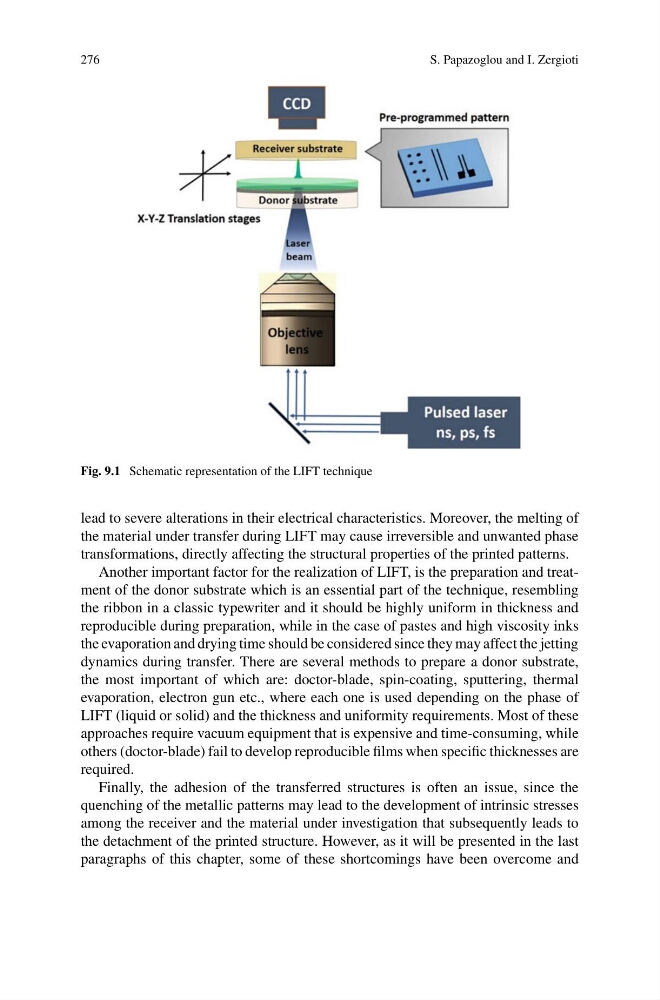
Fig. 9.1 Schematic representation of the LIFT technique
lead to severe alterations in their electrical characteristics. Moreover, the melting of
the material under transfer during LIFT may cause irreversible and unwanted phase
transformations, directly affecting the structural properties of the printed patterns.
Another important factor for the realization of LIFT, is the preparation and treatment of the donor substrate which is an essential part of the technique, resembling
the ribbon in a classic typewriter and it should be highly uniform in thickness and
reproducible during preparation, while in the case of pastes and high viscosity inks
the evaporation and drying time should be considered since they may affect the jetting
dynamics during transfer. There are several methods to prepare a donor substrate,
the most important of which are: doctor-blade, spin-coating, sputtering, thermal
evaporation, electron gun etc., where each one is used depending on the phase of
LIFT (liquid or solid) and the thickness and uniformity requirements. Most of these
approaches require vacuum equipment that is expensive and time-consuming, while
others (doctor-blade) fail to develop reproducible films when specific thicknesses are
required.
Finally, the adhesion of the transferred structures is often an issue, since the
quenching of the metallic patterns may lead to the development of intrinsic stresses
among the receiver and the material under investigation that subsequently leads to
the detachment of the printed structure. However, as it will be presented in the last
paragraphs of this chapter, some of these shortcomings have been overcome and
S. Papazoglou and I. Zergioti
Fig. 9.1 Schematic representation of the LIFT technique
lead to severe alterations in their electrical characteristics. Moreover, the melting of
the material under transfer during LIFT may cause irreversible and unwanted phase
transformations, directly affecting the structural properties of the printed patterns.
Another important factor for the realization of LIFT, is the preparation and treatment of the donor substrate which is an essential part of the technique, resembling
the ribbon in a classic typewriter and it should be highly uniform in thickness and
reproducible during preparation, while in the case of pastes and high viscosity inks
the evaporation and drying time should be considered since they may affect the jetting
dynamics during transfer. There are several methods to prepare a donor substrate,
the most important of which are: doctor-blade, spin-coating, sputtering, thermal
evaporation, electron gun etc., where each one is used depending on the phase of
LIFT (liquid or solid) and the thickness and uniformity requirements. Most of these
approaches require vacuum equipment that is expensive and time-consuming, while
others (doctor-blade) fail to develop reproducible films when specific thicknesses are
required.
Finally, the adhesion of the transferred structures is often an issue, since the
quenching of the metallic patterns may lead to the development of intrinsic stresses
among the receiver and the material under investigation that subsequently leads to
the detachment of the printed structure. However, as it will be presented in the last
paragraphs of this chapter, some of these shortcomings have been overcome and