

2 Ultrafast Laser Enabling Versatile Fabrication of Surface …
103
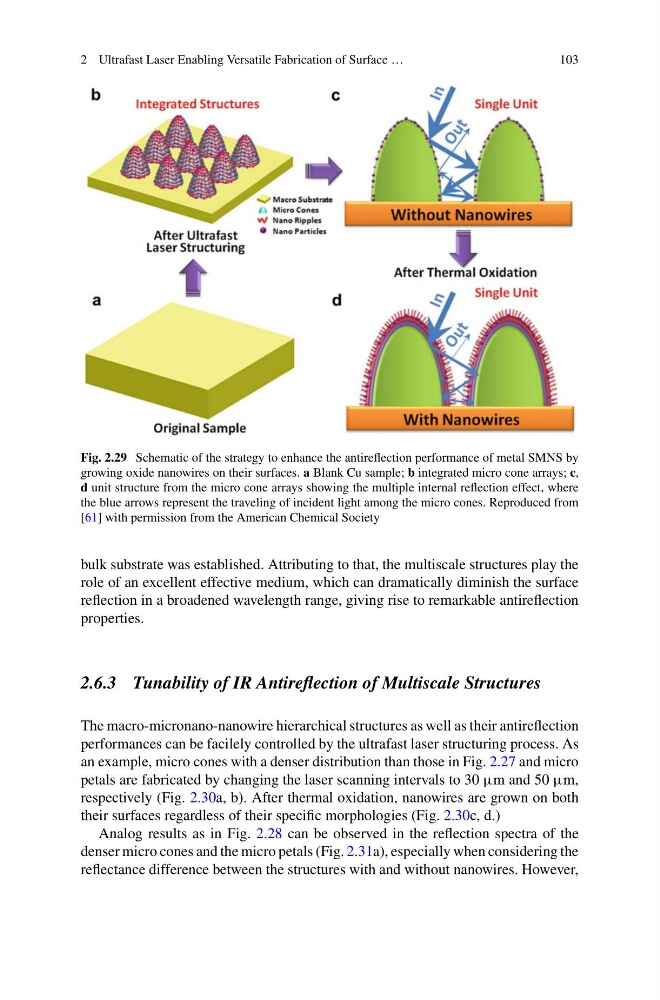
Fig. 2.29 Schematic of the strategy to enhance the antireflection performance of metal SMNS by
growing oxide nanowires on their surfaces. a Blank Cu sample; b integrated micro cone arrays; c,
d unit structure from the micro cone arrays showing the multiple internal reflection effect, where
the blue arrows represent the traveling of incident light among the micro cones. Reproduced from
[61] with permission from the American Chemical Society
bulk substrate was established. Attributing to that, the multiscale structures play the
role of an excellent effective medium, which can dramatically diminish the surface
reflection in a broadened wavelength range, giving rise to remarkable antireflection
properties.
2.6.3 Tunability of IR Antireflection of Multiscale Structures
The macro-micronano-nanowire hierarchical structures as well as their antireflection
performances can be facilely controlled by the ultrafast laser structuring process. As
an example, micro cones with a denser distribution than those in Fig. 2.27 and micro
petals are fabricated by changing the laser scanning intervals to 30 µm and 50 µm,
respectively (Fig. 2.30a, b). After thermal oxidation, nanowires are grown on both
their surfaces regardless of their specific morphologies (Fig. 2.30c, d.)
Analog results as in Fig. 2.28 can be observed in the reflection spectra of the
denser micro cones and the micro petals (Fig. 2.31a), especially when considering the
reflectance difference between the structures with and without nanowires. However,
103
Fig. 2.29 Schematic of the strategy to enhance the antireflection performance of metal SMNS by
growing oxide nanowires on their surfaces. a Blank Cu sample; b integrated micro cone arrays; c,
d unit structure from the micro cone arrays showing the multiple internal reflection effect, where
the blue arrows represent the traveling of incident light among the micro cones. Reproduced from
[61] with permission from the American Chemical Society
bulk substrate was established. Attributing to that, the multiscale structures play the
role of an excellent effective medium, which can dramatically diminish the surface
reflection in a broadened wavelength range, giving rise to remarkable antireflection
properties.
2.6.3 Tunability of IR Antireflection of Multiscale Structures
The macro-micronano-nanowire hierarchical structures as well as their antireflection
performances can be facilely controlled by the ultrafast laser structuring process. As
an example, micro cones with a denser distribution than those in Fig. 2.27 and micro
petals are fabricated by changing the laser scanning intervals to 30 µm and 50 µm,
respectively (Fig. 2.30a, b). After thermal oxidation, nanowires are grown on both
their surfaces regardless of their specific morphologies (Fig. 2.30c, d.)
Analog results as in Fig. 2.28 can be observed in the reflection spectra of the
denser micro cones and the micro petals (Fig. 2.31a), especially when considering the
reflectance difference between the structures with and without nanowires. However,