

10
1 Introduction
Description of the
Experiments
Specification of the
Droplet Microfluidic
Network
Fabricated Device
Designing Applicationspecific Architectures
Chapter 7
Dimensioning Droplet
Microfluidic Networks
Chapter 4
Generating
Droplet Sequences
Chapter 8
Designing Meanders
Chapter 5
Simulating Droplet
Microfluidic Networks
Chapter 3
Complex and
time-consuming design
Costly
prototyping
iterations
Part II
r
o
f
s
d
o
h
t
e
M
n
g
i
s
e
D
c
i
d
i
u
l
f
o
r
c
i
M
t
e
l
p
o
r
D
Networks in General
Part III
r
o
f
s
d
o
h
t
e
M
n
g
i
s
e
D
c
i
d
i
u
l
f
o
r
c
i
M
N e t w o r k s
Using
Passive Droplet
Routing
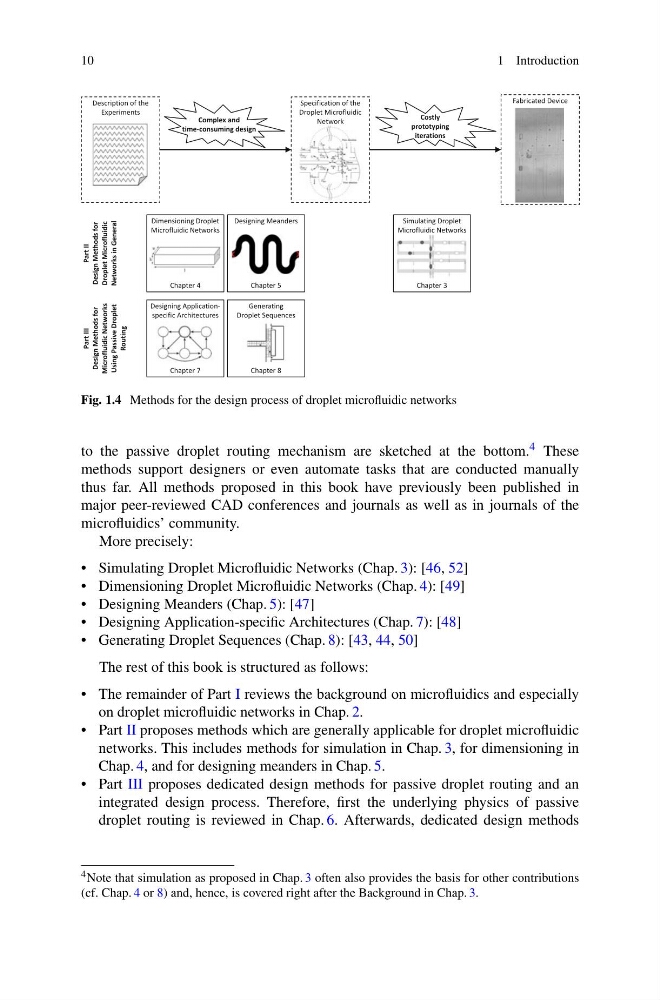
Fig. 1.4 Methods for the design process of droplet microfluidic networks
to the passive droplet routing mechanism are sketched at the bottom. 4 These
methods support designers or even automate tasks that are conducted manually
thus far. All methods proposed in this book have previously been published in
major peer-reviewed CAD conferences and journals as well as in journals of the
microfluidics’ community.
More precisely:
• Simulating Droplet Microfluidic Networks (Chap. 3): [46, 52]
• Dimensioning Droplet Microfluidic Networks (Chap. 4): [49]
• Designing Meanders (Chap. 5): [47]
• Designing Application-specific Architectures (Chap. 7): [48]
• Generating Droplet Sequences (Chap. 8): [43, 44, 50]
The rest of this book is structured as follows:
• The remainder of Part I reviews the background on microfluidics and especially
on droplet microfluidic networks in Chap. 2.
• Part II proposes methods which are generally applicable for droplet microfluidic
networks. This includes methods for simulation in Chap. 3, for dimensioning in
Chap. 4, and for designing meanders in Chap. 5.
• Part III proposes dedicated design methods for passive droplet routing and an
integrated design process. Therefore, first the underlying physics of passive
droplet routing is reviewed in Chap. 6. Afterwards, dedicated design methods
4 Note that simulation as proposed in Chap. 3 often also provides the basis for other contributions
(cf. Chap. 4 or 8) and, hence, is covered right after the Background in Chap. 3.
1 Introduction
Description of the
Experiments
Specification of the
Droplet Microfluidic
Network
Fabricated Device
Designing Applicationspecific Architectures
Chapter 7
Dimensioning Droplet
Microfluidic Networks
Chapter 4
Generating
Droplet Sequences
Chapter 8
Designing Meanders
Chapter 5
Simulating Droplet
Microfluidic Networks
Chapter 3
Complex and
time-consuming design
Costly
prototyping
iterations
Part II
r
o
f
s
d
o
h
t
e
M
n
g
i
s
e
D
c
i
d
i
u
l
f
o
r
c
i
M
t
e
l
p
o
r
D
Networks in General
Part III
r
o
f
s
d
o
h
t
e
M
n
g
i
s
e
D
c
i
d
i
u
l
f
o
r
c
i
M
N e t w o r k s
Using
Passive Droplet
Routing
Fig. 1.4 Methods for the design process of droplet microfluidic networks
to the passive droplet routing mechanism are sketched at the bottom. 4 These
methods support designers or even automate tasks that are conducted manually
thus far. All methods proposed in this book have previously been published in
major peer-reviewed CAD conferences and journals as well as in journals of the
microfluidics’ community.
More precisely:
• Simulating Droplet Microfluidic Networks (Chap. 3): [46, 52]
• Dimensioning Droplet Microfluidic Networks (Chap. 4): [49]
• Designing Meanders (Chap. 5): [47]
• Designing Application-specific Architectures (Chap. 7): [48]
• Generating Droplet Sequences (Chap. 8): [43, 44, 50]
The rest of this book is structured as follows:
• The remainder of Part I reviews the background on microfluidics and especially
on droplet microfluidic networks in Chap. 2.
• Part II proposes methods which are generally applicable for droplet microfluidic
networks. This includes methods for simulation in Chap. 3, for dimensioning in
Chap. 4, and for designing meanders in Chap. 5.
• Part III proposes dedicated design methods for passive droplet routing and an
integrated design process. Therefore, first the underlying physics of passive
droplet routing is reviewed in Chap. 6. Afterwards, dedicated design methods
4 Note that simulation as proposed in Chap. 3 often also provides the basis for other contributions
(cf. Chap. 4 or 8) and, hence, is covered right after the Background in Chap. 3.