

120
12 The Measurement of the Critical Velocity
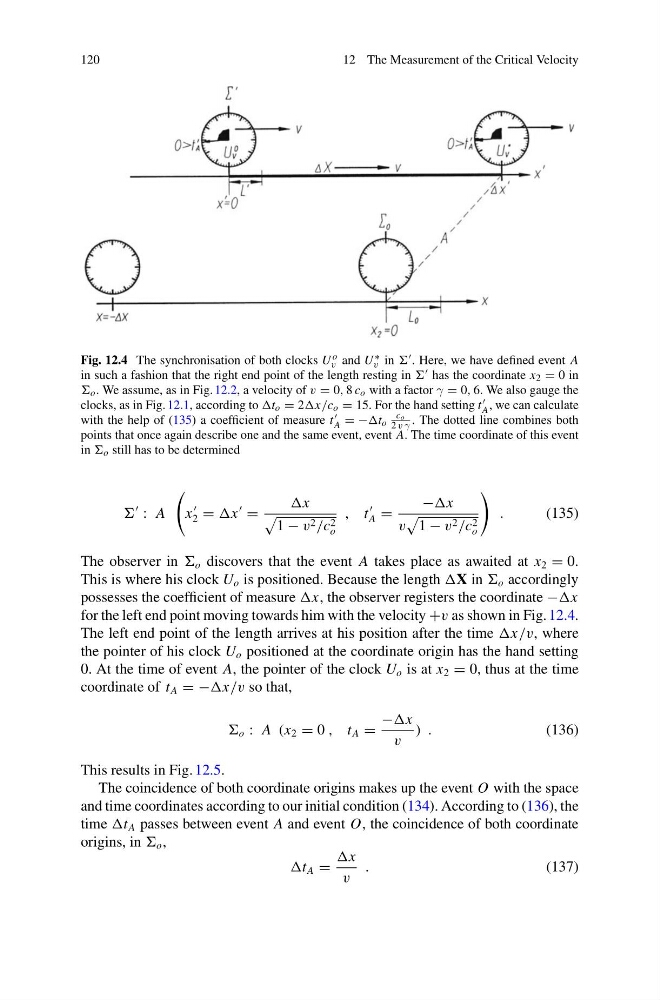
Fig. 12.4 The synchronisation of both clocks U o
v and U ∗
v in . Here, we have defined event A
in such a fashion that the right end point of the length resting in has the coordinate x 2 = 0 in
o . We assume, as in Fig. 12.2, a velocity of v = 0, 8 c o with a factor γ = 0, 6. We also gauge the
clocks, as in Fig. 12.1, according to t o = 2x/c o = 15. For the hand setting t
A , we can calculate
with the help of (135) a coefficient of measure t
A = −t o
co
2 v γ . The dotted line combines both
points that once again describe one and the same event, event A. The time coordinate of this event
in o still has to be determined
: A
x
2 = x
=
x
1 − v 2 /c 2
o
, t
A =
−x
v
1 − v 2 /c 2
o
.
(135)
The observer in o discovers that the event A takes place as awaited at x 2 = 0.
This is where his clock U o is positioned. Because the length X in o accordingly
possesses the coefficient of measure x, the observer registers the coordinate −x
for the left end point moving towards him with the velocity +v as shown in Fig. 12.4.
The left end point of the length arrives at his position after the time x/v, where
the pointer of his clock U o positioned at the coordinate origin has the hand setting
0. At the time of event A, the pointer of the clock U o is at x 2 = 0, thus at the time
coordinate of t A = −x/v so that,
o : A (x 2 = 0 , t A =
−x
v
) .
(136)
This results in Fig. 12.5.
The coincidence of both coordinate origins makes up the event O with the space
and time coordinates according to our initial condition (134). According to (136), the
time t A passes between event A and event O, the coincidence of both coordinate
origins, in o ,
t A =
x
v
.
(137)
12 The Measurement of the Critical Velocity
Fig. 12.4 The synchronisation of both clocks U o
v and U ∗
v in . Here, we have defined event A
in such a fashion that the right end point of the length resting in has the coordinate x 2 = 0 in
o . We assume, as in Fig. 12.2, a velocity of v = 0, 8 c o with a factor γ = 0, 6. We also gauge the
clocks, as in Fig. 12.1, according to t o = 2x/c o = 15. For the hand setting t
A , we can calculate
with the help of (135) a coefficient of measure t
A = −t o
co
2 v γ . The dotted line combines both
points that once again describe one and the same event, event A. The time coordinate of this event
in o still has to be determined
: A
x
2 = x
=
x
1 − v 2 /c 2
o
, t
A =
−x
v
1 − v 2 /c 2
o
.
(135)
The observer in o discovers that the event A takes place as awaited at x 2 = 0.
This is where his clock U o is positioned. Because the length X in o accordingly
possesses the coefficient of measure x, the observer registers the coordinate −x
for the left end point moving towards him with the velocity +v as shown in Fig. 12.4.
The left end point of the length arrives at his position after the time x/v, where
the pointer of his clock U o positioned at the coordinate origin has the hand setting
0. At the time of event A, the pointer of the clock U o is at x 2 = 0, thus at the time
coordinate of t A = −x/v so that,
o : A (x 2 = 0 , t A =
−x
v
) .
(136)
This results in Fig. 12.5.
The coincidence of both coordinate origins makes up the event O with the space
and time coordinates according to our initial condition (134). According to (136), the
time t A passes between event A and event O, the coincidence of both coordinate
origins, in o ,
t A =
x
v
.
(137)