

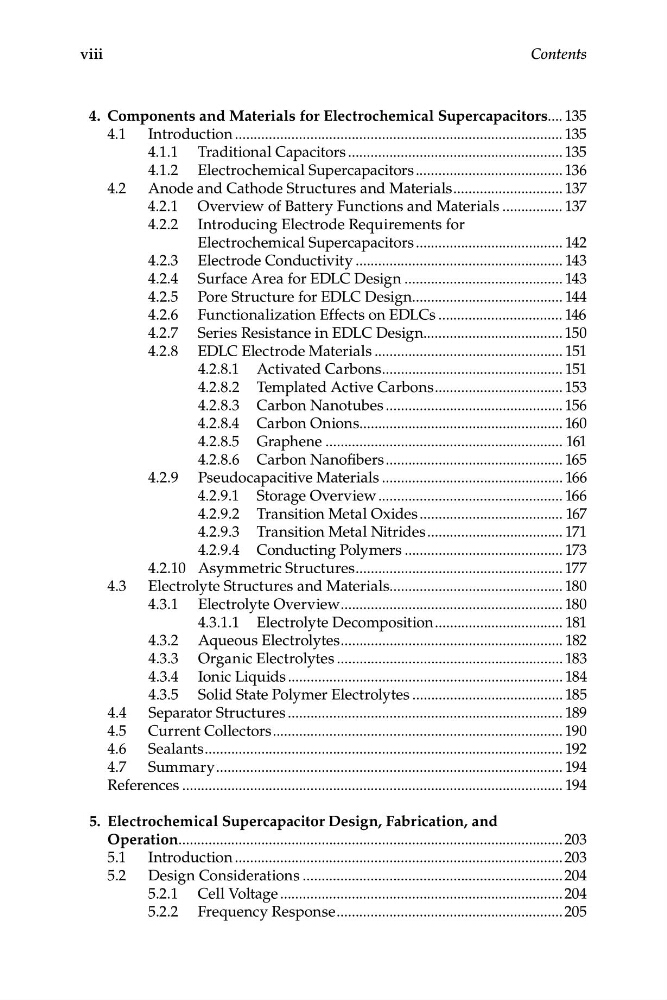
4. Components and Materials for Electrochemical Supercapacitors.... 135
4.1 Introduction ....................................................................................... 135
4.1.1 Traditional Capacitors ......................................................... 135
4.1.2 Electrochemical Supercapacitors ....................................... 136
4.2 Anode and Cathode Structures and Materials............................. 137
4.2.1 Overview of Battery Functions and Materials ................ 137
4.2.2 Introducing Electrode Requirements for
Electrochemical Supercapacitors ....................................... 142
4.2.3
Electrode Conductivity ....................................................... 143
4.2.4 Surface Area for EDLC Design .......................................... 143
4.2.5 Pore Structure for EDLC Design........................................ 144
4.2.6 Functionalization Effects on EDLCs ................................. 146
4.2.7 Series Resistance in EDLC Design..................................... 150
4.2.8 EDLC Electrode Materials .................................................. 151
4.2.8.1 Activated Carbons ................................................ 151
4.2.8.2 Templated Active Carbons .................................. 153
4.2.8.3 Carbon Nanotubes ............................................... 156
4.2.8.4 Carbon Onions...................................................... 160
4.2.8.5 Graphene ............................................................... 161
4.2.8.6 Carbon Nanofibers ............................................... 165
4.2.9 Pseudocapacitive Materials ................................................ 166
4.2.9.1 Storage Overview ................................................. 166
4.2.9.2 Transition Metal Oxides ...................................... 167
4.2.9.3 Transition Metal Nitrides .................................... 171
4.2.9.4 Conducting Polymers .......................................... 173
4.2.10 Asymmetric Structures....................................................... 177
4.3 Electrolyte Structures and Materials.............................................. 180
4.3.1
Electrolyte Overview ........................................................... 180
4.3.1.1 Electrolyte Decomposition .................................. 181
4.3.2
Aqueous Electrolytes........................................................... 182
4.3.3
Organic Electrolytes ............................................................ 183
4.3.4 Ionic Liquids ......................................................................... 184
4.3.5 Solid State Polymer Electrolytes ........................................ 185
4.4 Separator Structures ......................................................................... 189
4.5 Current Collectors............................................................................. 190
4.6 Sealants............................................................................................... 192
4.7 Summary ............................................................................................ 194
References ..................................................................................................... 194
5. Electrochemical Supercapacitor Design, Fabrication, and
Operation...................................................................................................... 203
5.1 Introduction ....................................................................................... 203
5.2 Design Considerations ..................................................................... 204
5.2.1 Cell Voltage ........................................................................... 204
5.2.2 Frequency Response............................................................ 205
viii
Contents
4.1 Introduction ....................................................................................... 135
4.1.1 Traditional Capacitors ......................................................... 135
4.1.2 Electrochemical Supercapacitors ....................................... 136
4.2 Anode and Cathode Structures and Materials............................. 137
4.2.1 Overview of Battery Functions and Materials ................ 137
4.2.2 Introducing Electrode Requirements for
Electrochemical Supercapacitors ....................................... 142
4.2.3
Electrode Conductivity ....................................................... 143
4.2.4 Surface Area for EDLC Design .......................................... 143
4.2.5 Pore Structure for EDLC Design........................................ 144
4.2.6 Functionalization Effects on EDLCs ................................. 146
4.2.7 Series Resistance in EDLC Design..................................... 150
4.2.8 EDLC Electrode Materials .................................................. 151
4.2.8.1 Activated Carbons ................................................ 151
4.2.8.2 Templated Active Carbons .................................. 153
4.2.8.3 Carbon Nanotubes ............................................... 156
4.2.8.4 Carbon Onions...................................................... 160
4.2.8.5 Graphene ............................................................... 161
4.2.8.6 Carbon Nanofibers ............................................... 165
4.2.9 Pseudocapacitive Materials ................................................ 166
4.2.9.1 Storage Overview ................................................. 166
4.2.9.2 Transition Metal Oxides ...................................... 167
4.2.9.3 Transition Metal Nitrides .................................... 171
4.2.9.4 Conducting Polymers .......................................... 173
4.2.10 Asymmetric Structures....................................................... 177
4.3 Electrolyte Structures and Materials.............................................. 180
4.3.1
Electrolyte Overview ........................................................... 180
4.3.1.1 Electrolyte Decomposition .................................. 181
4.3.2
Aqueous Electrolytes........................................................... 182
4.3.3
Organic Electrolytes ............................................................ 183
4.3.4 Ionic Liquids ......................................................................... 184
4.3.5 Solid State Polymer Electrolytes ........................................ 185
4.4 Separator Structures ......................................................................... 189
4.5 Current Collectors............................................................................. 190
4.6 Sealants............................................................................................... 192
4.7 Summary ............................................................................................ 194
References ..................................................................................................... 194
5. Electrochemical Supercapacitor Design, Fabrication, and
Operation...................................................................................................... 203
5.1 Introduction ....................................................................................... 203
5.2 Design Considerations ..................................................................... 204
5.2.1 Cell Voltage ........................................................................... 204
5.2.2 Frequency Response............................................................ 205
viii
Contents