

78
5 InGaN/GaN Multiple Quantum Wells Materials …
5.2.2 Spontaneous Polarization and Piezoelectric
Polarization
Polarization is an important property of nitride materials. Polarization effects exist
in both Ga-polar and N-polar materials. Polarization effects include spontaneous
polarization and piezoelectric polarization. Spontaneous polarization is caused by the
asymmetry of the wurtzite structure in the (0001) direction. Piezoelectric polarization
is caused by the arrangement shift of anion and cations accompanied by the lattice
distortion. The polarity of the III-V material determines the direction of spontaneous
polarization and piezoelectric polarization while affecting the structure and electrical
properties of the material.
As early as 1997, Bernardini et al. [6] predicted that there is a strong spontaneous
polarization effect in the III-nitride materials. In the materials of the Ga face polarity
(cationic polarity), the material lattice constant c/a is smaller than the ideal factor of
1.633, and the electronegativity between the group III cation and the N atom is largely
different. Therefore, the polarization vector P 1 is larger than the polarization vector
P 2 in the material structural unit, so there is a top-down spontaneous polarization P sp
throughout the material which is opposite to the material growth direction [0001].
In the case of the N-face polarity, the polarity is opposite to that of the Ga surface,
and there is an upward spontaneous polarization in the material that is the same as
the material growth direction [000-1].
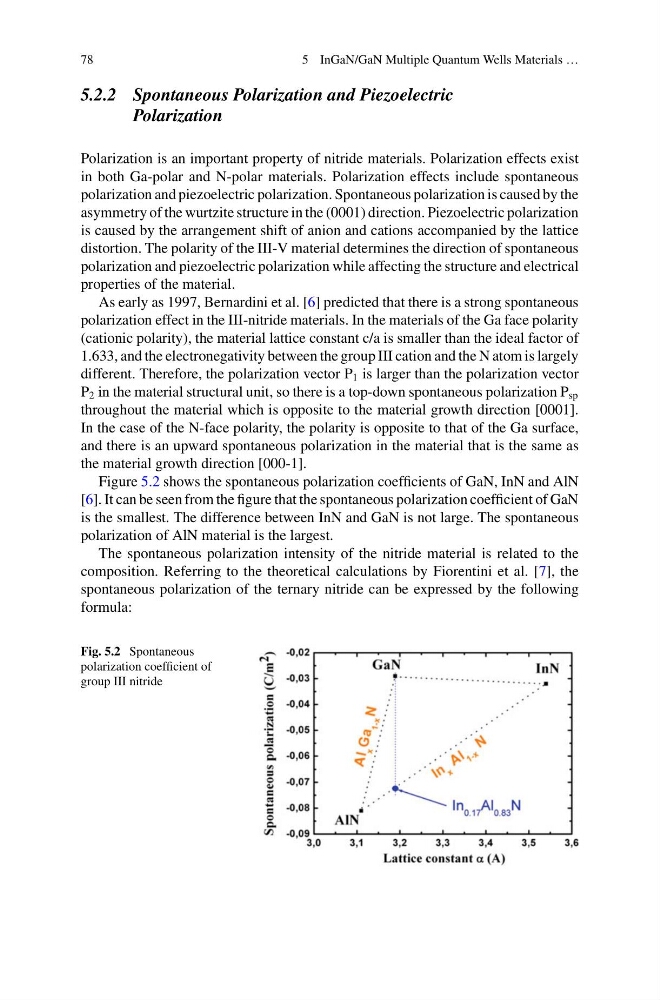
Figure 5.2 shows the spontaneous polarization coefficients of GaN, InN and AlN
[6]. It can be seen from the figure that the spontaneous polarization coefficient of GaN
is the smallest. The difference between InN and GaN is not large. The spontaneous
polarization of AlN material is the largest.
The spontaneous polarization intensity of the nitride material is related to the
composition. Referring to the theoretical calculations by Fiorentini et al. [7], the
spontaneous polarization of the ternary nitride can be expressed by the following
formula:
Fig. 5.2 Spontaneous
polarization coefficient of
group III nitride
5 InGaN/GaN Multiple Quantum Wells Materials …
5.2.2 Spontaneous Polarization and Piezoelectric
Polarization
Polarization is an important property of nitride materials. Polarization effects exist
in both Ga-polar and N-polar materials. Polarization effects include spontaneous
polarization and piezoelectric polarization. Spontaneous polarization is caused by the
asymmetry of the wurtzite structure in the (0001) direction. Piezoelectric polarization
is caused by the arrangement shift of anion and cations accompanied by the lattice
distortion. The polarity of the III-V material determines the direction of spontaneous
polarization and piezoelectric polarization while affecting the structure and electrical
properties of the material.
As early as 1997, Bernardini et al. [6] predicted that there is a strong spontaneous
polarization effect in the III-nitride materials. In the materials of the Ga face polarity
(cationic polarity), the material lattice constant c/a is smaller than the ideal factor of
1.633, and the electronegativity between the group III cation and the N atom is largely
different. Therefore, the polarization vector P 1 is larger than the polarization vector
P 2 in the material structural unit, so there is a top-down spontaneous polarization P sp
throughout the material which is opposite to the material growth direction [0001].
In the case of the N-face polarity, the polarity is opposite to that of the Ga surface,
and there is an upward spontaneous polarization in the material that is the same as
the material growth direction [000-1].
Figure 5.2 shows the spontaneous polarization coefficients of GaN, InN and AlN
[6]. It can be seen from the figure that the spontaneous polarization coefficient of GaN
is the smallest. The difference between InN and GaN is not large. The spontaneous
polarization of AlN material is the largest.
The spontaneous polarization intensity of the nitride material is related to the
composition. Referring to the theoretical calculations by Fiorentini et al. [7], the
spontaneous polarization of the ternary nitride can be expressed by the following
formula:
Fig. 5.2 Spontaneous
polarization coefficient of
group III nitride