

46
4 Epitaxial of III-Nitride LED Materials
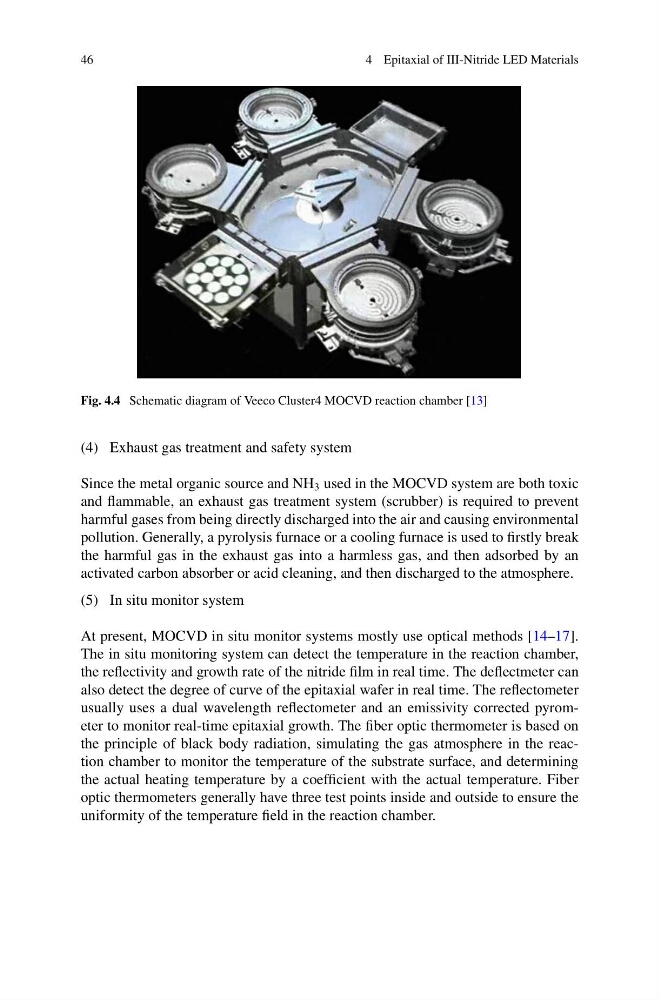
Fig. 4.4 Schematic diagram of Veeco Cluster4 MOCVD reaction chamber [13]
(4) Exhaust gas treatment and safety system
Since the metal organic source and NH 3 used in the MOCVD system are both toxic
and flammable, an exhaust gas treatment system (scrubber) is required to prevent
harmful gases from being directly discharged into the air and causing environmental
pollution. Generally, a pyrolysis furnace or a cooling furnace is used to firstly break
the harmful gas in the exhaust gas into a harmless gas, and then adsorbed by an
activated carbon absorber or acid cleaning, and then discharged to the atmosphere.
(5) In situ monitor system
At present, MOCVD in situ monitor systems mostly use optical methods [14–17].
The in situ monitoring system can detect the temperature in the reaction chamber,
the reflectivity and growth rate of the nitride film in real time. The deflectmeter can
also detect the degree of curve of the epitaxial wafer in real time. The reflectometer
usually uses a dual wavelength reflectometer and an emissivity corrected pyrometer to monitor real-time epitaxial growth. The fiber optic thermometer is based on
the principle of black body radiation, simulating the gas atmosphere in the reaction chamber to monitor the temperature of the substrate surface, and determining
the actual heating temperature by a coefficient with the actual temperature. Fiber
optic thermometers generally have three test points inside and outside to ensure the
uniformity of the temperature field in the reaction chamber.
4 Epitaxial of III-Nitride LED Materials
Fig. 4.4 Schematic diagram of Veeco Cluster4 MOCVD reaction chamber [13]
(4) Exhaust gas treatment and safety system
Since the metal organic source and NH 3 used in the MOCVD system are both toxic
and flammable, an exhaust gas treatment system (scrubber) is required to prevent
harmful gases from being directly discharged into the air and causing environmental
pollution. Generally, a pyrolysis furnace or a cooling furnace is used to firstly break
the harmful gas in the exhaust gas into a harmless gas, and then adsorbed by an
activated carbon absorber or acid cleaning, and then discharged to the atmosphere.
(5) In situ monitor system
At present, MOCVD in situ monitor systems mostly use optical methods [14–17].
The in situ monitoring system can detect the temperature in the reaction chamber,
the reflectivity and growth rate of the nitride film in real time. The deflectmeter can
also detect the degree of curve of the epitaxial wafer in real time. The reflectometer
usually uses a dual wavelength reflectometer and an emissivity corrected pyrometer to monitor real-time epitaxial growth. The fiber optic thermometer is based on
the principle of black body radiation, simulating the gas atmosphere in the reaction chamber to monitor the temperature of the substrate surface, and determining
the actual heating temperature by a coefficient with the actual temperature. Fiber
optic thermometers generally have three test points inside and outside to ensure the
uniformity of the temperature field in the reaction chamber.