

16
2 Basic Principles of LED
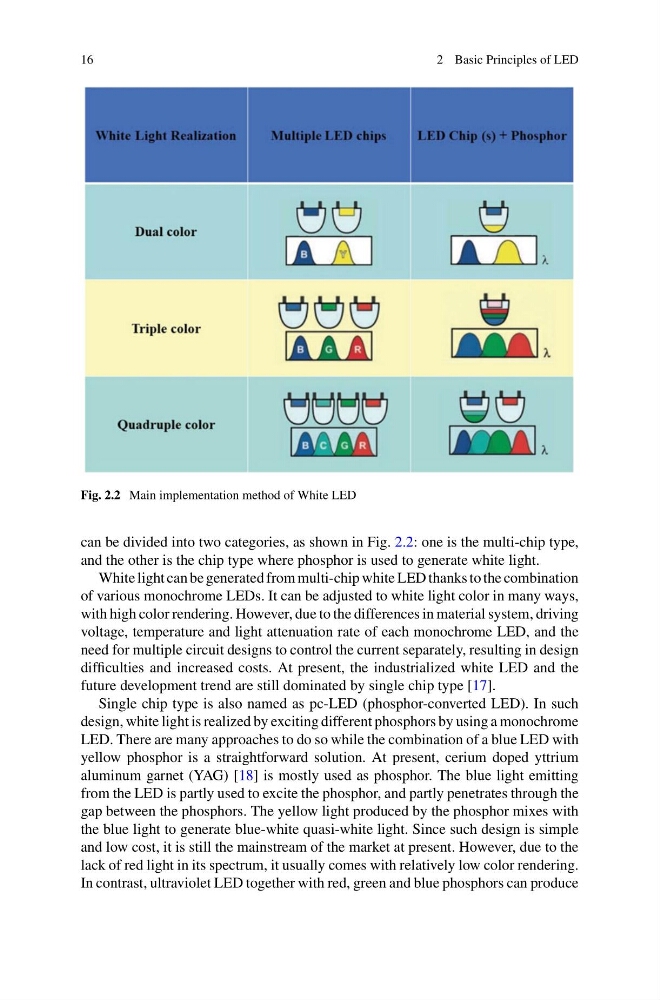
Fig. 2.2 Main implementation method of White LED
can be divided into two categories, as shown in Fig. 2.2: one is the multi-chip type,
and the other is the chip type where phosphor is used to generate white light.
White light can be generated from multi-chip white LED thanks to the combination
of various monochrome LEDs. It can be adjusted to white light color in many ways,
with high color rendering. However, due to the differences in material system, driving
voltage, temperature and light attenuation rate of each monochrome LED, and the
need for multiple circuit designs to control the current separately, resulting in design
difficulties and increased costs. At present, the industrialized white LED and the
future development trend are still dominated by single chip type [17].
Single chip type is also named as pc-LED (phosphor-converted LED). In such
design, white light is realized by exciting different phosphors by using a monochrome
LED. There are many approaches to do so while the combination of a blue LED with
yellow phosphor is a straightforward solution. At present, cerium doped yttrium
aluminum garnet (YAG) [18] is mostly used as phosphor. The blue light emitting
from the LED is partly used to excite the phosphor, and partly penetrates through the
gap between the phosphors. The yellow light produced by the phosphor mixes with
the blue light to generate blue-white quasi-white light. Since such design is simple
and low cost, it is still the mainstream of the market at present. However, due to the
lack of red light in its spectrum, it usually comes with relatively low color rendering.
In contrast, ultraviolet LED together with red, green and blue phosphors can produce
2 Basic Principles of LED
Fig. 2.2 Main implementation method of White LED
can be divided into two categories, as shown in Fig. 2.2: one is the multi-chip type,
and the other is the chip type where phosphor is used to generate white light.
White light can be generated from multi-chip white LED thanks to the combination
of various monochrome LEDs. It can be adjusted to white light color in many ways,
with high color rendering. However, due to the differences in material system, driving
voltage, temperature and light attenuation rate of each monochrome LED, and the
need for multiple circuit designs to control the current separately, resulting in design
difficulties and increased costs. At present, the industrialized white LED and the
future development trend are still dominated by single chip type [17].
Single chip type is also named as pc-LED (phosphor-converted LED). In such
design, white light is realized by exciting different phosphors by using a monochrome
LED. There are many approaches to do so while the combination of a blue LED with
yellow phosphor is a straightforward solution. At present, cerium doped yttrium
aluminum garnet (YAG) [18] is mostly used as phosphor. The blue light emitting
from the LED is partly used to excite the phosphor, and partly penetrates through the
gap between the phosphors. The yellow light produced by the phosphor mixes with
the blue light to generate blue-white quasi-white light. Since such design is simple
and low cost, it is still the mainstream of the market at present. However, due to the
lack of red light in its spectrum, it usually comes with relatively low color rendering.
In contrast, ultraviolet LED together with red, green and blue phosphors can produce