

11.4 LED for Plant Breeding
245
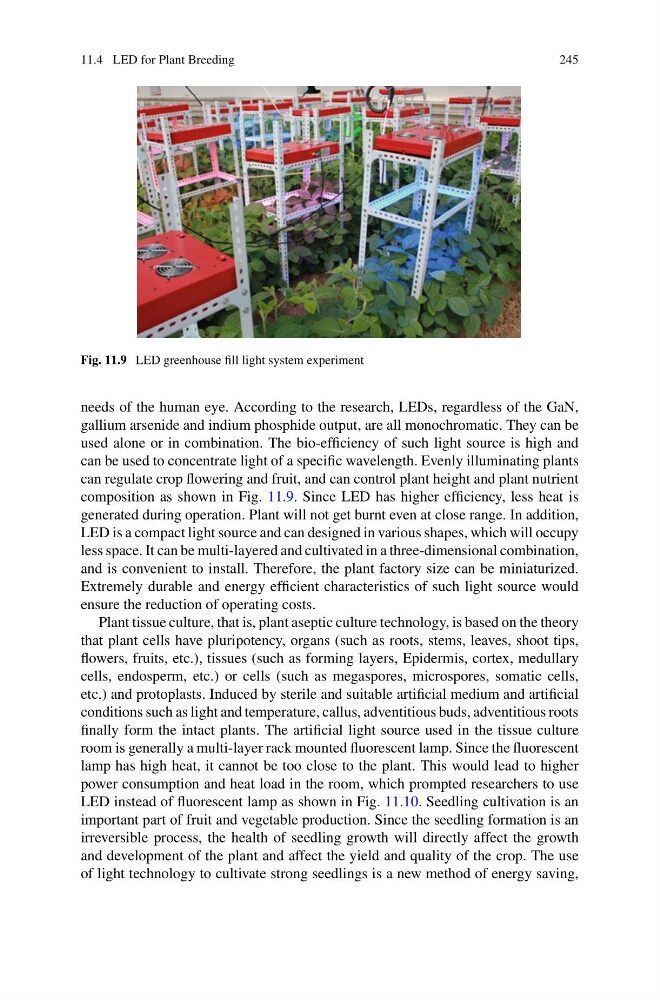
Fig. 11.9 LED greenhouse fill light system experiment
needs of the human eye. According to the research, LEDs, regardless of the GaN,
gallium arsenide and indium phosphide output, are all monochromatic. They can be
used alone or in combination. The bio-efficiency of such light source is high and
can be used to concentrate light of a specific wavelength. Evenly illuminating plants
can regulate crop flowering and fruit, and can control plant height and plant nutrient
composition as shown in Fig. 11.9. Since LED has higher efficiency, less heat is
generated during operation. Plant will not get burnt even at close range. In addition,
LED is a compact light source and can designed in various shapes, which will occupy
less space. It can be multi-layered and cultivated in a three-dimensional combination,
and is convenient to install. Therefore, the plant factory size can be miniaturized.
Extremely durable and energy efficient characteristics of such light source would
ensure the reduction of operating costs.
Plant tissue culture, that is, plant aseptic culture technology, is based on the theory
that plant cells have pluripotency, organs (such as roots, stems, leaves, shoot tips,
flowers, fruits, etc.), tissues (such as forming layers, Epidermis, cortex, medullary
cells, endosperm, etc.) or cells (such as megaspores, microspores, somatic cells,
etc.) and protoplasts. Induced by sterile and suitable artificial medium and artificial
conditions such as light and temperature, callus, adventitious buds, adventitious roots
finally form the intact plants. The artificial light source used in the tissue culture
room is generally a multi-layer rack mounted fluorescent lamp. Since the fluorescent
lamp has high heat, it cannot be too close to the plant. This would lead to higher
power consumption and heat load in the room, which prompted researchers to use
LED instead of fluorescent lamp as shown in Fig. 11.10. Seedling cultivation is an
important part of fruit and vegetable production. Since the seedling formation is an
irreversible process, the health of seedling growth will directly affect the growth
and development of the plant and affect the yield and quality of the crop. The use
of light technology to cultivate strong seedlings is a new method of energy saving,
245
Fig. 11.9 LED greenhouse fill light system experiment
needs of the human eye. According to the research, LEDs, regardless of the GaN,
gallium arsenide and indium phosphide output, are all monochromatic. They can be
used alone or in combination. The bio-efficiency of such light source is high and
can be used to concentrate light of a specific wavelength. Evenly illuminating plants
can regulate crop flowering and fruit, and can control plant height and plant nutrient
composition as shown in Fig. 11.9. Since LED has higher efficiency, less heat is
generated during operation. Plant will not get burnt even at close range. In addition,
LED is a compact light source and can designed in various shapes, which will occupy
less space. It can be multi-layered and cultivated in a three-dimensional combination,
and is convenient to install. Therefore, the plant factory size can be miniaturized.
Extremely durable and energy efficient characteristics of such light source would
ensure the reduction of operating costs.
Plant tissue culture, that is, plant aseptic culture technology, is based on the theory
that plant cells have pluripotency, organs (such as roots, stems, leaves, shoot tips,
flowers, fruits, etc.), tissues (such as forming layers, Epidermis, cortex, medullary
cells, endosperm, etc.) or cells (such as megaspores, microspores, somatic cells,
etc.) and protoplasts. Induced by sterile and suitable artificial medium and artificial
conditions such as light and temperature, callus, adventitious buds, adventitious roots
finally form the intact plants. The artificial light source used in the tissue culture
room is generally a multi-layer rack mounted fluorescent lamp. Since the fluorescent
lamp has high heat, it cannot be too close to the plant. This would lead to higher
power consumption and heat load in the room, which prompted researchers to use
LED instead of fluorescent lamp as shown in Fig. 11.10. Seedling cultivation is an
important part of fruit and vegetable production. Since the seedling formation is an
irreversible process, the health of seedling growth will directly affect the growth
and development of the plant and affect the yield and quality of the crop. The use
of light technology to cultivate strong seedlings is a new method of energy saving,