

11.4 LED for Plant Breeding
243
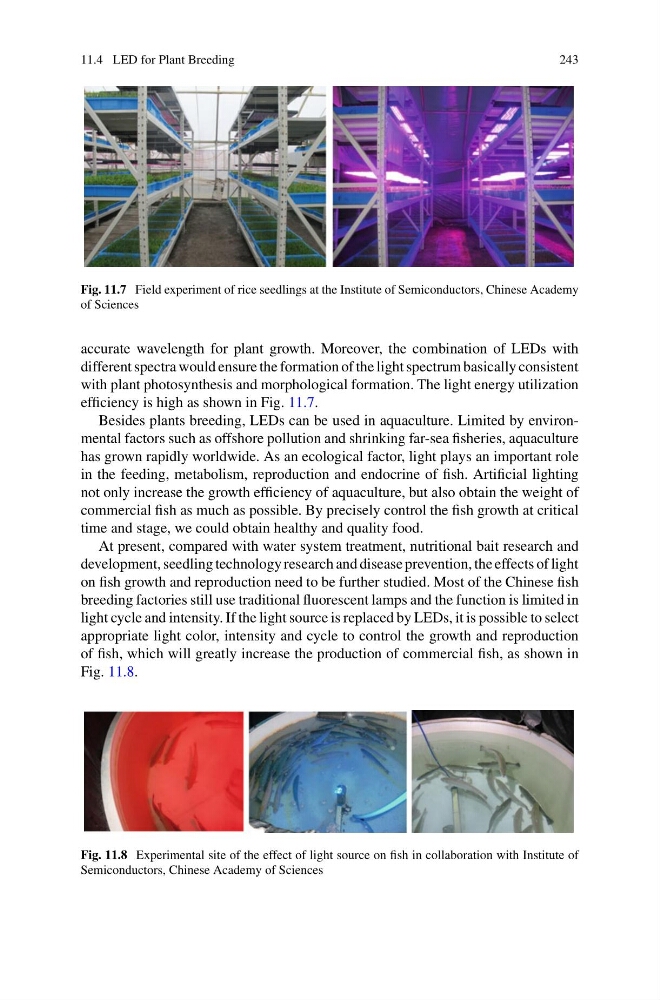
Fig. 11.7 Field experiment of rice seedlings at the Institute of Semiconductors, Chinese Academy
of Sciences
accurate wavelength for plant growth. Moreover, the combination of LEDs with
different spectra would ensure the formation of the light spectrum basically consistent
with plant photosynthesis and morphological formation. The light energy utilization
efficiency is high as shown in Fig. 11.7.
Besides plants breeding, LEDs can be used in aquaculture. Limited by environmental factors such as offshore pollution and shrinking far-sea fisheries, aquaculture
has grown rapidly worldwide. As an ecological factor, light plays an important role
in the feeding, metabolism, reproduction and endocrine of fish. Artificial lighting
not only increase the growth efficiency of aquaculture, but also obtain the weight of
commercial fish as much as possible. By precisely control the fish growth at critical
time and stage, we could obtain healthy and quality food.
At present, compared with water system treatment, nutritional bait research and
development, seedling technology research and disease prevention, the effects of light
on fish growth and reproduction need to be further studied. Most of the Chinese fish
breeding factories still use traditional fluorescent lamps and the function is limited in
light cycle and intensity. If the light source is replaced by LEDs, it is possible to select
appropriate light color, intensity and cycle to control the growth and reproduction
of fish, which will greatly increase the production of commercial fish, as shown in
Fig. 11.8.
Fig. 11.8 Experimental site of the effect of light source on fish in collaboration with Institute of
Semiconductors, Chinese Academy of Sciences
243
Fig. 11.7 Field experiment of rice seedlings at the Institute of Semiconductors, Chinese Academy
of Sciences
accurate wavelength for plant growth. Moreover, the combination of LEDs with
different spectra would ensure the formation of the light spectrum basically consistent
with plant photosynthesis and morphological formation. The light energy utilization
efficiency is high as shown in Fig. 11.7.
Besides plants breeding, LEDs can be used in aquaculture. Limited by environmental factors such as offshore pollution and shrinking far-sea fisheries, aquaculture
has grown rapidly worldwide. As an ecological factor, light plays an important role
in the feeding, metabolism, reproduction and endocrine of fish. Artificial lighting
not only increase the growth efficiency of aquaculture, but also obtain the weight of
commercial fish as much as possible. By precisely control the fish growth at critical
time and stage, we could obtain healthy and quality food.
At present, compared with water system treatment, nutritional bait research and
development, seedling technology research and disease prevention, the effects of light
on fish growth and reproduction need to be further studied. Most of the Chinese fish
breeding factories still use traditional fluorescent lamps and the function is limited in
light cycle and intensity. If the light source is replaced by LEDs, it is possible to select
appropriate light color, intensity and cycle to control the growth and reproduction
of fish, which will greatly increase the production of commercial fish, as shown in
Fig. 11.8.
Fig. 11.8 Experimental site of the effect of light source on fish in collaboration with Institute of
Semiconductors, Chinese Academy of Sciences