

236
11 Applications of LEDs
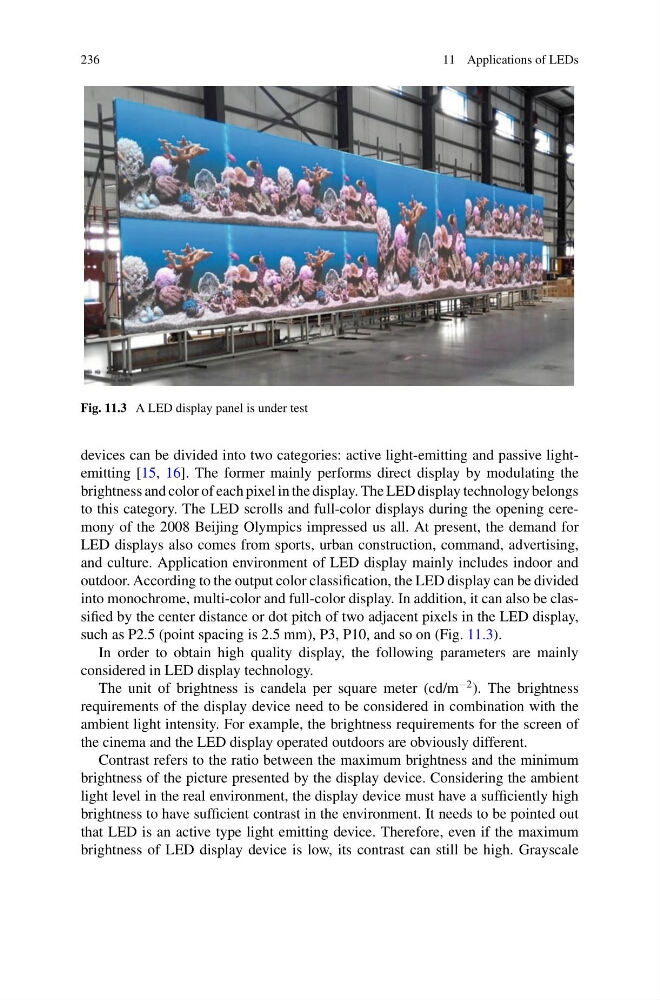
Fig. 11.3 A LED display panel is under test
devices can be divided into two categories: active light-emitting and passive lightemitting [15, 16]. The former mainly performs direct display by modulating the
brightness and color of each pixel in the display. The LED display technology belongs
to this category. The LED scrolls and full-color displays during the opening ceremony of the 2008 Beijing Olympics impressed us all. At present, the demand for
LED displays also comes from sports, urban construction, command, advertising,
and culture. Application environment of LED display mainly includes indoor and
outdoor. According to the output color classification, the LED display can be divided
into monochrome, multi-color and full-color display. In addition, it can also be classified by the center distance or dot pitch of two adjacent pixels in the LED display,
such as P2.5 (point spacing is 2.5 mm), P3, P10, and so on (Fig. 11.3).
In order to obtain high quality display, the following parameters are mainly
considered in LED display technology.
The unit of brightness is candela per square meter (cd/m
−2 ). The brightness
requirements of the display device need to be considered in combination with the
ambient light intensity. For example, the brightness requirements for the screen of
the cinema and the LED display operated outdoors are obviously different.
Contrast refers to the ratio between the maximum brightness and the minimum
brightness of the picture presented by the display device. Considering the ambient
light level in the real environment, the display device must have a sufficiently high
brightness to have sufficient contrast in the environment. It needs to be pointed out
that LED is an active type light emitting device. Therefore, even if the maximum
brightness of LED display device is low, its contrast can still be high. Grayscale
11 Applications of LEDs
Fig. 11.3 A LED display panel is under test
devices can be divided into two categories: active light-emitting and passive lightemitting [15, 16]. The former mainly performs direct display by modulating the
brightness and color of each pixel in the display. The LED display technology belongs
to this category. The LED scrolls and full-color displays during the opening ceremony of the 2008 Beijing Olympics impressed us all. At present, the demand for
LED displays also comes from sports, urban construction, command, advertising,
and culture. Application environment of LED display mainly includes indoor and
outdoor. According to the output color classification, the LED display can be divided
into monochrome, multi-color and full-color display. In addition, it can also be classified by the center distance or dot pitch of two adjacent pixels in the LED display,
such as P2.5 (point spacing is 2.5 mm), P3, P10, and so on (Fig. 11.3).
In order to obtain high quality display, the following parameters are mainly
considered in LED display technology.
The unit of brightness is candela per square meter (cd/m
−2 ). The brightness
requirements of the display device need to be considered in combination with the
ambient light intensity. For example, the brightness requirements for the screen of
the cinema and the LED display operated outdoors are obviously different.
Contrast refers to the ratio between the maximum brightness and the minimum
brightness of the picture presented by the display device. Considering the ambient
light level in the real environment, the display device must have a sufficiently high
brightness to have sufficient contrast in the environment. It needs to be pointed out
that LED is an active type light emitting device. Therefore, even if the maximum
brightness of LED display device is low, its contrast can still be high. Grayscale