

530
K. Sada and K. Kokado
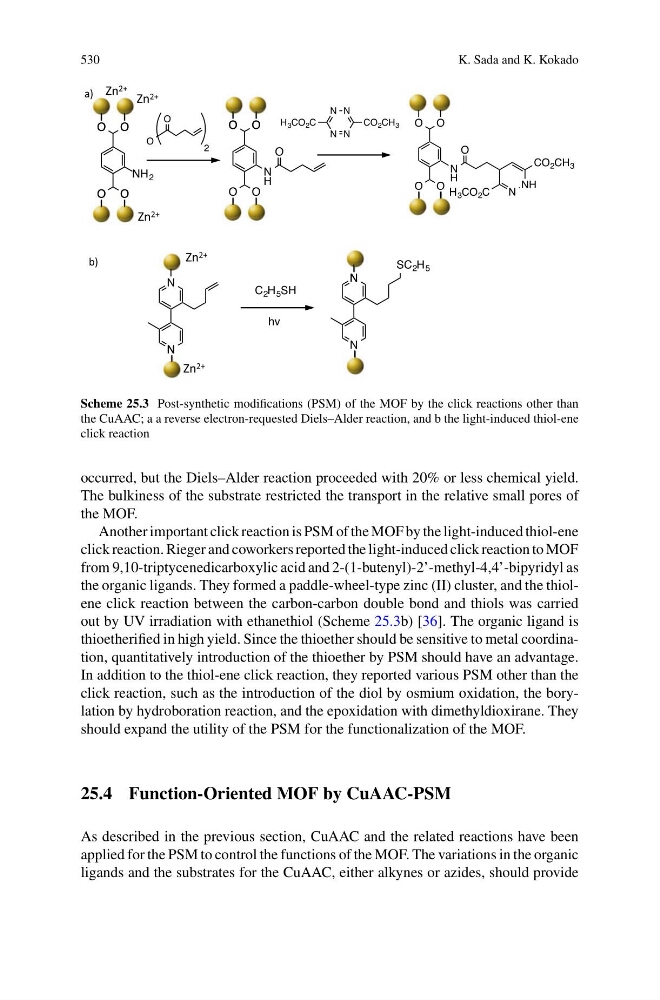
Scheme 25.3 Post-synthetic modifications (PSM) of the MOF by the click reactions other than
the CuAAC; a a reverse electron-requested Diels–Alder reaction, and b the light-induced thiol-ene
click reaction
occurred, but the Diels–Alder reaction proceeded with 20% or less chemical yield.
The bulkiness of the substrate restricted the transport in the relative small pores of
the MOF.
Another important click reaction is PSM of the MOF by the light-induced thiol-ene
click reaction. Rieger and coworkers reported the light-induced click reaction to MOF
from 9,10-triptycenedicarboxylic acid and 2-(1-butenyl)-2’-methyl-4,4’-bipyridyl as
the organic ligands. They formed a paddle-wheel-type zinc (II) cluster, and the thiolene click reaction between the carbon-carbon double bond and thiols was carried
out by UV irradiation with ethanethiol (Scheme 25.3b) [36]. The organic ligand is
thioetherified in high yield. Since the thioether should be sensitive to metal coordination, quantitatively introduction of the thioether by PSM should have an advantage.
In addition to the thiol-ene click reaction, they reported various PSM other than the
click reaction, such as the introduction of the diol by osmium oxidation, the borylation by hydroboration reaction, and the epoxidation with dimethyldioxirane. They
should expand the utility of the PSM for the functionalization of the MOF.
25.4 Function-Oriented MOF by CuAAC-PSM
As described in the previous section, CuAAC and the related reactions have been
applied for the PSM to control the functions of the MOF. The variations in the organic
ligands and the substrates for the CuAAC, either alkynes or azides, should provide
K. Sada and K. Kokado
Scheme 25.3 Post-synthetic modifications (PSM) of the MOF by the click reactions other than
the CuAAC; a a reverse electron-requested Diels–Alder reaction, and b the light-induced thiol-ene
click reaction
occurred, but the Diels–Alder reaction proceeded with 20% or less chemical yield.
The bulkiness of the substrate restricted the transport in the relative small pores of
the MOF.
Another important click reaction is PSM of the MOF by the light-induced thiol-ene
click reaction. Rieger and coworkers reported the light-induced click reaction to MOF
from 9,10-triptycenedicarboxylic acid and 2-(1-butenyl)-2’-methyl-4,4’-bipyridyl as
the organic ligands. They formed a paddle-wheel-type zinc (II) cluster, and the thiolene click reaction between the carbon-carbon double bond and thiols was carried
out by UV irradiation with ethanethiol (Scheme 25.3b) [36]. The organic ligand is
thioetherified in high yield. Since the thioether should be sensitive to metal coordination, quantitatively introduction of the thioether by PSM should have an advantage.
In addition to the thiol-ene click reaction, they reported various PSM other than the
click reaction, such as the introduction of the diol by osmium oxidation, the borylation by hydroboration reaction, and the epoxidation with dimethyldioxirane. They
should expand the utility of the PSM for the functionalization of the MOF.
25.4 Function-Oriented MOF by CuAAC-PSM
As described in the previous section, CuAAC and the related reactions have been
applied for the PSM to control the functions of the MOF. The variations in the organic
ligands and the substrates for the CuAAC, either alkynes or azides, should provide