

Several indicators from the AQUAMED project’s surveys (http://www.
aquamedproject.net) make it possible to assess the research’s support capacity in
relation to the size of the aquaculture sector and its performance. In general, Algeria
has many specialized research structures in aquaculture. Four university departments, two institutes, and a national research center (CNRDPA) are in charge. The
number of researchers involved is low, considering the development objectives, the
extent of the territory, the diversity of the subjects to be mastered, the techniques to
be transferred, and the innovation needs to ensure the mastery of the farms. In all
cases, there is a lack of coordination between aquaculture stakeholders and a
relatively weak technical training and monitoring of producers.
In Algeria, aquaculture has not had the expected development, despite the
political will and real strengths, particularly in terms of financial and fiscal benefits.
The hoped-for development seems to depend first of all on the ability to set up an
organization in coherence with realistic objectives. The current effort to restructure
the entire industry, including training and finalized research (MPRH 2014), needs to
be highlighted. Table 20.3 summarizes the strengths and weaknesses of marine
aquaculture in Algeria.
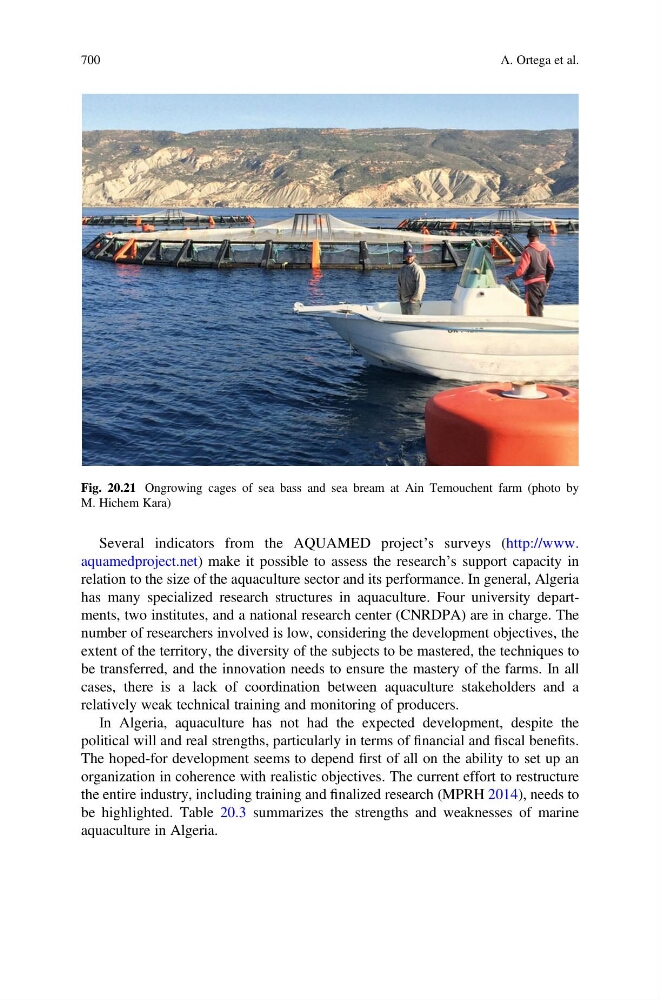
Fig. 20.21 Ongrowing cages of sea bass and sea bream at Ain Temouchent farm (photo by
M. Hichem Kara)
700
A. Ortega et al.