

Doraloup went into bankruptcy in December 2002, but Aqua-M’diq continued
their activity, and it established a cooperation agreement with INRH in order to
provide it with technical support in terms of servicing and maintenance of the
mooring system of floating cages and a partial production of sea bass fingerlings
in the experimental fish hatchery of the Aquaculture Research Center in M’diq. It
also opted for an effective participation in research efforts for fish feed development
using local ingredients in a joint partnership between Aqua-M’diq, a private livestock feed factory interested in feed production in Kenitra, INRH Aquaculture
Center in M’diq, and Agronomic and Veterinary Institute Hassan II in Rabat. So,
it was possible to locally supply Aqua-M’diq with sea bass fingerlings from INRH
Aquaculture Center in M’diq from 2004 to 2009 and with feeds produced by a
commercial factory in Kenitra since 2005 and further with sea bass extruded feeds
produced by another animal feeds located near Tangiers. This enabled this fish farm
to survive and continue its aquaculture activities, to sell its products on the national
market, and to create its own distribution network at the regional and national level.
This network has been gradually reinforced with marketing development through
large commercial surfaces installed in different cities of Morocco.
Local fish fry production and locally produced fish feeds have led to overpass a
critical period due to prices falling of sea bass and sea bream on the European market
and fierce competition of other Mediterranean countries. This has allowed to provide
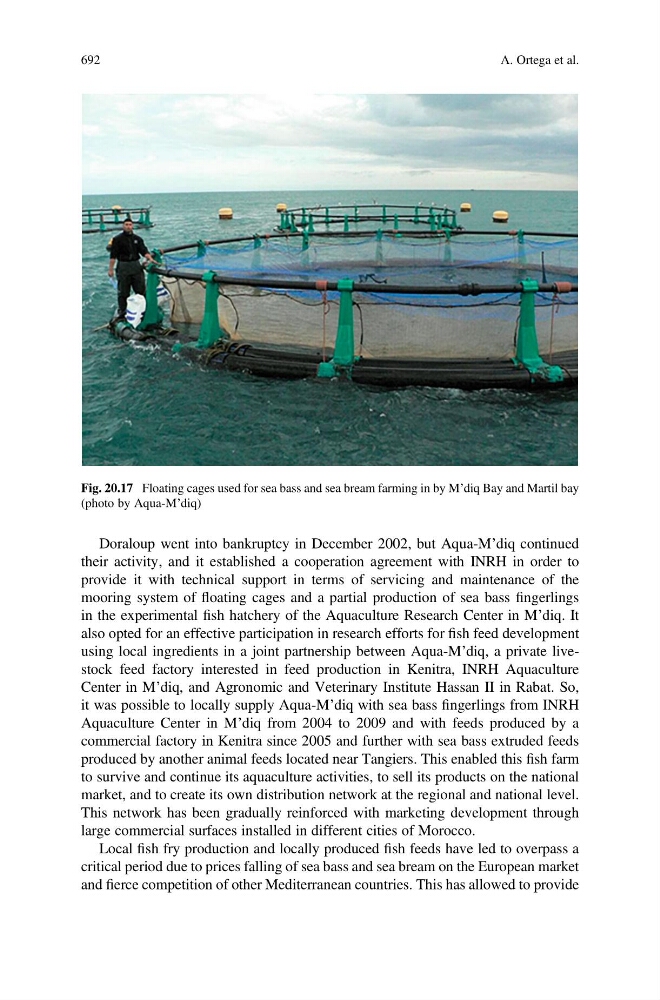
Fig. 20.17 Floating cages used for sea bass and sea bream farming in by M’diq Bay and Martil bay
(photo by Aqua-M’diq)
692
A. Ortega et al.