

Despite these figures, Mediterranean fisheries only account for a small proportion
of world production (some 80 million tons). However, the average prices of landings
(which are mainly sold fresh) are above the average prices of world markets, and
from a socioeconomic point of view, fishing activities in the Mediterranean employ a
large number of people. Fishing in the Mediterranean is very diverse and varies
geographically, not only because of the existence of different marine environments
but also because of different socioeconomic situations. They are characterized by
certain distinct features, like high diversity of the catches, high number of marketable and not marketable species, absence of large single stocks, and small-scale
vessels (Damalas 2017).
Mediterranean and Black Sea waters are divided into 30 geographical subareas
(GSAs), established in 2009 by the GFCM to compile data, monitor fisheries, and
assess fisheries in a georeferenced manner. Therefore, from the fishery point of view,
the Alboran Sea includes GSAs 01 (Northern Alboran Sea), 02 (Alboran Island), and
03 (Southern Alboran Sea). Spanish fleet operates in GSAs 01 and 02 (Fig. 18.2).
The fishing area of the Northern Alboran Sea is characterized by a very narrow
shelf affected by several shelf-indenting canyons (Durán et al. 2018). Due to its
oceanographic and ecological importance, with the confluence of Atlantic and
Mediterranean masses, this sea supports a great marine biodiversity (García-Raso
et al. 2010; Templado 2011), including a large number of commercial species. A
wide variety of fishing techniques have been developed, of which bottom trawling is
one of the most widely used and is responsible for the largest catches of demersal
species in the area (Camiñas et al. 2004). The target species of bottom trawlers are
mainly European hake, mullets, octopus, and shrimps. However, catches are composed of a large number of species (Gil de Sola 1993).
0
200
400
600
800
1000
1200
1970 1975 1980 1985 1990 1995 2000 2005 2010 2015
Tons/year
Mediterranean Sea
Black Sea
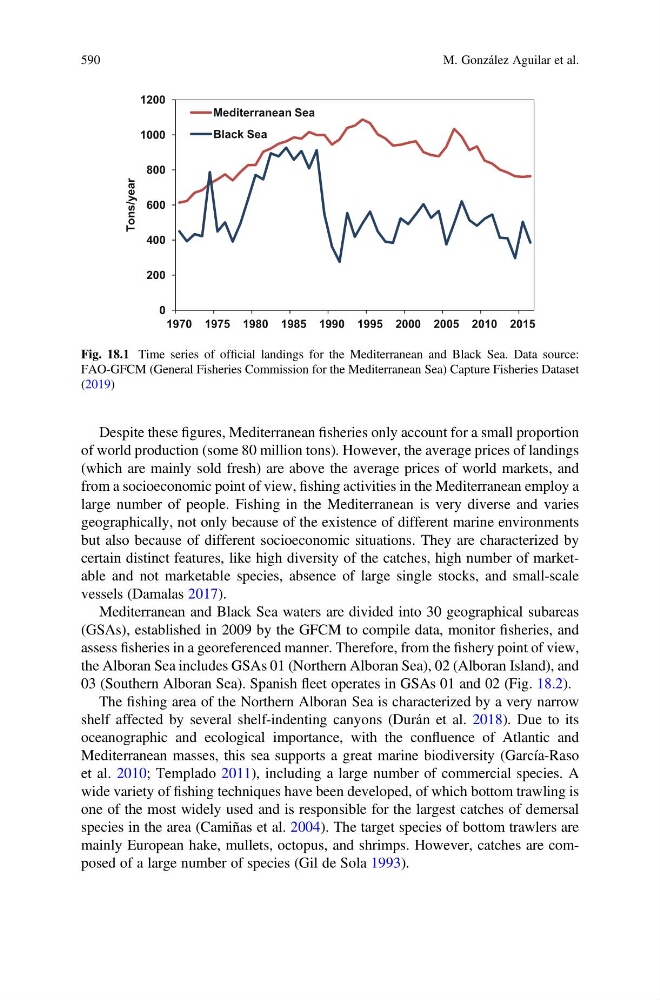
Fig. 18.1 Time series of official landings for the Mediterranean and Black Sea. Data source:
FAO-GFCM (General Fisheries Commission for the Mediterranean Sea) Capture Fisheries Dataset
(2019)
590
M. González Aguilar et al.
of world production (some 80 million tons). However, the average prices of landings
(which are mainly sold fresh) are above the average prices of world markets, and
from a socioeconomic point of view, fishing activities in the Mediterranean employ a
large number of people. Fishing in the Mediterranean is very diverse and varies
geographically, not only because of the existence of different marine environments
but also because of different socioeconomic situations. They are characterized by
certain distinct features, like high diversity of the catches, high number of marketable and not marketable species, absence of large single stocks, and small-scale
vessels (Damalas 2017).
Mediterranean and Black Sea waters are divided into 30 geographical subareas
(GSAs), established in 2009 by the GFCM to compile data, monitor fisheries, and
assess fisheries in a georeferenced manner. Therefore, from the fishery point of view,
the Alboran Sea includes GSAs 01 (Northern Alboran Sea), 02 (Alboran Island), and
03 (Southern Alboran Sea). Spanish fleet operates in GSAs 01 and 02 (Fig. 18.2).
The fishing area of the Northern Alboran Sea is characterized by a very narrow
shelf affected by several shelf-indenting canyons (Durán et al. 2018). Due to its
oceanographic and ecological importance, with the confluence of Atlantic and
Mediterranean masses, this sea supports a great marine biodiversity (García-Raso
et al. 2010; Templado 2011), including a large number of commercial species. A
wide variety of fishing techniques have been developed, of which bottom trawling is
one of the most widely used and is responsible for the largest catches of demersal
species in the area (Camiñas et al. 2004). The target species of bottom trawlers are
mainly European hake, mullets, octopus, and shrimps. However, catches are composed of a large number of species (Gil de Sola 1993).
0
200
400
600
800
1000
1200
1970 1975 1980 1985 1990 1995 2000 2005 2010 2015
Tons/year
Mediterranean Sea
Black Sea
Fig. 18.1 Time series of official landings for the Mediterranean and Black Sea. Data source:
FAO-GFCM (General Fisheries Commission for the Mediterranean Sea) Capture Fisheries Dataset
(2019)
590
M. González Aguilar et al.