

complementary pottery and salting industries’ archaeological findings (Muñoz
2012), for tuna species since ancient times (Rodríguez-Roda 1964; Abad 1995).
Currently, the bluefin tuna fishery consists mainly of traditional trap nets
(almadrabas), bait boats, and artisanal fisheries, all fish in the continental shelf,
although the South Andalusian longliners used a drifting longline targeting bluefin
tuna (Camiñas 2006). In addition to the abovementioned traps, a fishing activity,
using handline and live bait targeting this species, has been carried out in the Strait of
Gibraltar area since 1996, in depths ranging from 500 to 800 m (UNEP-MAP-RAC/
SPA 2014; FAO 2018). This handline fishing technique is conducted by the artisanal
fleet of Morocco and Spain (Abid et al. 2012, 2014).
Small tunas, bullet tuna, Atlantic bonito, and little tunny are caught by tuna traps
and purse seine vessels targeting clupeoids and with artisanal gillnets in the Alboran
Sea (Santamaria and Deflorio 2005). In addition, there are several artisanal fisheries
(fixed gillnets and small surface longlines) targeting these small tuna species.
0
20
40
60
80
100
120
140
160
1985
1987
1989
1991
1993
1995
1997
1999
2001
2003
2005
2007
2009
2011
2013
2015
2017
Landings (t)
Atlantic bonito
0
200
400
600
800
1000
1200
1400
1985
1987
1989
1991
1993
1995
1997
1999
2001
2003
2005
2007
2009
2011
2013
2015
2017
Landings (t)
Bluefin tuna
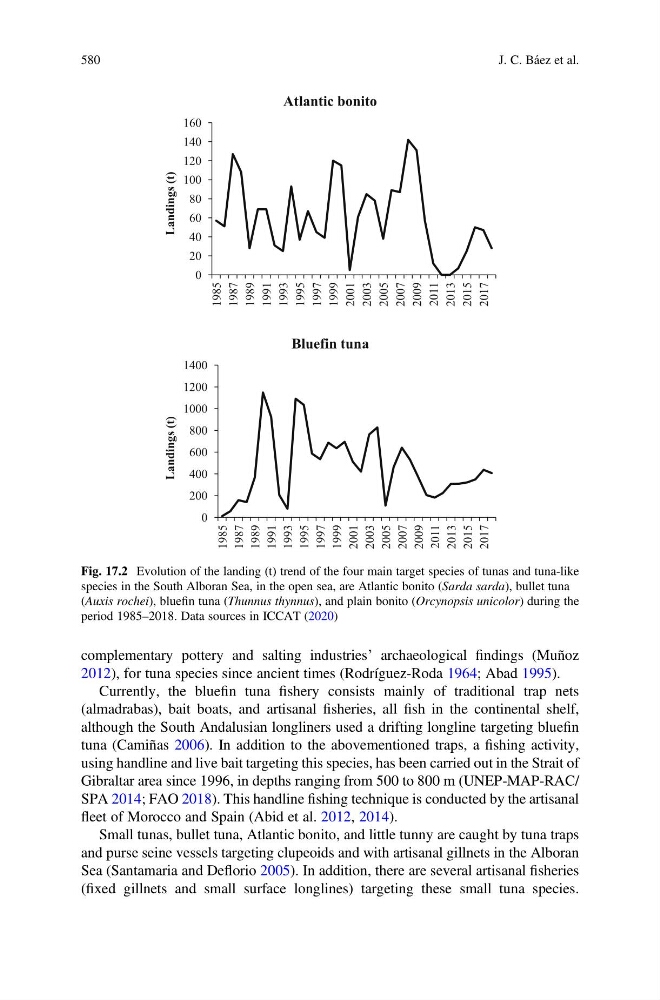
Fig. 17.2 Evolution of the landing (t) trend of the four main target species of tunas and tuna-like
species in the South Alboran Sea, in the open sea, are Atlantic bonito (Sarda sarda), bullet tuna
(Auxis rochei), bluefin tuna (Thunnus thynnus), and plain bonito (Orcynopsis unicolor) during the
period 1985–2018. Data sources in ICCAT (2020)
580
J. C. Báez et al.
2012), for tuna species since ancient times (Rodríguez-Roda 1964; Abad 1995).
Currently, the bluefin tuna fishery consists mainly of traditional trap nets
(almadrabas), bait boats, and artisanal fisheries, all fish in the continental shelf,
although the South Andalusian longliners used a drifting longline targeting bluefin
tuna (Camiñas 2006). In addition to the abovementioned traps, a fishing activity,
using handline and live bait targeting this species, has been carried out in the Strait of
Gibraltar area since 1996, in depths ranging from 500 to 800 m (UNEP-MAP-RAC/
SPA 2014; FAO 2018). This handline fishing technique is conducted by the artisanal
fleet of Morocco and Spain (Abid et al. 2012, 2014).
Small tunas, bullet tuna, Atlantic bonito, and little tunny are caught by tuna traps
and purse seine vessels targeting clupeoids and with artisanal gillnets in the Alboran
Sea (Santamaria and Deflorio 2005). In addition, there are several artisanal fisheries
(fixed gillnets and small surface longlines) targeting these small tuna species.
0
20
40
60
80
100
120
140
160
1985
1987
1989
1991
1993
1995
1997
1999
2001
2003
2005
2007
2009
2011
2013
2015
2017
Landings (t)
Atlantic bonito
0
200
400
600
800
1000
1200
1400
1985
1987
1989
1991
1993
1995
1997
1999
2001
2003
2005
2007
2009
2011
2013
2015
2017
Landings (t)
Bluefin tuna
Fig. 17.2 Evolution of the landing (t) trend of the four main target species of tunas and tuna-like
species in the South Alboran Sea, in the open sea, are Atlantic bonito (Sarda sarda), bullet tuna
(Auxis rochei), bluefin tuna (Thunnus thynnus), and plain bonito (Orcynopsis unicolor) during the
period 1985–2018. Data sources in ICCAT (2020)
580
J. C. Báez et al.