

maintain these convective systems far away from a mountain barrier (Ducrocq et al.
2008).
Lightning frequency over the Alboran Sea presents a maximum in autumn as
shown in Fig. 3.8, although it is one of the Mediterranean sub-basins with lower
lightning density. Lightning occurrence over land surrounding the Alboran Sea is
low all the year around, except in the Atlas Mountains where there exists high
activity from April to September (Anderson and Klugmann 2014).
Duffourg and Ducrocq (2013) estimated that evaporation in the Mediterranean is
the origin of 40–60% of the advected water vapor feeding northwestern Mediterranean convective systems whereas the remaining moisture would come from the
subtropical Atlantic Ocean (Winschall et al. 2014) or North Africa (Turato et al.
2004). More recently, Ciric et al. (2018) analyzed the average percentage of Mediterranean contribution to extreme rainfall for all months and the entire Mediterranean area, and estimated that the contribution in autumn was approximately 40% for
the eastern facade of the Iberian Peninsula. However, for the Alboran Sea, the
influence of Mediterranean moisture on HPE was rapidly reduced to the west. Its
contribution would not reach 10% in the vicinity of the Strait.
In winter, matching with precipitation, insolation presents a minimum in the Strait
of Gibraltar, whereas it presents a maximum east of Melilla in the south coast of
the Alboran Sea. In summer, the minimum of insolation in Alboran is located along
the south coast, caused by low clouds originated by easterly wind (Fig. 3.9).
Over the Mediterranean Sea itself precipitation minus evaporation, P–E, is
negative throughout the year (e.g., Mariotti et al. 2002; Seager et al. 2014)
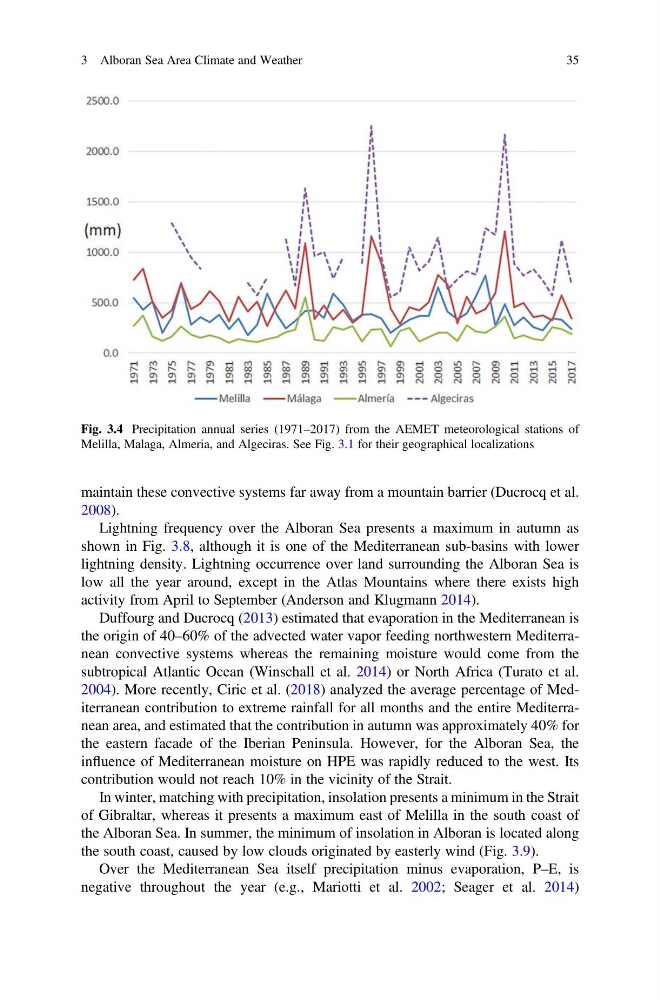
Fig. 3.4 Precipitation annual series (1971–2017) from the AEMET meteorological stations of
Melilla, Malaga, Almeria, and Algeciras. See Fig. 3.1 for their geographical localizations
3 Alboran Sea Area Climate and Weather
35
2008).
Lightning frequency over the Alboran Sea presents a maximum in autumn as
shown in Fig. 3.8, although it is one of the Mediterranean sub-basins with lower
lightning density. Lightning occurrence over land surrounding the Alboran Sea is
low all the year around, except in the Atlas Mountains where there exists high
activity from April to September (Anderson and Klugmann 2014).
Duffourg and Ducrocq (2013) estimated that evaporation in the Mediterranean is
the origin of 40–60% of the advected water vapor feeding northwestern Mediterranean convective systems whereas the remaining moisture would come from the
subtropical Atlantic Ocean (Winschall et al. 2014) or North Africa (Turato et al.
2004). More recently, Ciric et al. (2018) analyzed the average percentage of Mediterranean contribution to extreme rainfall for all months and the entire Mediterranean area, and estimated that the contribution in autumn was approximately 40% for
the eastern facade of the Iberian Peninsula. However, for the Alboran Sea, the
influence of Mediterranean moisture on HPE was rapidly reduced to the west. Its
contribution would not reach 10% in the vicinity of the Strait.
In winter, matching with precipitation, insolation presents a minimum in the Strait
of Gibraltar, whereas it presents a maximum east of Melilla in the south coast of
the Alboran Sea. In summer, the minimum of insolation in Alboran is located along
the south coast, caused by low clouds originated by easterly wind (Fig. 3.9).
Over the Mediterranean Sea itself precipitation minus evaporation, P–E, is
negative throughout the year (e.g., Mariotti et al. 2002; Seager et al. 2014)
Fig. 3.4 Precipitation annual series (1971–2017) from the AEMET meteorological stations of
Melilla, Malaga, Almeria, and Algeciras. See Fig. 3.1 for their geographical localizations
3 Alboran Sea Area Climate and Weather
35