

oftentimes capturing shoals of postlarvae and juveniles of other species, such as
Pagellus sp., Boops boops, Mullus spp., etc. (García et al. 1981; Reina-Hervás and
Serrano 1987).
The increase of the coastal populations flanking the Alboran Sea originated from
the touristic boom of the mid-1960s and 1970s led to the increase of fry fishing. This
fishery typified the coastal region with numerous beach seine fishing along the coast
(Fig. 13.2), especially abundant in the beaches facing the Bay of Malaga (García
et al. 1981). The product of the fishery was camouflaged as “chanquete,” the local
denomination for Aphia minuta, a transparent gobid whose adult size was similar to
the fry of sardine, anchovy, and round sardinella. The abundance of sardine in the
Alboran Sea led to the first scientific reports describing their distribution in the area
(Oliver 1955, 1961). An actual description of the fishing methods applied in present
times providing recent data from the coastal fisheries off N Alboran coastline is
reported in García et al. (2012).
With the economy rising in the 1980s, the fishery expanded because its resources
were guaranteed year-round. The inshore coastline of the Alboran Sea is a haven for
the growth of advanced stages of sardine, anchovy, and several other commercial
fish species. Thus, the iconic image of beach seine trawling was commonplace in the
shores of the Bay of Malaga (Fig. 13.2). The demand for the consumption of fry
became so high that another type of artisanal fishing gear, the birorta, also competed
for these early life resources (Fig. 13.3). This kind of fishery consisted in a small type
of purse seine maneuvered by two–three persons that encircled postlarval shoals, and
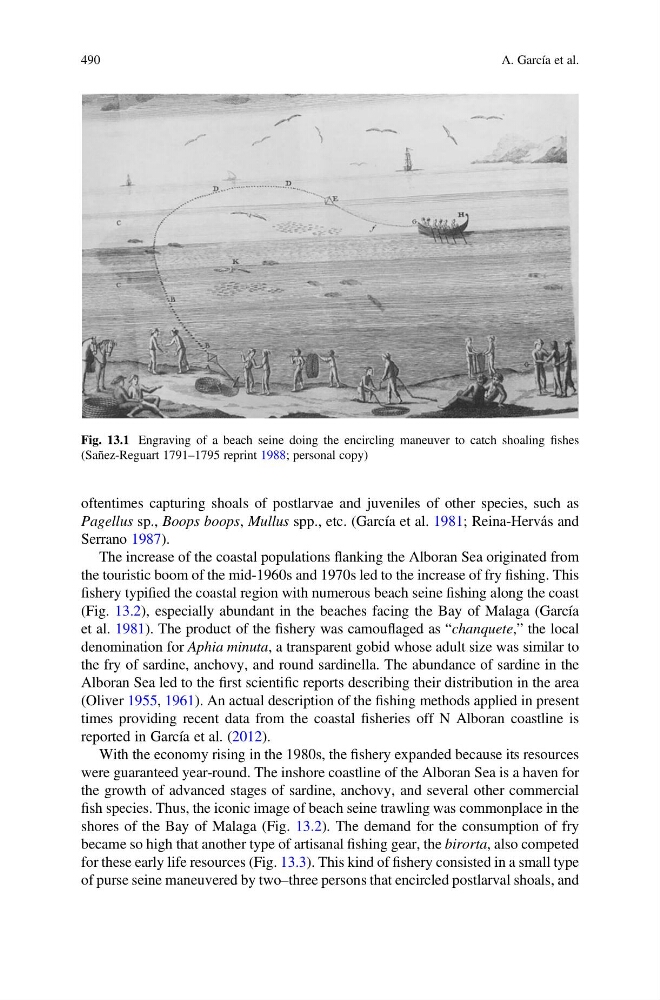
Fig. 13.1 Engraving of a beach seine doing the encircling maneuver to catch shoaling fishes
(Sañez-Reguart 1791–1795 reprint 1988; personal copy)
490
A. García et al.
Pagellus sp., Boops boops, Mullus spp., etc. (García et al. 1981; Reina-Hervás and
Serrano 1987).
The increase of the coastal populations flanking the Alboran Sea originated from
the touristic boom of the mid-1960s and 1970s led to the increase of fry fishing. This
fishery typified the coastal region with numerous beach seine fishing along the coast
(Fig. 13.2), especially abundant in the beaches facing the Bay of Malaga (García
et al. 1981). The product of the fishery was camouflaged as “chanquete,” the local
denomination for Aphia minuta, a transparent gobid whose adult size was similar to
the fry of sardine, anchovy, and round sardinella. The abundance of sardine in the
Alboran Sea led to the first scientific reports describing their distribution in the area
(Oliver 1955, 1961). An actual description of the fishing methods applied in present
times providing recent data from the coastal fisheries off N Alboran coastline is
reported in García et al. (2012).
With the economy rising in the 1980s, the fishery expanded because its resources
were guaranteed year-round. The inshore coastline of the Alboran Sea is a haven for
the growth of advanced stages of sardine, anchovy, and several other commercial
fish species. Thus, the iconic image of beach seine trawling was commonplace in the
shores of the Bay of Malaga (Fig. 13.2). The demand for the consumption of fry
became so high that another type of artisanal fishing gear, the birorta, also competed
for these early life resources (Fig. 13.3). This kind of fishery consisted in a small type
of purse seine maneuvered by two–three persons that encircled postlarval shoals, and
Fig. 13.1 Engraving of a beach seine doing the encircling maneuver to catch shoaling fishes
(Sañez-Reguart 1791–1795 reprint 1988; personal copy)
490
A. García et al.