

Pelagic filter-feeding tunicates are also an important component of gelatinous
plankton and comprise four groups: appendicularians (class Appendicularia) and
salps, pyrosomes and doliolids (class Thaliacea), all represented in the Alboran Sea.
They often form large swarms after the upwelling of cool, nutrient-rich water
promoting blooms of phytoplankton. The appendicularians are the predominant
pelagic tunicates, mainly the genera Oikopleura during summer and Fritillaria
during winter (Champalbert 1996). In turn, the species of salps, pyrosomes and
doliolids that occur sporadically in swarms are mostly Thalia democratica,
Pyrosoma atlanticum and Doliolium nationalis.
10.4.2 Nektonic Invertebrates
Most nektonic animals are vertebrates, mainly fish, whereas invertebrates are only
represented by cephalopods (squids) and some crustaceans (larger euphausiids,
shrimps, prawns and swimming crabs), many of them being commercially important
marine species.
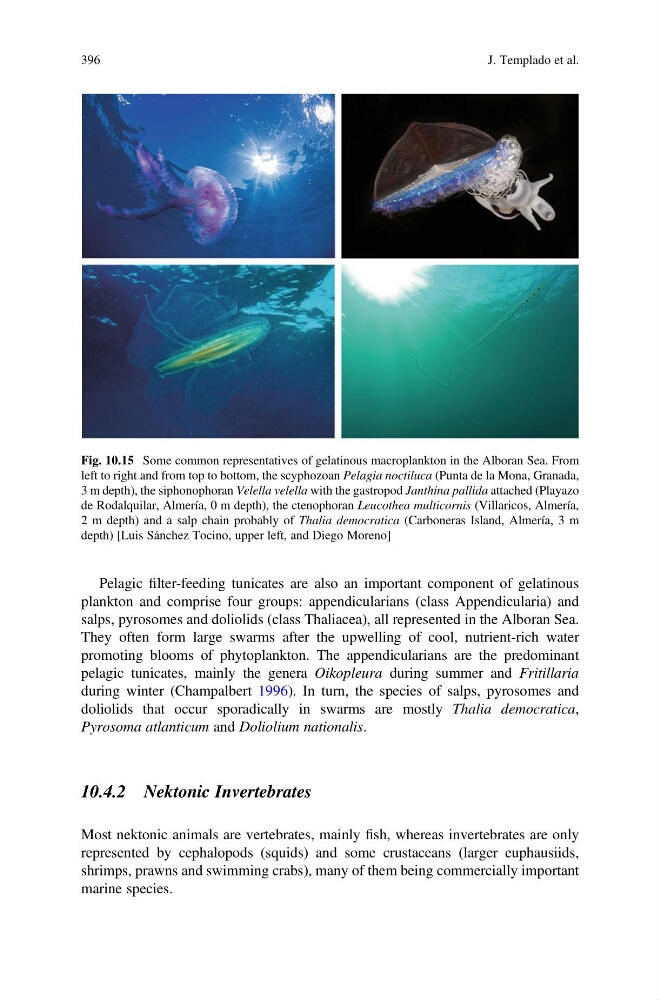
Fig. 10.15 Some common representatives of gelatinous macroplankton in the Alboran Sea. From
left to right and from top to bottom, the scyphozoan Pelagia noctiluca (Punta de la Mona, Granada,
3 m depth), the siphonophoran Velella velella with the gastropod Janthina pallida attached (Playazo
de Rodalquilar, Almería, 0 m depth), the ctenophoran Leucothea multicornis (Villaricos, Almería,
2 m depth) and a salp chain probably of Thalia democratica (Carboneras Island, Almería, 3 m
depth) [Luis Sánchez Tocino, upper left, and Diego Moreno]
396
J. Templado et al.
plankton and comprise four groups: appendicularians (class Appendicularia) and
salps, pyrosomes and doliolids (class Thaliacea), all represented in the Alboran Sea.
They often form large swarms after the upwelling of cool, nutrient-rich water
promoting blooms of phytoplankton. The appendicularians are the predominant
pelagic tunicates, mainly the genera Oikopleura during summer and Fritillaria
during winter (Champalbert 1996). In turn, the species of salps, pyrosomes and
doliolids that occur sporadically in swarms are mostly Thalia democratica,
Pyrosoma atlanticum and Doliolium nationalis.
10.4.2 Nektonic Invertebrates
Most nektonic animals are vertebrates, mainly fish, whereas invertebrates are only
represented by cephalopods (squids) and some crustaceans (larger euphausiids,
shrimps, prawns and swimming crabs), many of them being commercially important
marine species.
Fig. 10.15 Some common representatives of gelatinous macroplankton in the Alboran Sea. From
left to right and from top to bottom, the scyphozoan Pelagia noctiluca (Punta de la Mona, Granada,
3 m depth), the siphonophoran Velella velella with the gastropod Janthina pallida attached (Playazo
de Rodalquilar, Almería, 0 m depth), the ctenophoran Leucothea multicornis (Villaricos, Almería,
2 m depth) and a salp chain probably of Thalia democratica (Carboneras Island, Almería, 3 m
depth) [Luis Sánchez Tocino, upper left, and Diego Moreno]
396
J. Templado et al.