

10.3.6 Deep Reef-Building Corals
Biogenic reefs are any durable hard structure built by living organisms that rises
from the bottom, can increase in volume or thickness through the progressive
stratification of successive generations of organisms and generate special habitats.
Deep reefs in the Alboran Sea are mainly formed by stony corals or deep-sea oysters.
The so-called white coral or cold-water coral community (CWC) is dominated in
the Mediterranean Sea by the azooxanthellate colonial species Desmophyllum
pertusum (formerly known as Lophelia pertusa) and Madrepora oculata and the
solitary coral Desmophyllum dianthus. A recent study (Adamo et al. 2016) shows a
surprising genetic identity between Desmophyllum pertusum and D. dianthus and
suggests the potential conspecificity of both species. This consequently leads, in any
case, to ascribe both taxa under the generic name Desmophyllum (which has priority
over Lophelia by date of publication). These corals are usually found below the
photic zone at upper bathyal depths between 180 and 1000 m, where they can build
large three-dimensional structures (Freiwald et al. 2009).
Until recent times, these deep-water corals were mostly recorded in the Mediterranean as Pleistocene fossils, with just a few records of living specimens, and it
has been suggested that the postglacial conditions could cause their sharp decline
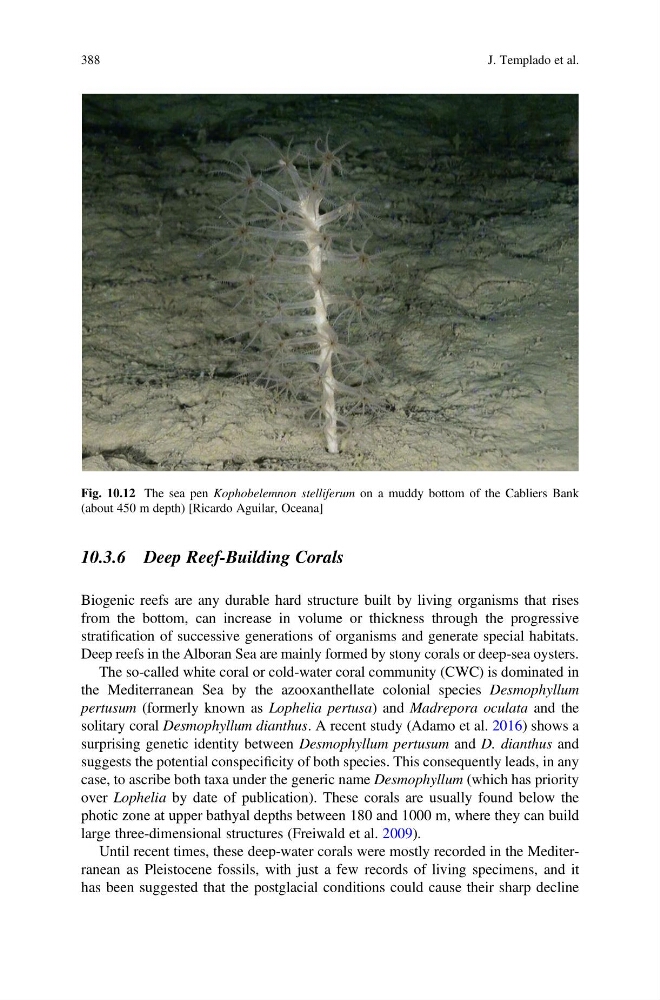
Fig. 10.12 The sea pen Kophobelemnon stelliferum on a muddy bottom of the Cabliers Bank
(about 450 m depth) [Ricardo Aguilar, Oceana]
388
J. Templado et al.
Biogenic reefs are any durable hard structure built by living organisms that rises
from the bottom, can increase in volume or thickness through the progressive
stratification of successive generations of organisms and generate special habitats.
Deep reefs in the Alboran Sea are mainly formed by stony corals or deep-sea oysters.
The so-called white coral or cold-water coral community (CWC) is dominated in
the Mediterranean Sea by the azooxanthellate colonial species Desmophyllum
pertusum (formerly known as Lophelia pertusa) and Madrepora oculata and the
solitary coral Desmophyllum dianthus. A recent study (Adamo et al. 2016) shows a
surprising genetic identity between Desmophyllum pertusum and D. dianthus and
suggests the potential conspecificity of both species. This consequently leads, in any
case, to ascribe both taxa under the generic name Desmophyllum (which has priority
over Lophelia by date of publication). These corals are usually found below the
photic zone at upper bathyal depths between 180 and 1000 m, where they can build
large three-dimensional structures (Freiwald et al. 2009).
Until recent times, these deep-water corals were mostly recorded in the Mediterranean as Pleistocene fossils, with just a few records of living specimens, and it
has been suggested that the postglacial conditions could cause their sharp decline
Fig. 10.12 The sea pen Kophobelemnon stelliferum on a muddy bottom of the Cabliers Bank
(about 450 m depth) [Ricardo Aguilar, Oceana]
388
J. Templado et al.